
Who Showed Up, and Who Didn't — Four Years After Mahsa Amini (Part Two of Three)
In Part One of this series (https://thenewpersiantimes.com/article/say-her-name-four-years-after-mahsa-amini-part-one-of-three), I told the story of Mahsa Jina Amini — the twenty-two-year-old whose death in the custody of the morality police on September 16, 2022 lit the largest uprising the Islamic Republic had ever faced. I wrote about the names that followed hers: Nika, Sarina, Kian, Majidreza, and more than five hundred others. About the journalists jailed for telling the truth, the fire at Evin, the eyes they aimed for, the footage the platforms buried, the diaspora that gathered for the first time in our history, and the song the whole world learned to sing.
The artists showed up. The athletes showed up. Ordinary people in more than 150 cities showed up.
This is the story of who didn't — and of the few who did when it counted.
The silence that revealed everything
Understand first what the regime did the moment the streets filled: it pulled the plug.
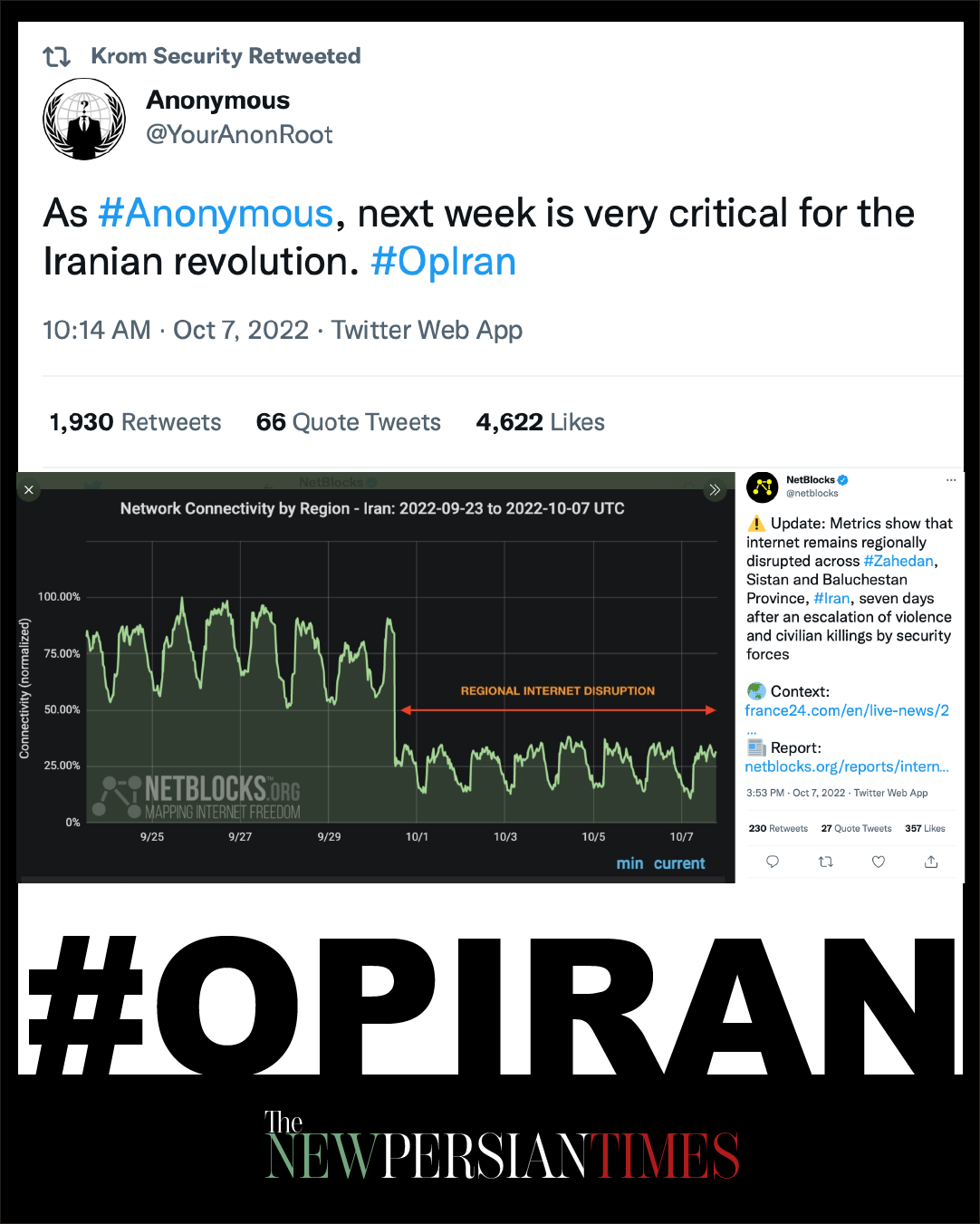
On September 21, 2022 — five days after her death — the Islamic Republic blocked Instagram and WhatsApp nationwide, the last two international platforms Iranians could still reach. Then it began cutting mobile internet every evening, on a curfew schedule, so the country went dark exactly when the protests began. Tens of millions of people were cut off from each other and from the world, and the footage of what was being done to them had to be smuggled out over VPNs and satellite links, a few seconds at a time.
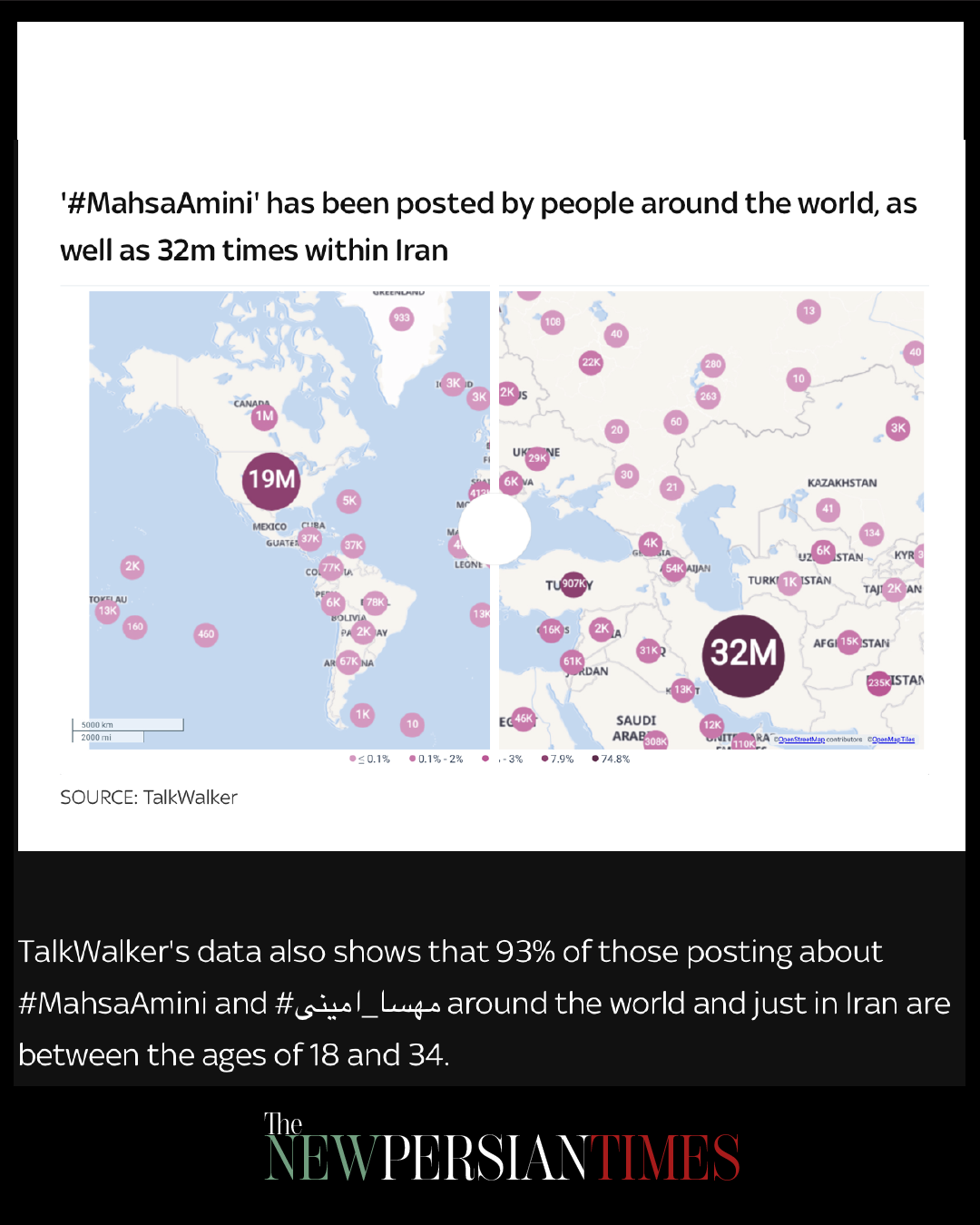
And still the name got out. Within a week, the Persian hashtag #MahsaAmini had been tweeted and retweeted more than forty million times — a record for Persian Twitter — and it kept climbing into the hundreds of millions, becoming one of the most-used hashtags in the platform's history. A twenty-two-year-old from Saqqez whom almost no one had heard of on a Friday was, by the following Friday, the most famous name in the world. The regime had turned off the internet in an entire country, and one girl's name had broken through it anyway.
And the internet fought back. Within days of the blackout, the hacker collective Anonymous declared #OpIran. Iranian government websites went dark one after another — ministries, the central bank, state media, the presidency's own site. Hackers claimed a breach of the parliament's database and leaked officials' phone numbers and emails. Just as important, they ran Telegram channels with thousands of members handing out VPN servers, proxies, and Tor guides so people inside Iran could get back online. Then, on the evening of October 8, a group calling itself Adalat Ali hijacked the state television news bulletin itself: for a few seconds, viewers across Iran saw Khamenei's face in crosshairs and flames, the photographs of the murdered, and the words Woman, Life, Freedom — with a caption that read, "Our youths' blood is dripping off your paws."
Did it topple anything? No. But for a regime whose whole strategy was to make its people feel alone and unseen, having its own websites knocked offline and its own newscast seized was humiliating — and for Iranians, it was proof that strangers around the world were in the fight with them.
I say all of this for a reason. Nobody on the outside could claim they didn't know. Not in 2022. The people of Iran had defeated a national blackout to make sure of it. Which makes the silence that followed a choice.
Here was the purest women's rights uprising of our lifetime. Schoolgirls tearing off their headscarves in front of armed men. Women burning the symbol of their own subjugation in the street. A revolution whose very first word was Woman.
So where was the movement that speaks for women?
The great feminist organizations of the West — the ones that can fill a capital with marchers in a weekend, that have a statement ready for every cause under the sun — were painfully, conspicuously quiet. A few individual voices spoke up, and I honor them. But the institutions, the marches, the sustained campaigns, the full weight of a movement that claims to stand for every woman everywhere? It never came. The women of Iran were dying for the exact freedoms Western feminism says it exists to defend, and they were met with a shrug. Some were too worried about offending a religion to defend the women being beaten in its name. Iranian women noticed. We all noticed. And we have not forgotten that either.
But the silence that cut deepest was closer to home.
This was the season when people revealed themselves. While our feeds filled with the faces of murdered teenagers, some of our own — fellow Iranians, people we called friends, people we had broken bread with for years — posted nothing. Not a name. Not a candle. Not a word. They kept posting their vacations and their dinners as though the homeland was not on fire.
We all knew why. They wanted to keep the right to travel back. To protect the summer trips, the property, the comfortable arrangement. To stay in the good graces of the Islamic Republic, they complied with it — from the safety of America. People inside Iran were risking a bullet to speak. People here would not risk a visa.
Friendships ended over it. Real ones, decades old. I don't say that with pride. I say it because it happened in nearly every Iranian family I know, and because it was necessary. There are moments in history that ask you a simple question — whose side are you on? — and silence is an answer.
And for some, it turned out to be more than silence. That season also revealed that certain families we had welcomed into our homes had ties to the Islamic Republic that ran far deeper than any of us understood. That is a whole other can of worms — and one The New Persian Times will open in a future article.
The empty chair
One moment from that first week captures the whole era for me.
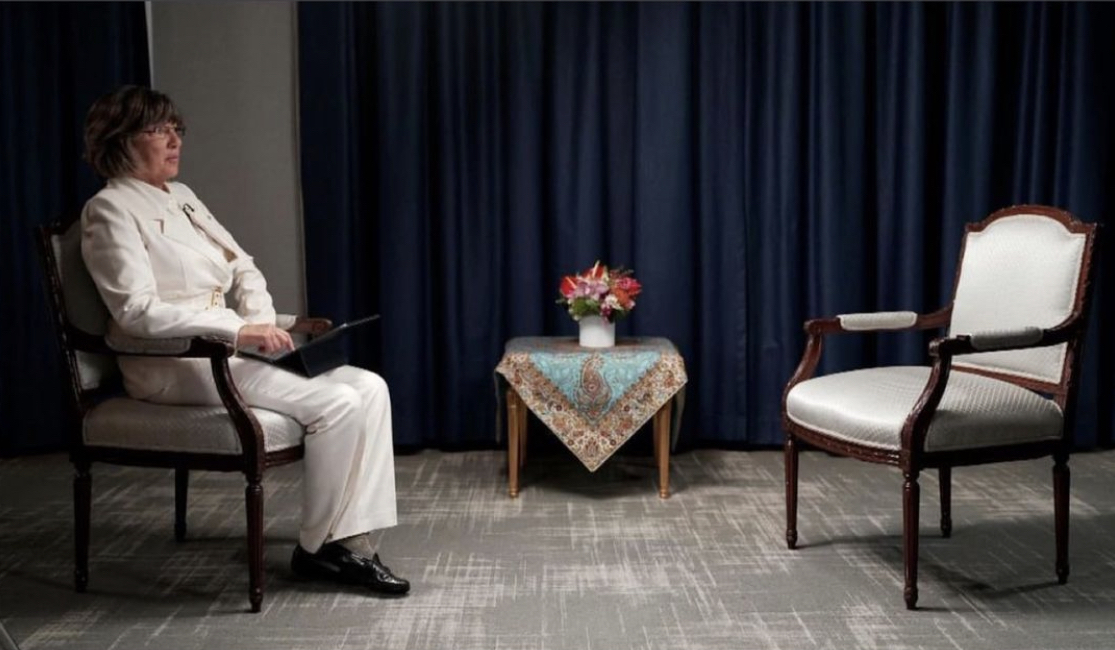
Days after Mahsa's death, with protesters already being shot in the streets, the regime's president, Ebrahim Raisi, was in New York for the United Nations General Assembly. CNN's Christiane Amanpour — Iranian-raised, the most famous foreign correspondent alive — had landed the interview. It would have been his first on American soil. She waited forty minutes. Then an aide appeared with a condition: put on a headscarf. She declined. "We are in New York," she said, "where there is no law or tradition regarding headscarves." Raisi never came. She posted a photograph of herself sitting across from an empty chair, and much of the world applauded.
I understand why. Refusing was the right instinct, and I give her credit for it.
But I have never been able to shake the feeling that it was the missed opportunity of a lifetime. The man who commanded the forces killing our daughters was minutes away, in the same city. Imagine if she had put the scarf on, sat down, waited for the cameras to roll — and then taken it off in front of him. Imagine if she had looked him in the eye and told him to his face that she stood with the women of Iran. One gesture, broadcast to the world, that every girl in Tehran would have seen by morning. That is what standing with the people looked like in the fall of 2022: girls were doing exactly that in front of men with guns. Instead, he was handed the easiest exit imaginable, and the man Iranians call the butcher of 1988 flew home without ever having to face her questions about Mahsa Amini.
An empty chair is a powerful picture. It is not the same as a confrontation.
She was not the only one that season measured by what they did with their moment. One by one, celebrities, journalists, influencers, and so-called experts revealed themselves — some by speaking up when it cost them something, others by their silence, their hedging, or their sudden talking points that sounded a lot like Tehran's. It was painful to watch. It was also a gift. By the end of it, the fog had lifted, and it was very clear who deserved our support and who did not.
The ones who showed up
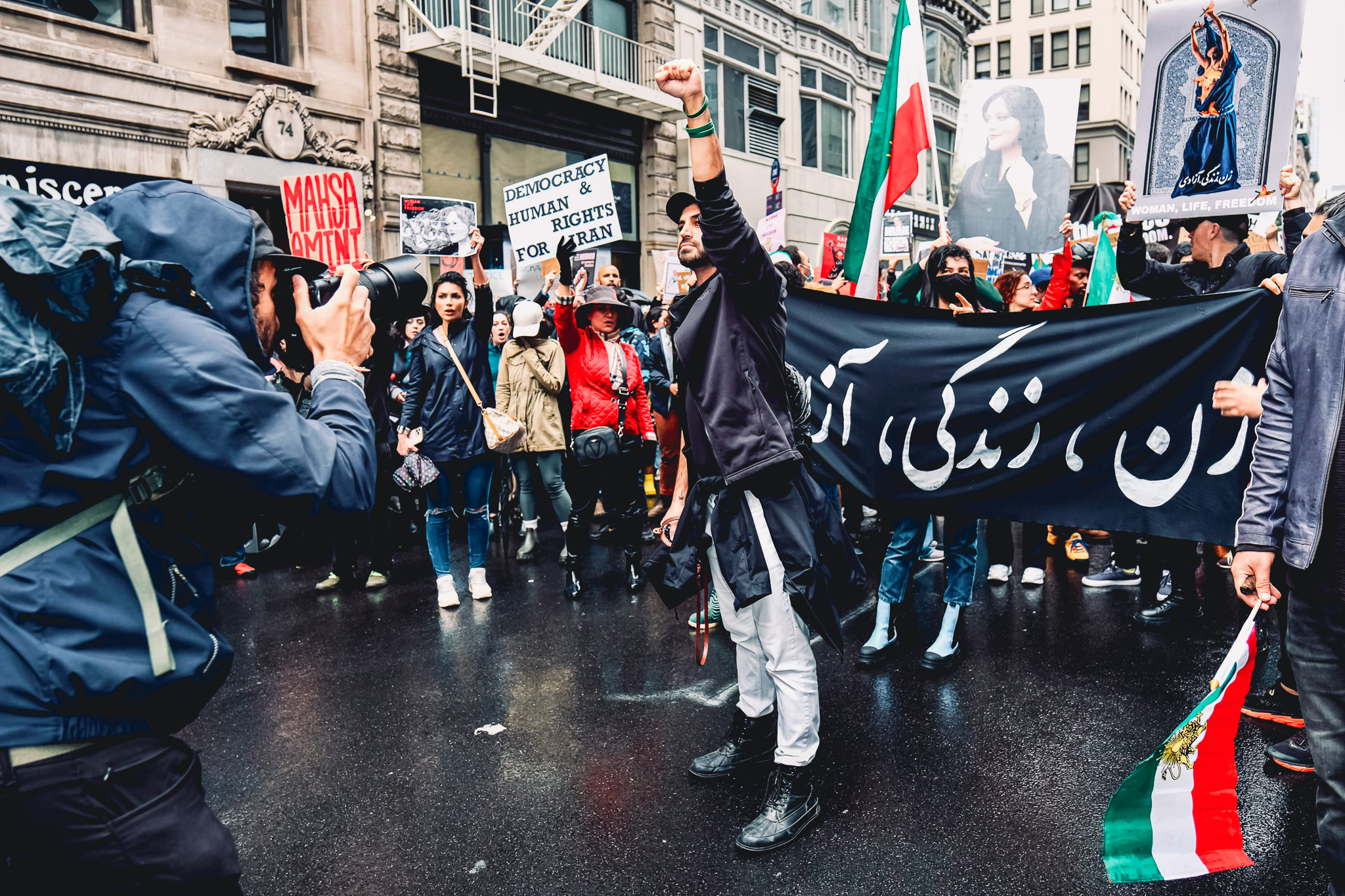
Now the other side of the ledger — because the people did show up, in numbers our community had never seen.
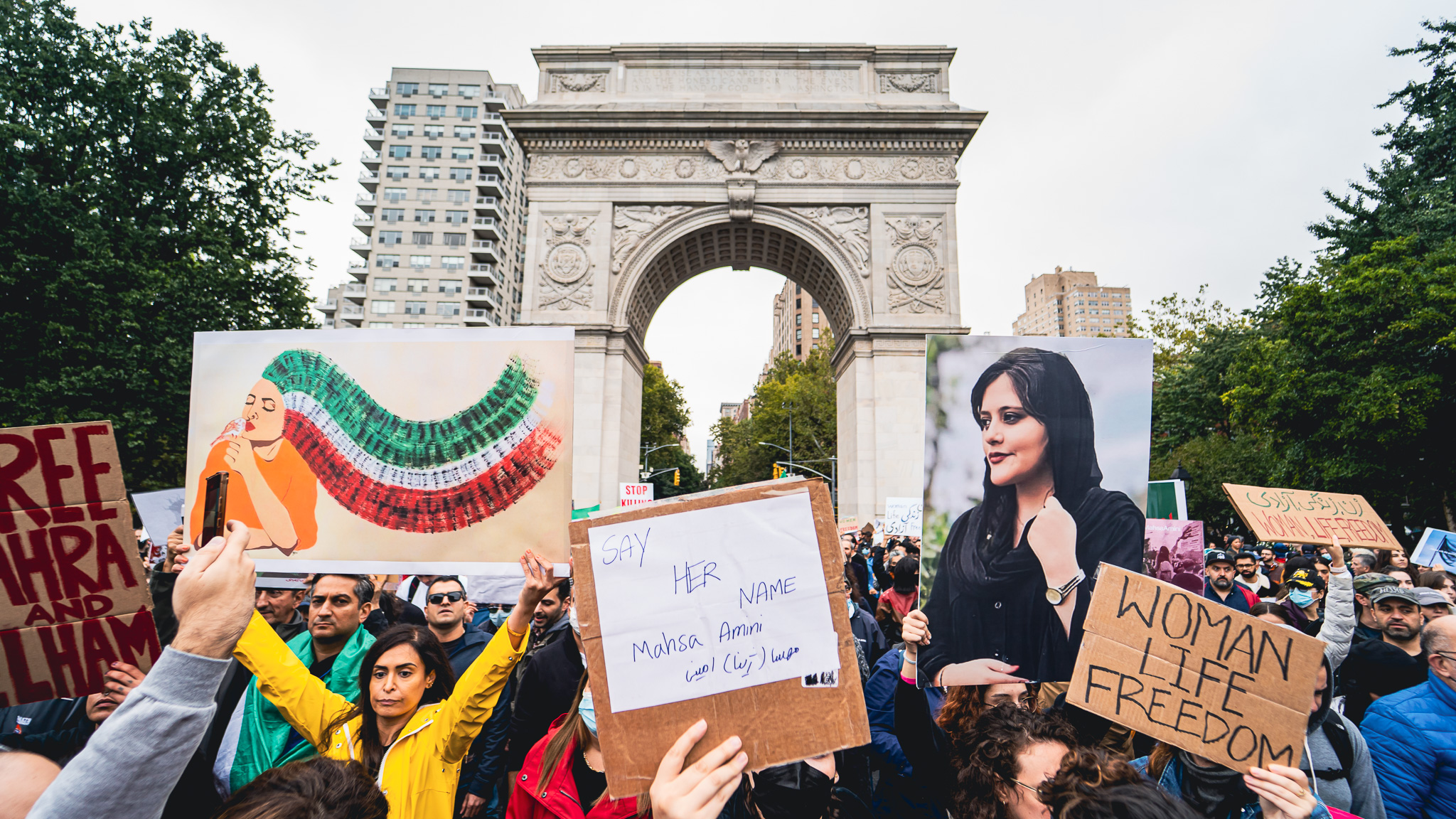
On October 1, 2022, two weeks after Mahsa's death, Iranians marched in more than 150 cities on the same day. Three weeks later, eighty thousand filled the streets of Berlin. Fifty thousand marched in Toronto. And on February 11, 2023 — the anniversary of the revolution that stole our country — a hundred thousand gathered in Los Angeles, the largest Iranian demonstration in American history. Week after week, for months, in cities where a few hundred Iranians had never once stood together, thousands did.
I was in the middle of it with my camera in New York and Washington. In New York we marched through Midtown, filled Times Square, and stood outside the United Nations with Nika's and Sarina's faces on poster board, chanting Zan, Zendegi, Azadi at the building that was supposed to be listening. In Washington we came from every state to the National Mall, the Lion and Sun flying against the Capitol dome, three generations of one family under a single banner. I photographed grandmothers who had fled in 1979 weeping beside teenagers who had never set foot in Iran. I photographed Americans with no Iranian blood who had simply seen a video and could not stay home. I photographed the moment a diaspora that had spent forty years divided — monarchist and republican, religious and secular, old exile and new arrival — realized it was standing in the same street, shouting the same three words.
Those photographs live in the gallery on our website. Go look at them. Look at the faces. Every one of those people had a reason to stay home — a job, a family back in Iran, a visa to protect — and every one of them came anyway. That is what showing up looks like. Hold that picture in your mind for the rest of this article.
The ones who stepped up
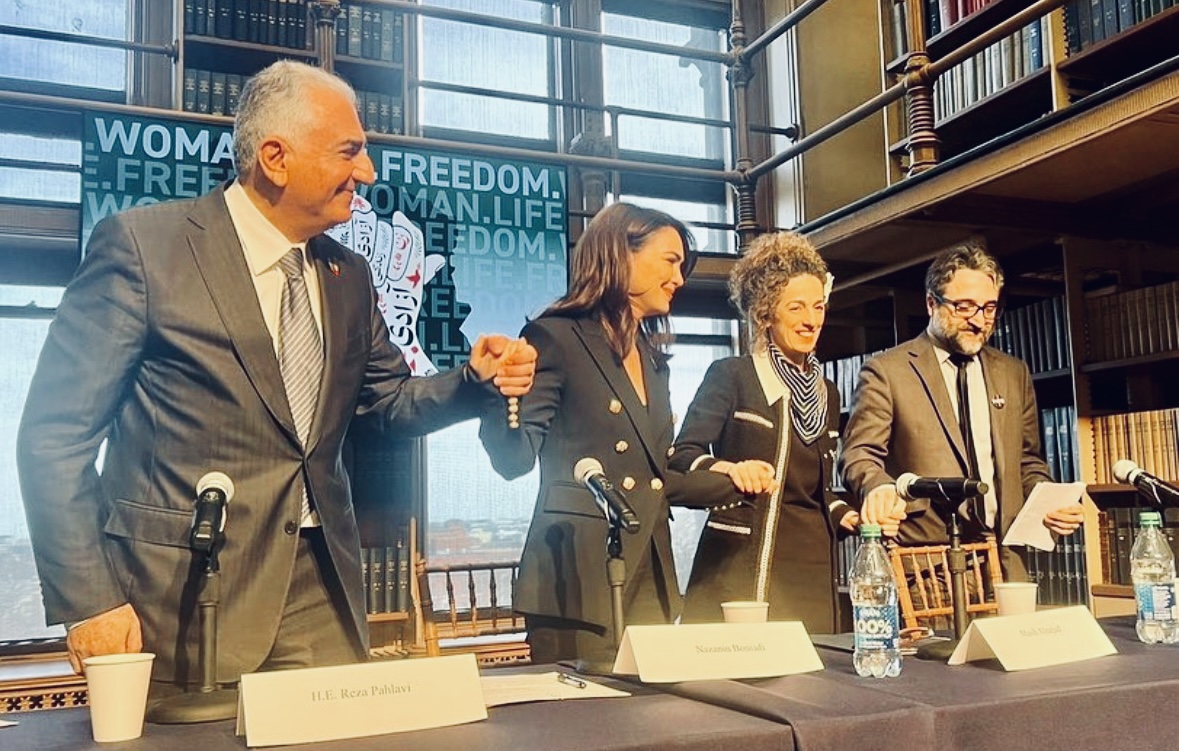
Out of that moment, people rose. Crown Prince Reza Pahlavi stepped forward as a leader, and he did it standing alongside others: Masih Alinejad, who had fought the compulsory hijab for years and survived the regime's plots against her life on American soil. Nazanin Boniadi, who carried the cause to the United Nations. Golshifteh Farahani, who gave it her voice and her stage. And Hamed Esmaeilion, who lost his wife Parisa and his nine-year-old daughter Reera when the Revolutionary Guard shot down Ukraine International Airlines Flight PS752 in January 2020 — and who turned that loss into the rally in Berlin.
In February 2023 they sat together on one stage at Georgetown University. The coalition itself did not hold — unity is hard, and ours is a people out of practice. But the Crown Prince held. Through every wave since, he has stayed in the arena — and in the uprisings that followed, his name has been heard in the streets of Iran.
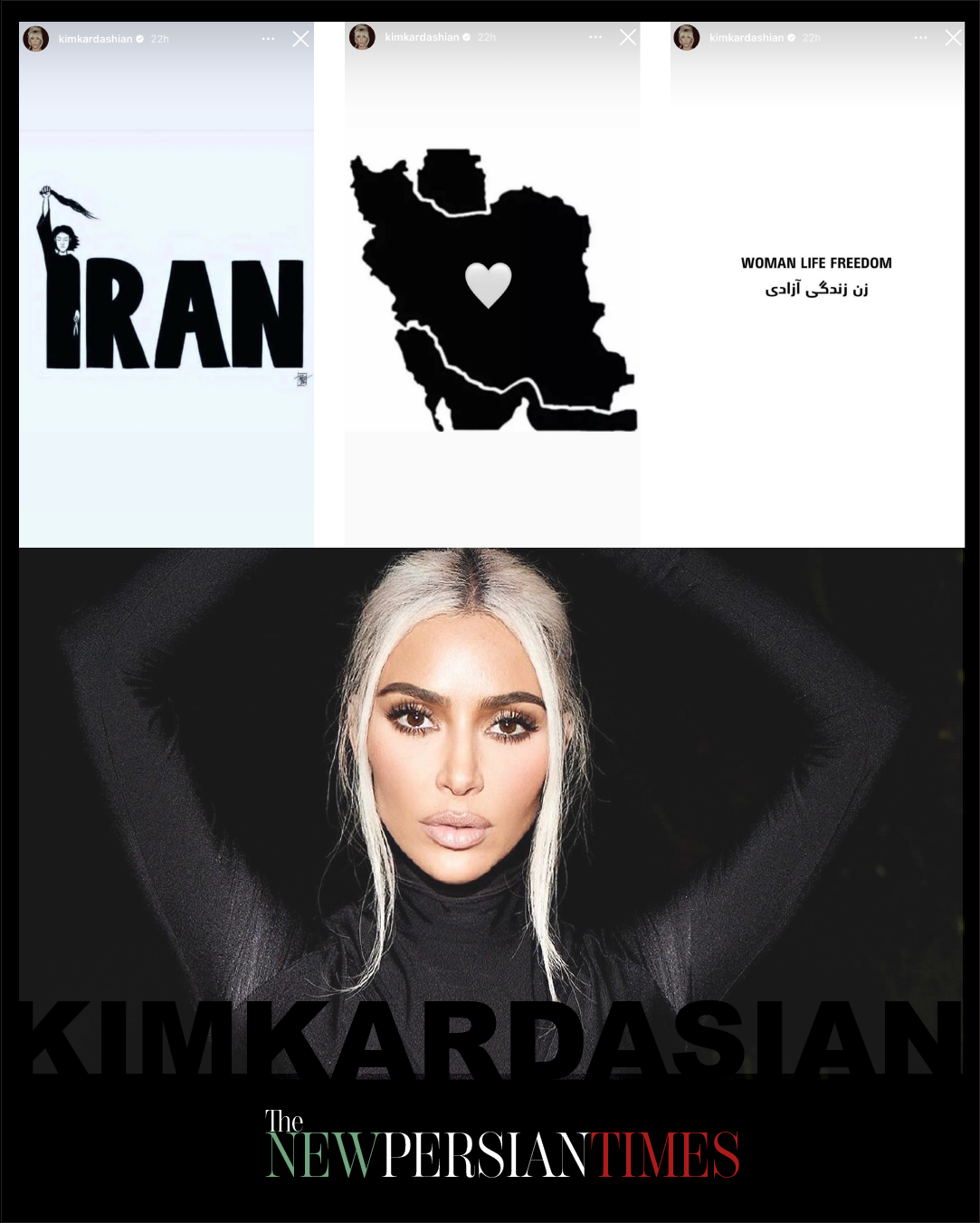
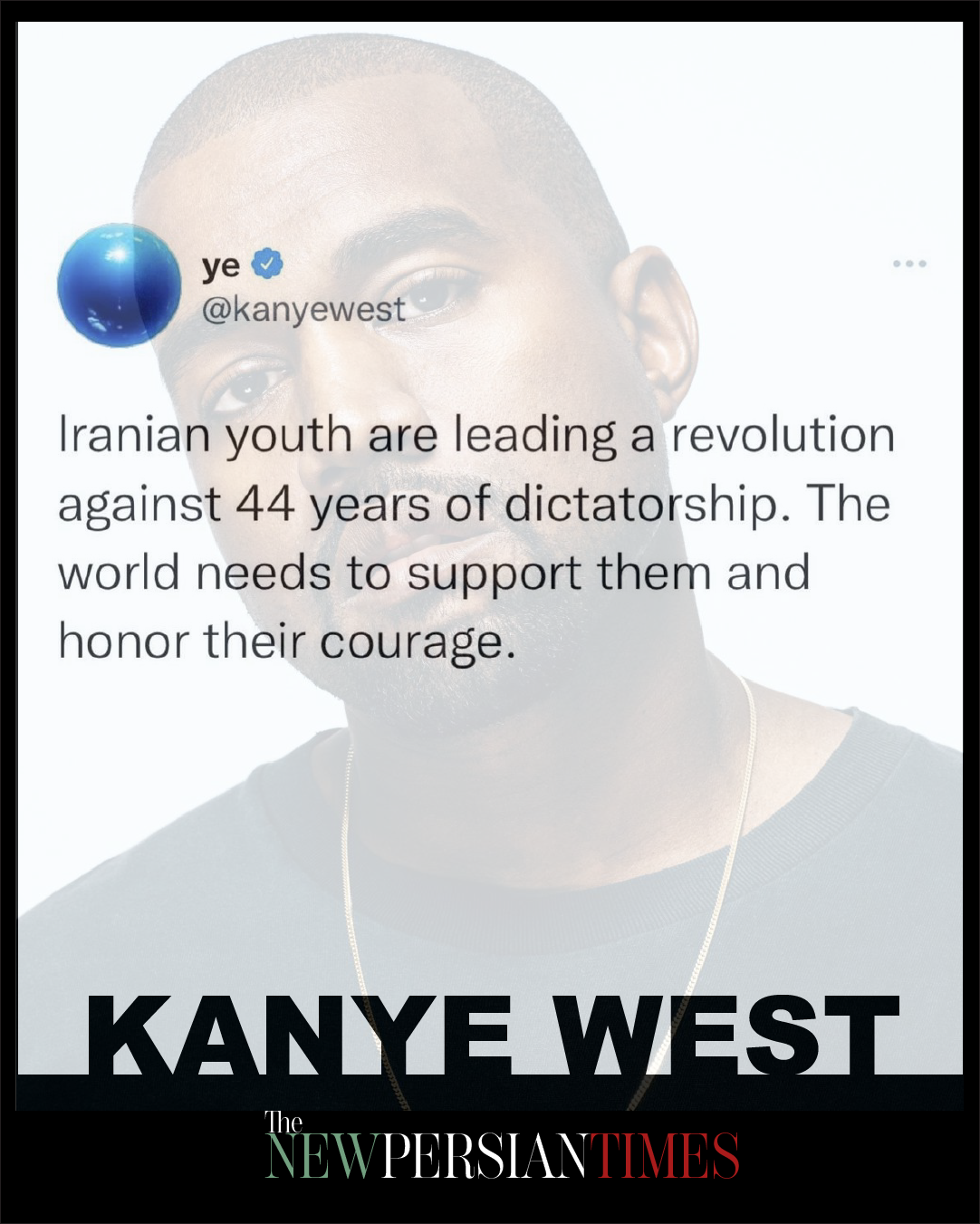
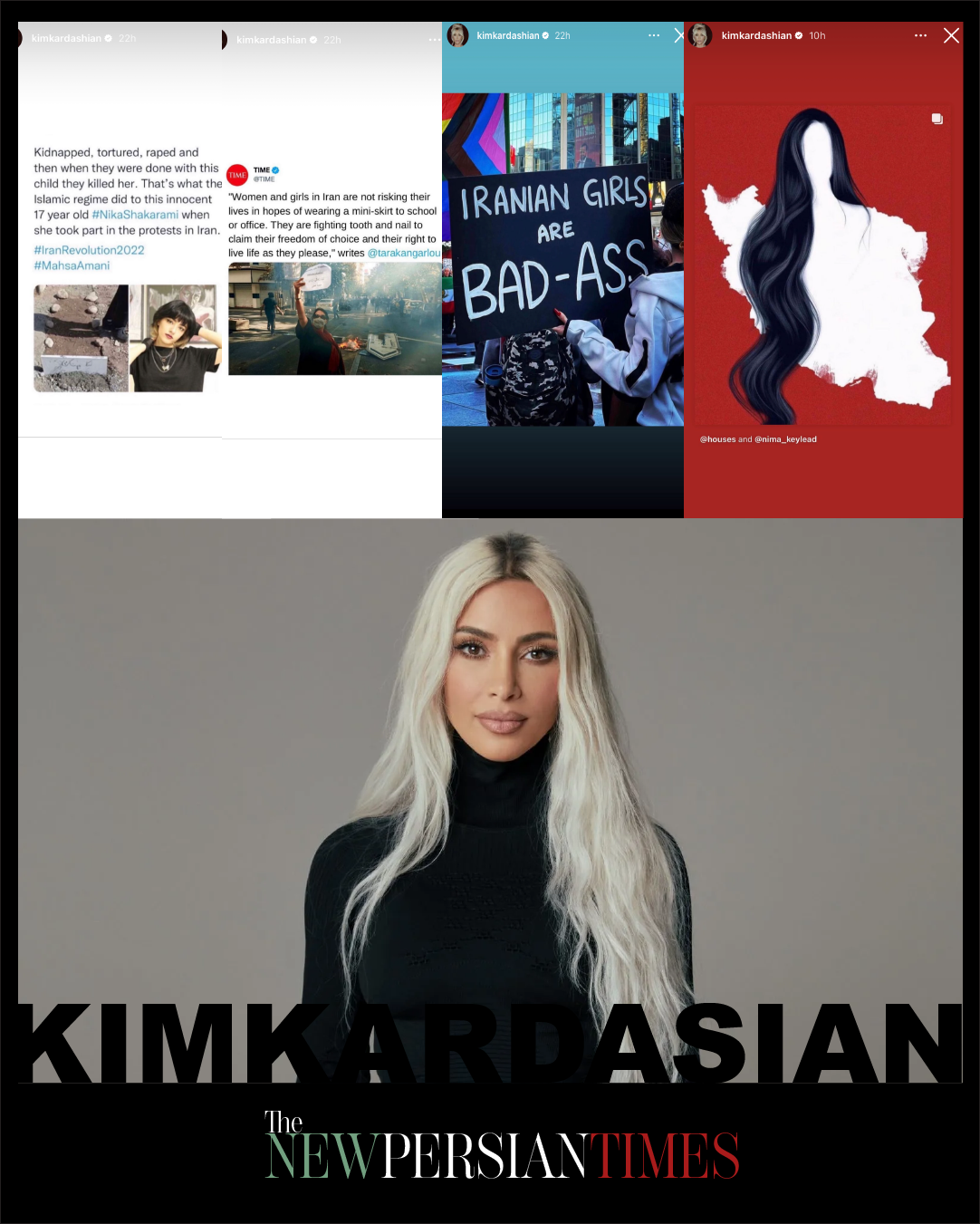
And it was not only Iranians. Some of the most-followed people on earth — people with no Iranian blood and nothing to gain — used their platforms for us. Kim Kardashian put the faces of the protests in front of her hundreds of millions of followers, Nika Shakarami's among them. Kanye West posted his support for the young Iranians in the streets. Bella Hadid, Justin Bieber, Jessica Chastain, Angelina Jolie, and others did the same. Say what you want about celebrity activism; in a country where the regime had cut the internet, every one of those posts put Iran in front of people who would never have seen it otherwise.
Hold on to that. Because if a Kardashian could find the words, what excuse did our own have?
A word to the ones who chose wrong
I am going to say this plainly, because someone has to.
To every Iranian celebrity, actress, singer, athlete, and influencer who looked at the bodies of Nika and Sarina and Kian and decided the smarter move was silence — or worse, who kept smiling for the regime's cameras, kept taking its stages and its festivals and its permits, kept posing in the very headscarf those girls died refusing — hear this.
You did not choose neutrality. There is no neutral seat at a hanging. You chose the side with the cranes.
You weighed your career in Tehran against the lives of your own people, and you chose the career. You told yourselves it was complicated. It was not complicated. Sixteen-year-old girls understood it perfectly. A nine-year-old in a homemade boat understood it. You had platforms of millions, the safety of fame, and the eyes of the world — and you used them to protect your access to a dying regime.
So let me tell you what the future looks like, because it is coming faster than you think.
Iran will be free. And a free Iran will have a very long memory. It will remember who sang for the murderers and who sang Baraye. It will remember who stood with the people when it was dangerous, and who found their courage only once it was safe. Nobody is keeping score. Nobody has to. The record kept itself, in public, in real time — and the people saw all of it.
You will not be welcomed in the new Iran with open arms. There will be no gala for you, no comeback tour, no forgiveness ceremony. The people who buried their children while you posted your vacation photos will not be buying tickets. Your fame was a gift from the very public you abandoned, and the public can take it back. Nobody in a free Iran will be lining up to hear from the ones who found their voice only after it was safe.
To the handful who are still on the fence: there is still time, but not much. Every day the regime grows weaker and every day the record grows longer. Pick a side while it still costs you something — because the moment it costs you nothing, it counts for nothing.
And to the ones who chose right — who lost their careers, their homes, their passports, their families' safety, to stand with the people: the future belongs to you. Your names are already written on the right side of history, and a free Iran will say them with pride.
History does not grade on a curve. It only asks one question, and everyone answers it in public.
That is the reckoning among ourselves. But there is a bigger one still owed — by the governments and institutions that had the power to act, and chose to talk. That is Part Three.
Always in solidarity. Always for freedom.
Sincerely, آیین
Next — Part Three of Three: "Words Were Not Enough." The United Nations, the European Parliament, the White House — what the free world did with the clearest moral moment of a generation, the one organization that turned our outrage into law, why I built The New Persian Times, and where the movement stands four years on.
The New Persian Times was built to tell the story the headlines keep missing. Subscribe to our newsletter on Substack for our coverage of Iran, the diaspora, and the road to a free Iran: newpersiantimes.substack.com