
Two Nations, One Day: The Split Screen That Showed the World What Iranians Always Knew
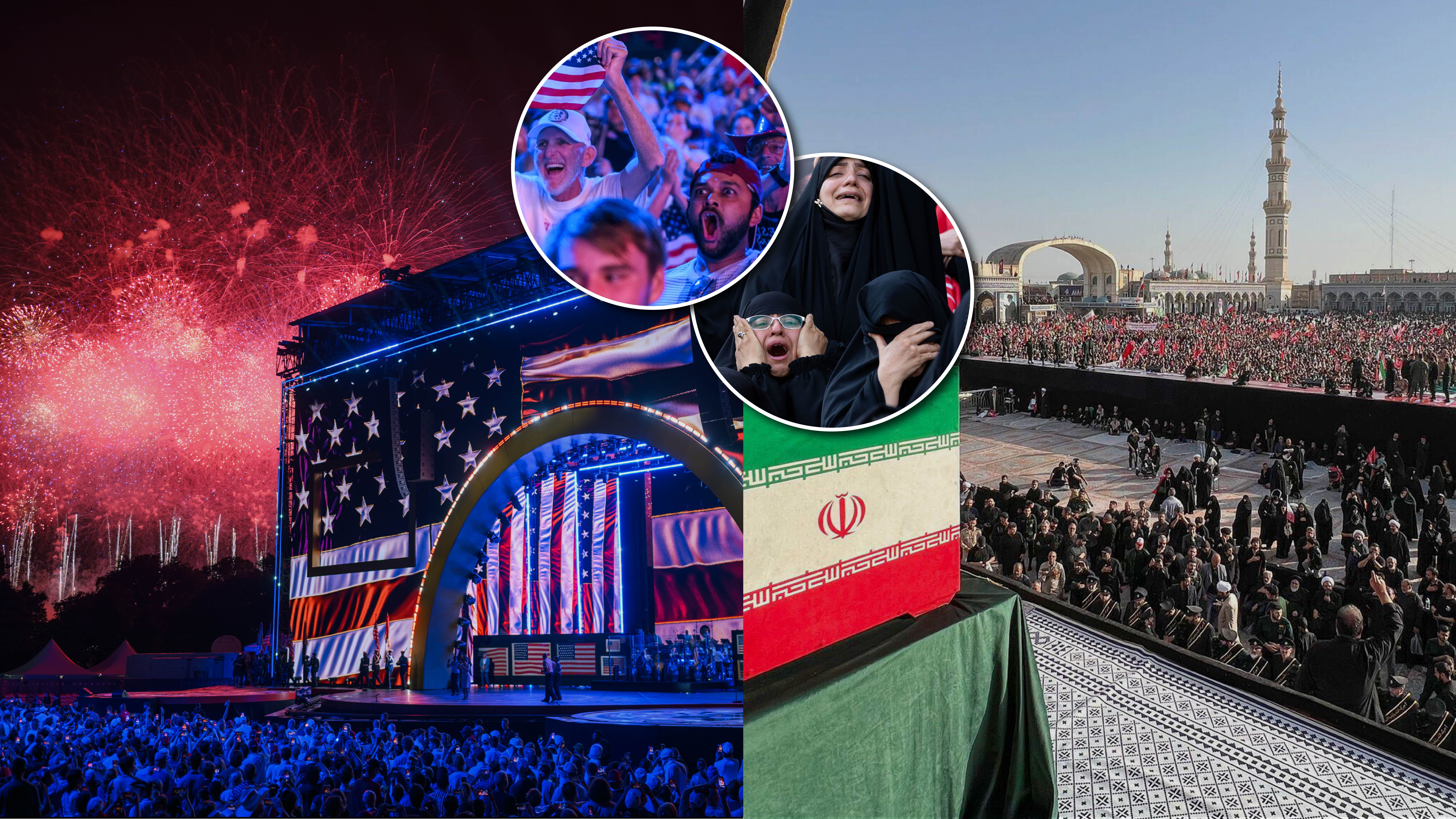
On July 4th, 2026, the world watched two spectacles unfold on opposite sides of the planet. In Washington, D.C., America threw itself a 250th birthday party — loud, chaotic, rained on, and unmistakably alive. In Tehran, the Islamic Republic staged the state funeral of Ali Khamenei, the dictator killed in a joint U.S.-Israeli strike on February 28th — a funeral whose dates were allegedly chosen to coincide with America's Independence Day. One event was a celebration of a free people. The other was a regime's desperate attempt to manufacture legitimacy over a coffin. The contrast could not be more instructive.
America at 250: Lightning, Delays, and a Party That Refused to Quit
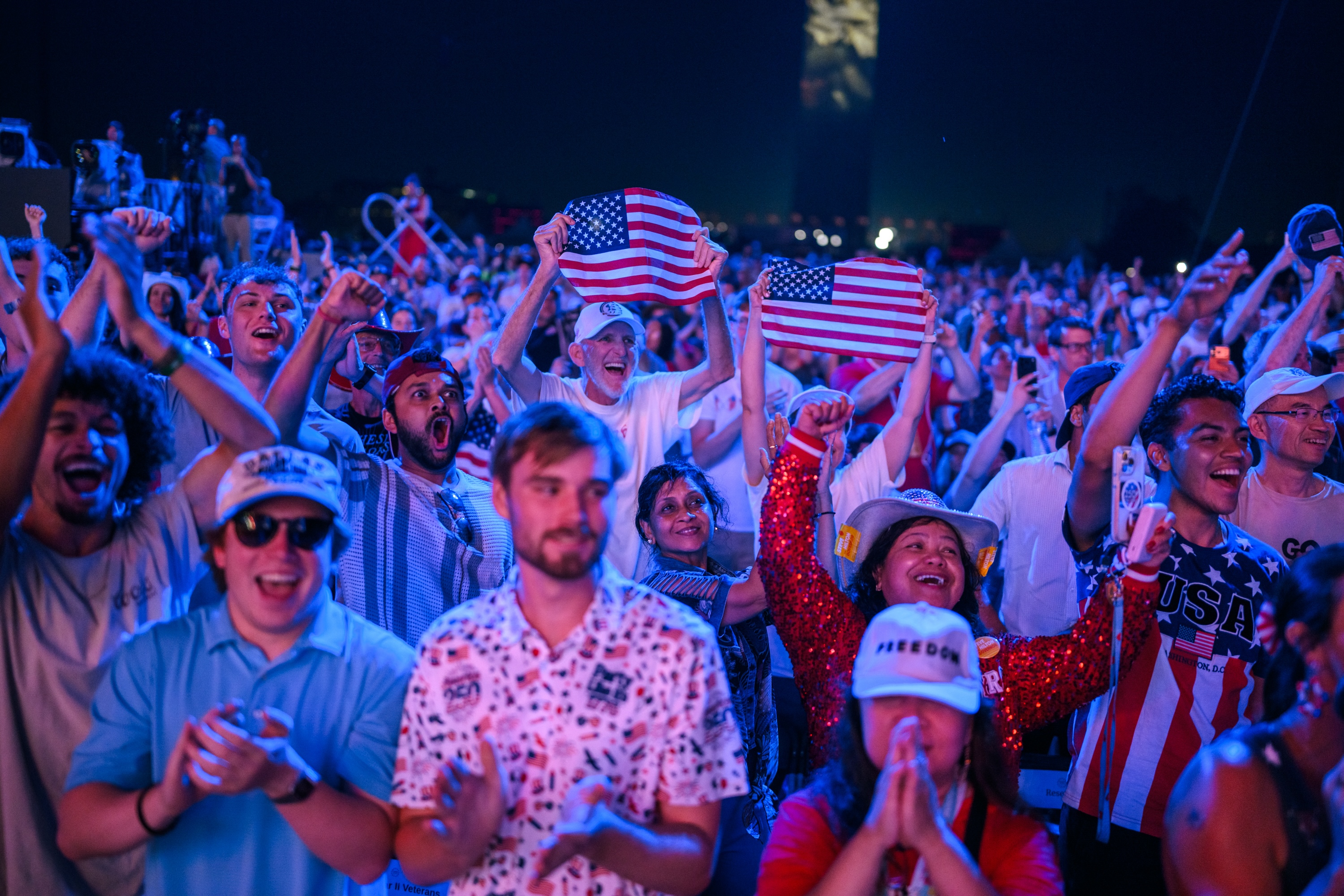
Nothing about the Salute to America 250 celebration on the National Mall went according to plan — and that's what made it so American. With roughly 150 million Americans under heat alerts and D.C.'s heat index pushing 110 to 115 degrees, the city's Independence Day parade was cancelled outright, per NewsNation. Then, just as the evening festivities were set to begin, lightning and dark storm clouds rolled over the White House, forcing the National Guard to evacuate thousands of spectators from the Mall around 7 p.m., with the Secret Service re-screening every single attendee who returned through security checkpoints hours later.
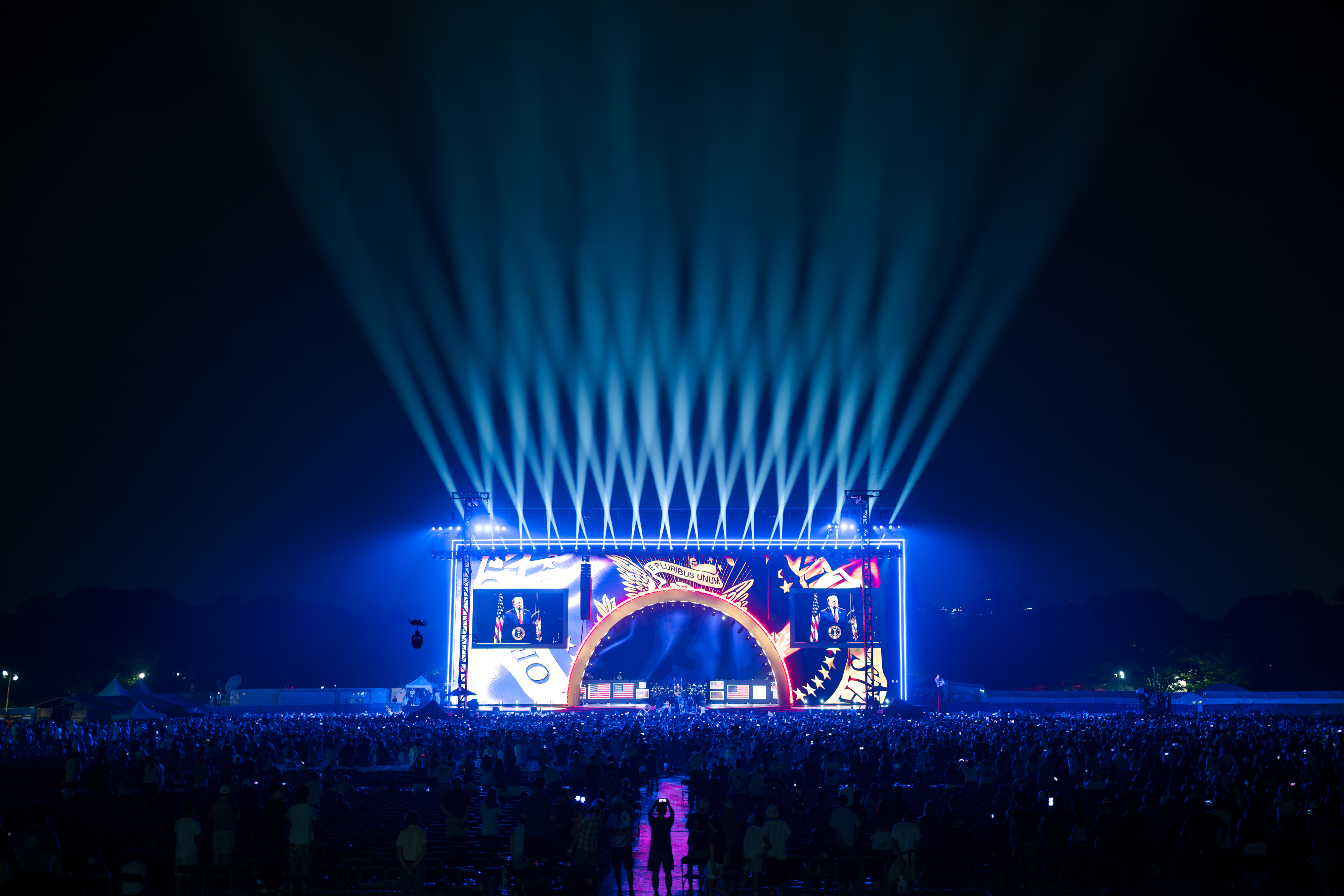
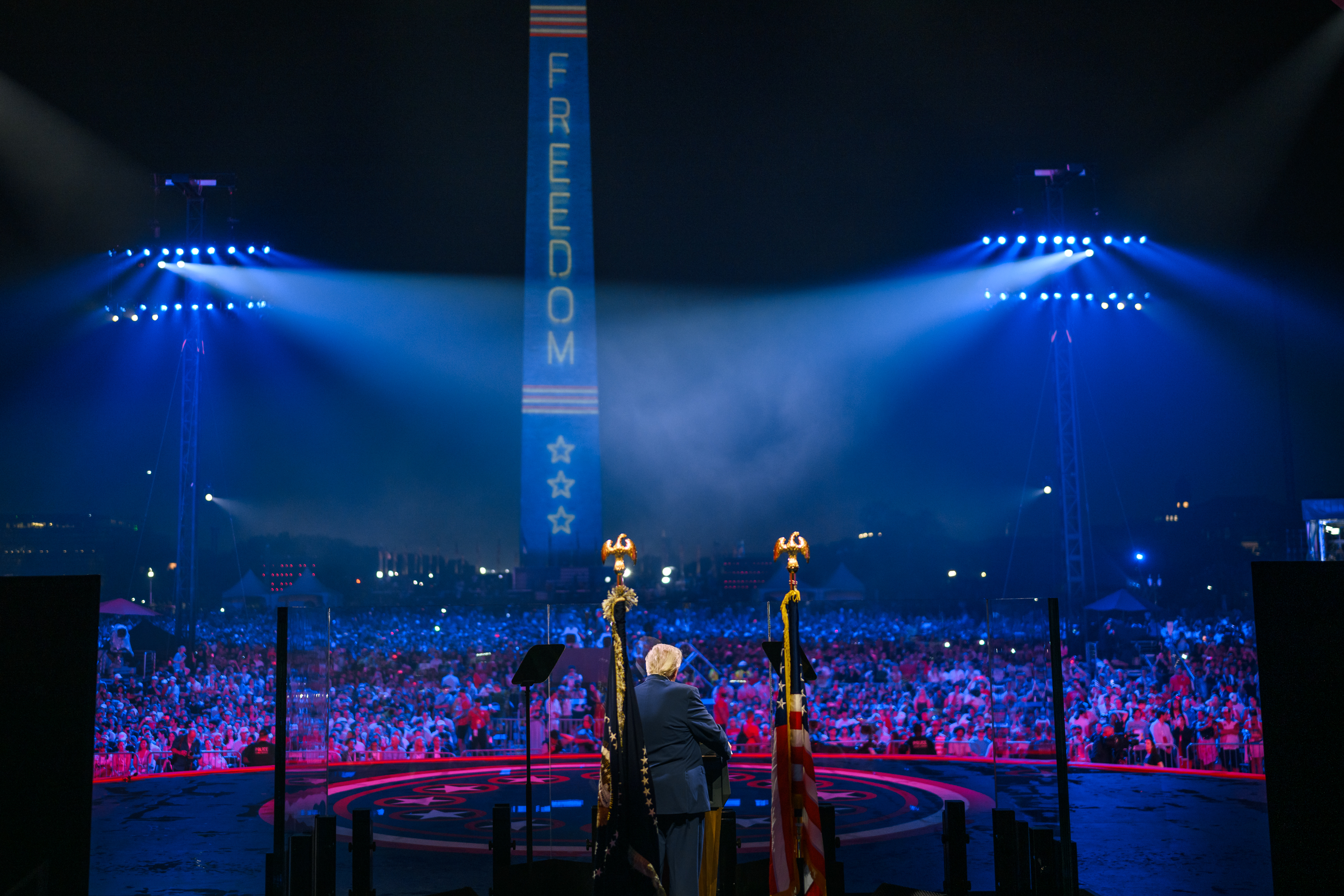
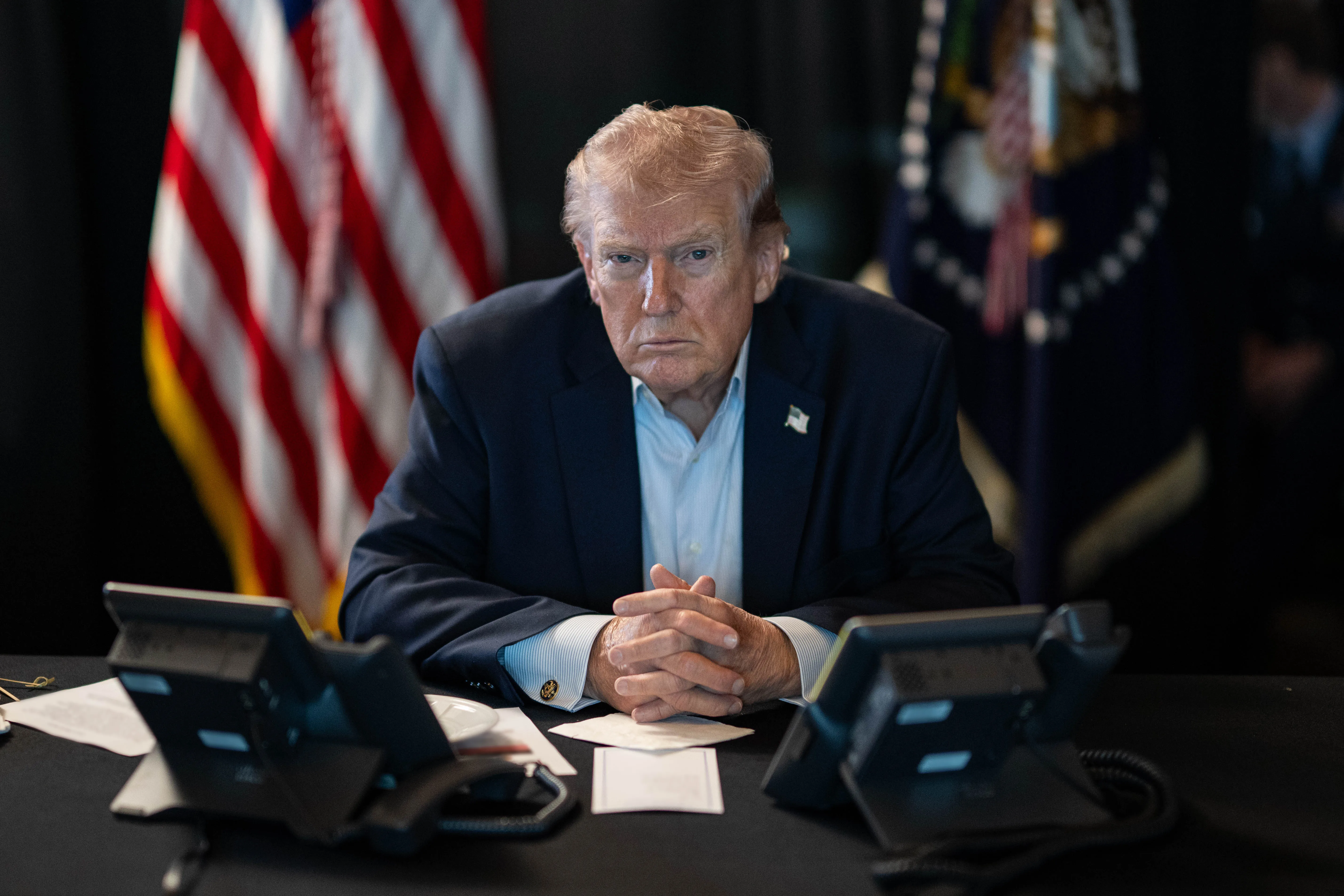
President Donald J. Trump delivers remarks at the Washington Monument during the Salute to America 4th of July celebrations for America’s 250th anniversary, Saturday, July 4, 2026, on the National Mall in Washington, D.C. (Official White House Photo by Patrick B. Ruddy & Daniel Torok).
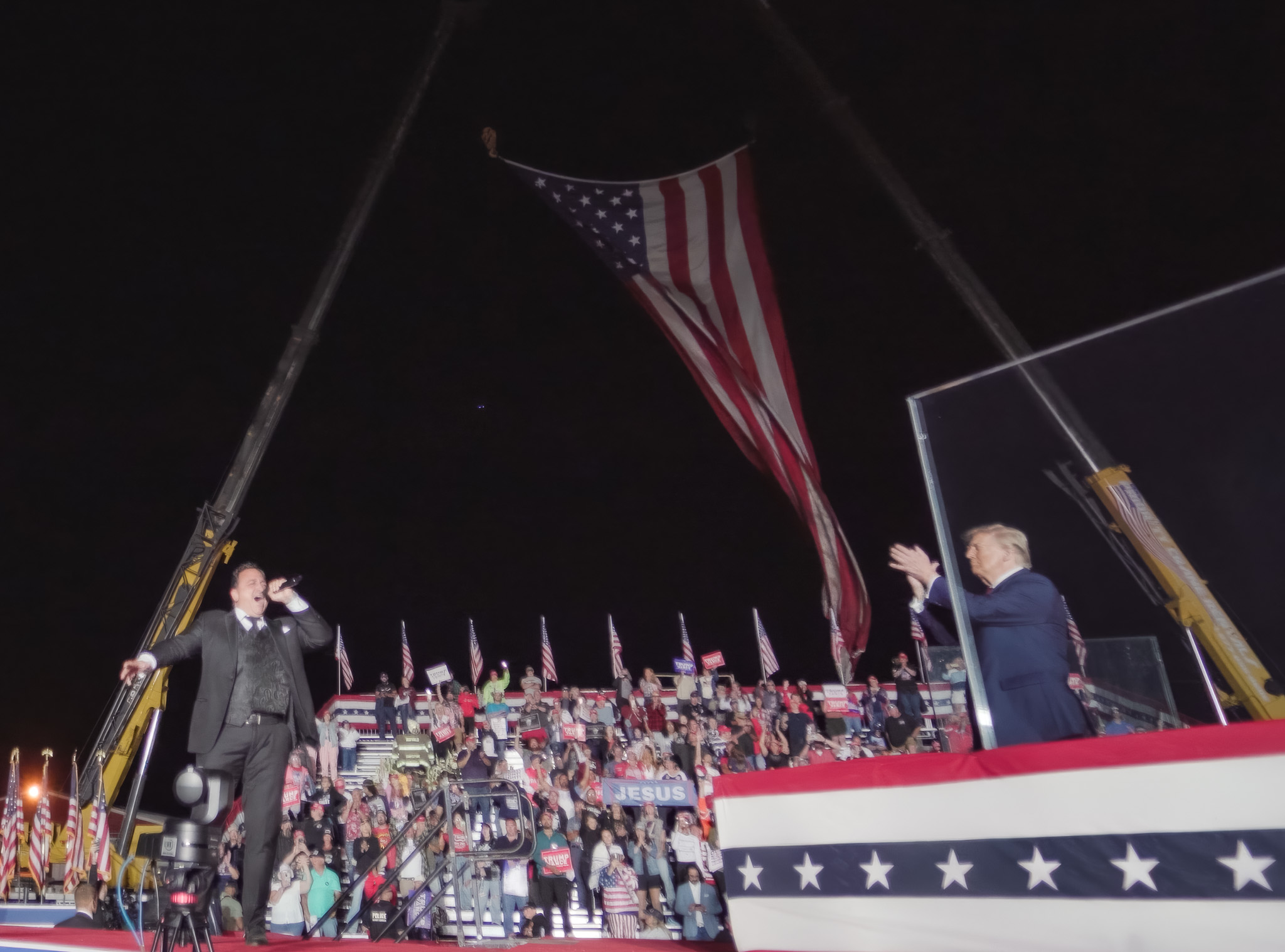
And return they did. NBC News described a "robust crowd" filtering back onto the Mall, singing and dancing along to the pre-show performances. Then came the "Presidential Tenor" — Christopher Macchio's own well-earned billing — performing "Ave Maria." No performer on that stage carries more history with this president. Trump, whose late brother Robert first introduced him to Macchio's voice, announced the Salute to America lineup on Truth Social with the declaration, per The Hill: "Not since the legendary Luciano Pavarotti has there been such a voice!" And Trump has trusted that voice with the heaviest moment of his political life. When he returned to Butler, Pennsylvania in October 2024 — back to the very fairgrounds where an assassin's bullet had grazed his ear — Trump opened with the most defiant three words in modern campaign history, "As I was saying," and it was Macchio he brought out as the star performer. At exactly 6:11 p.m., the minute the shots had been fired, tolling bells and a moment of silence gave way to Macchio's "Ave Maria," sung in memory of Corey Comperatore, the volunteer firefighter killed shielding his family. It was arguably the most openly Catholic moment ever staged at an American political event — a hymn to the Virgin offered to a wounded, divided nation as an act of healing. On July 4th, 2026, that same voice sang that same hymn over the National Mall, followed by Lee Greenwood's iconic rendition of "God Bless the U.S.A." When President Trump finally took the stage after the two-hour weather delay, he opened by thanking the crowd for sticking it out, telling them — as CNN reported — that even if he had to speak in front of one person at 4 o'clock in the morning, he was going to be there, and that there was no way they could be deterred.
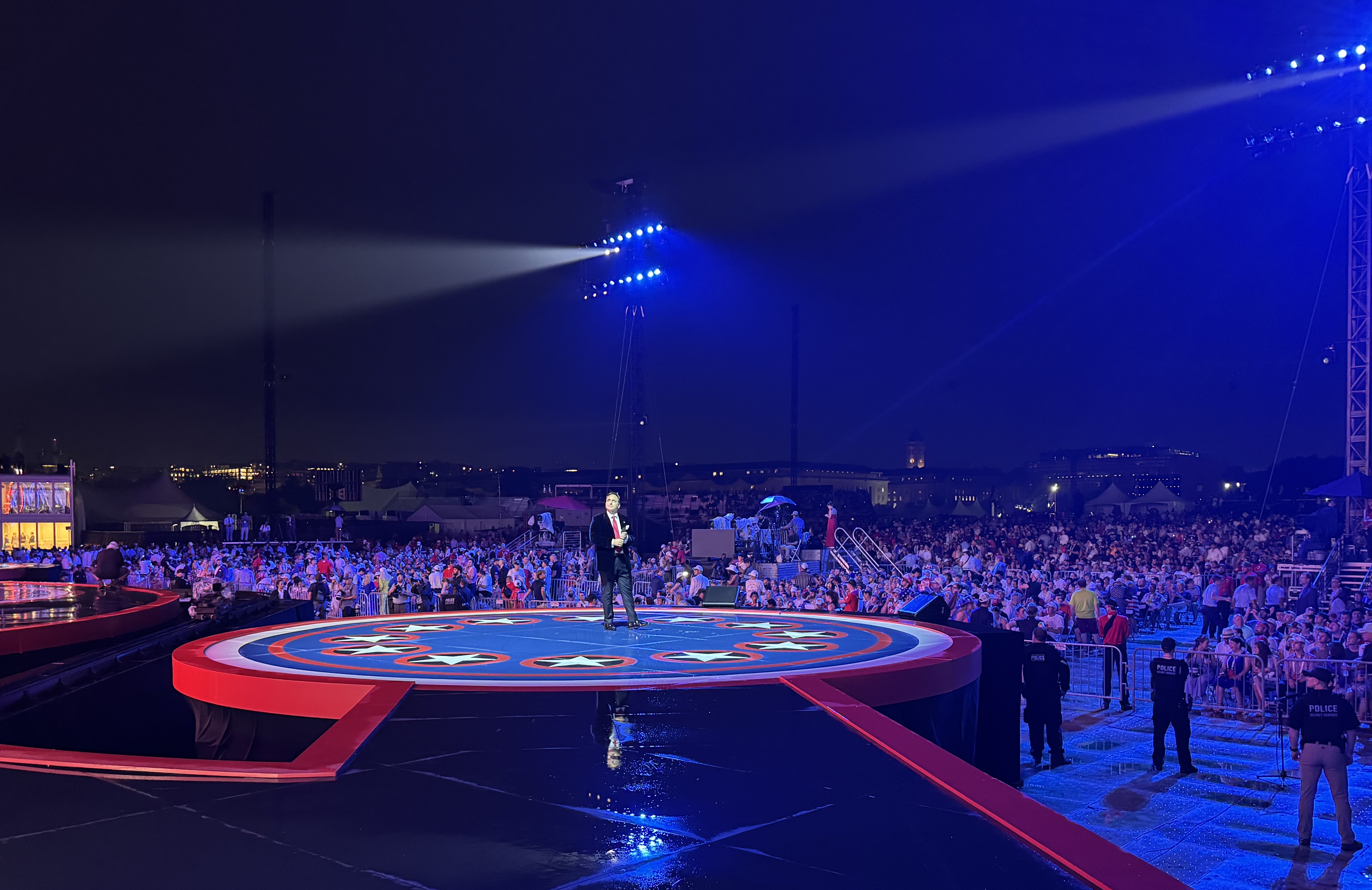
(Photo by The New Persian Times)
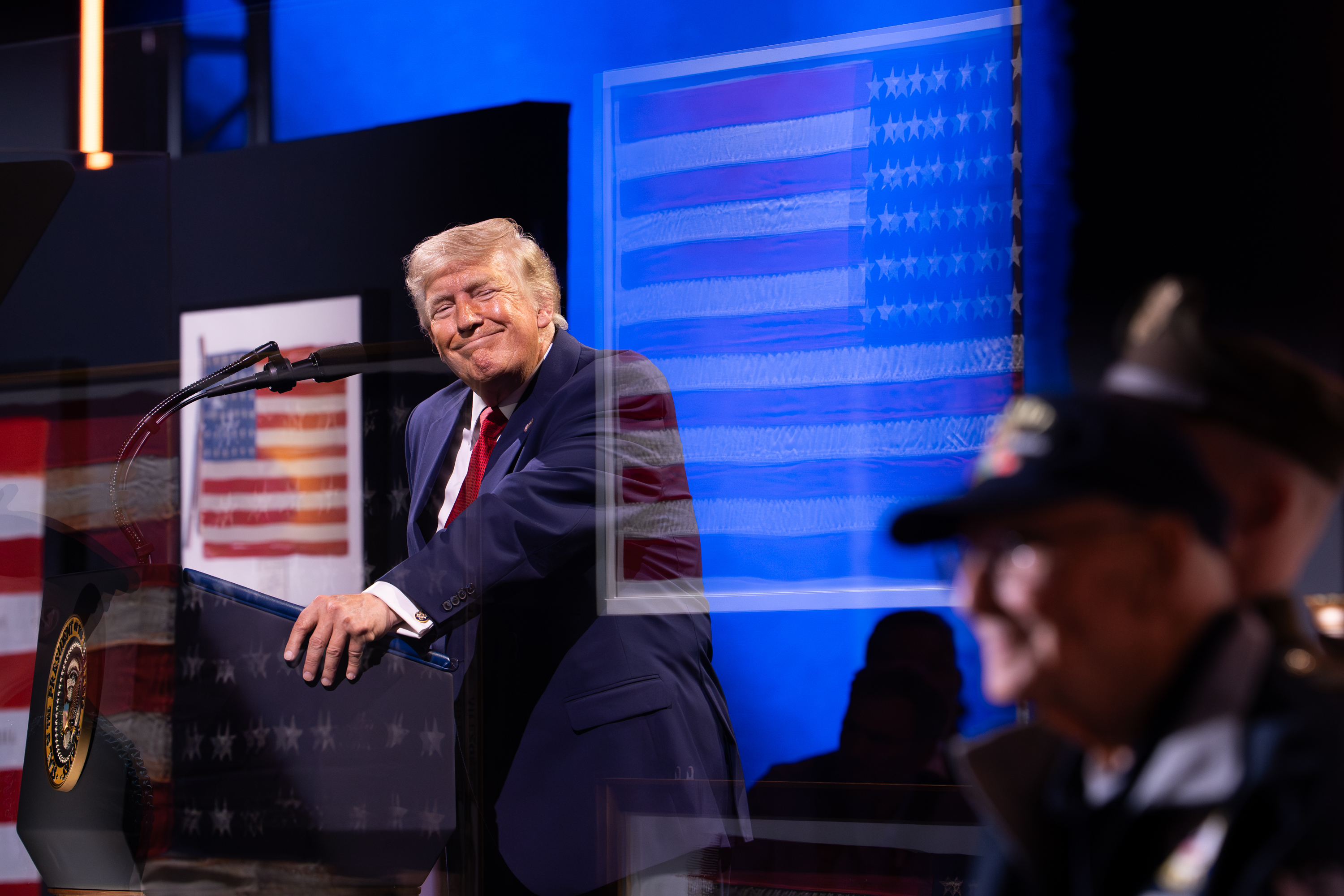
Trump's speech, clocking in under 40 minutes, called this moment "the dawn of the golden age of America" (Fox News) and declared the United States, in his words, "the crowning achievement of human history." He honored World War II centenarian veterans, Gold Star families, descendants of Francis Scott Key, and the Artemis II moon crew — and took his shots at the resurgence of communism in American politics, comparing it to a cancer that had to be cut out fast, per NewsNation. Israeli Defense Minister Israel Katz marked the day on social media by calling the U.S.-Israel alliance stronger than ever, a post covered by Fox News Digital.
(Photo by Andrea Hanks)
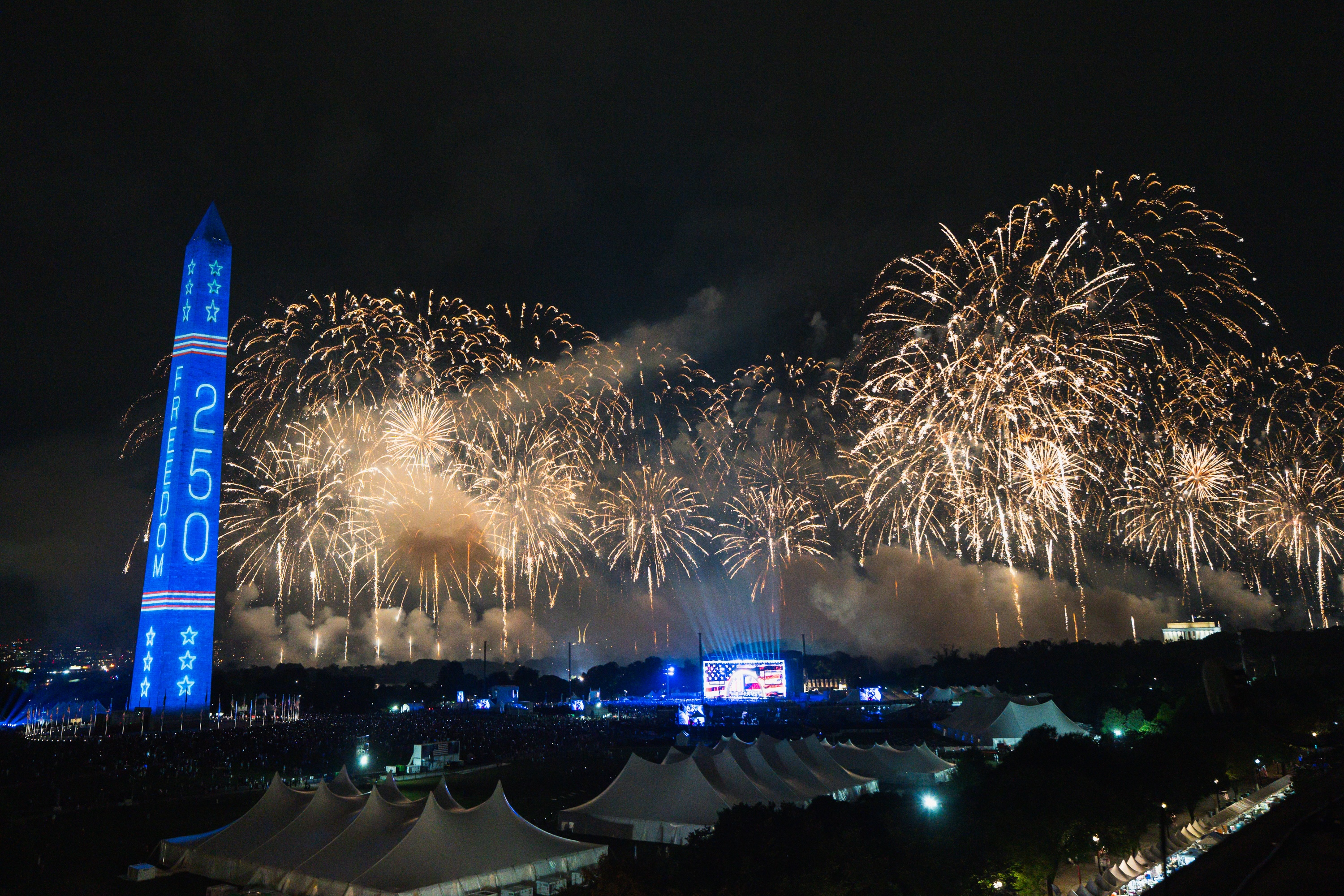
Then came the fireworks: roughly 850,000 shells launched from ten sites across the Lincoln Memorial Reflecting Pool, Potomac River barges, and West Potomac Park — a 40-minute display CNN reported may have set a new Guinness World Record as the largest fireworks show in history. Trump, on Truth Social, called it the best fireworks show ever.
Storms, extreme heat, evacuations — and still they came back, danced, and lit up the sky. Nobody bused them in. Nobody paid them to be there. Remember that detail. It matters for what comes next.
(Photos by Daniel Torok)
Tehran: A Funeral Built on Buses, Bread, and Borrowed Mourners
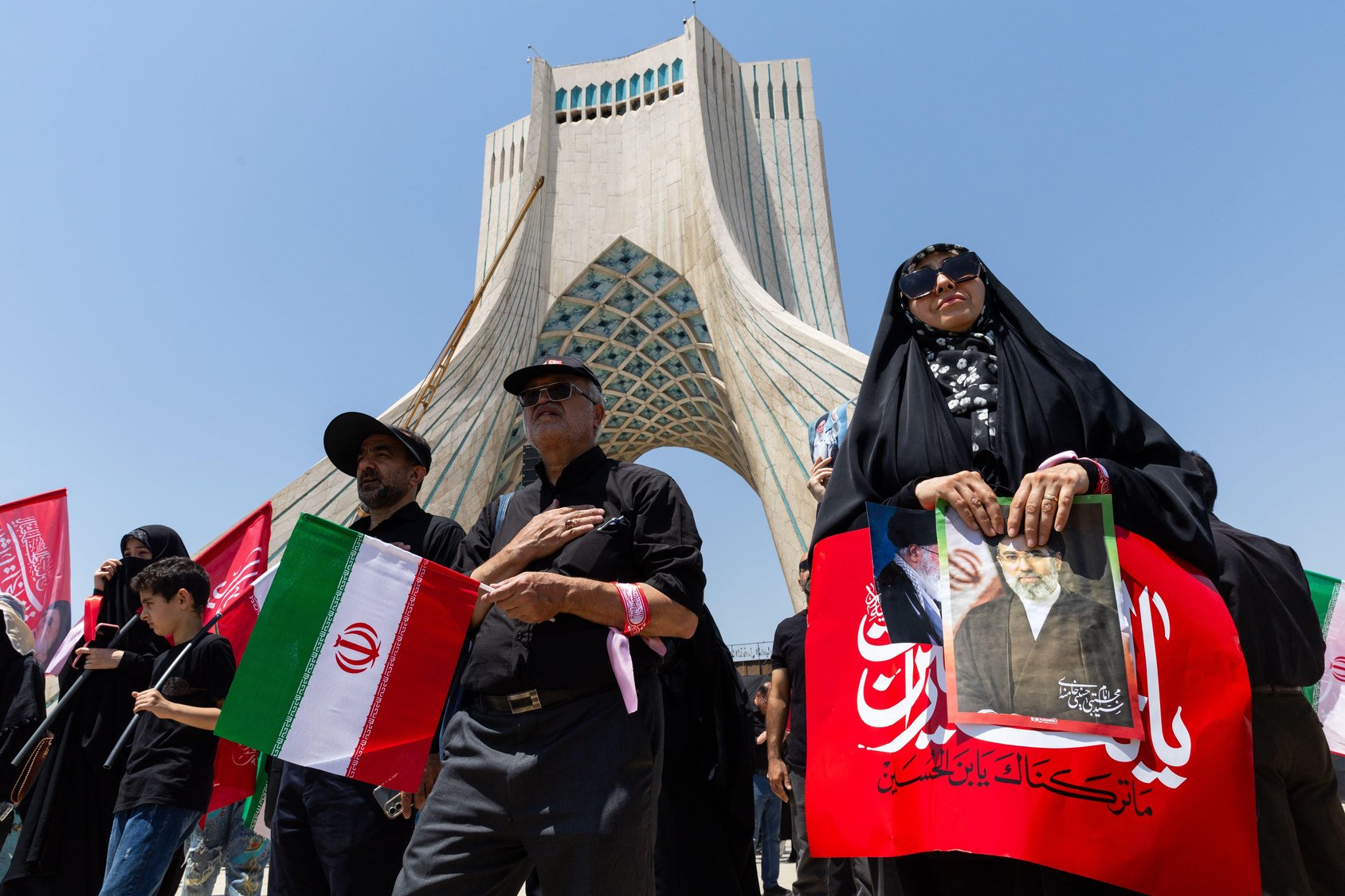
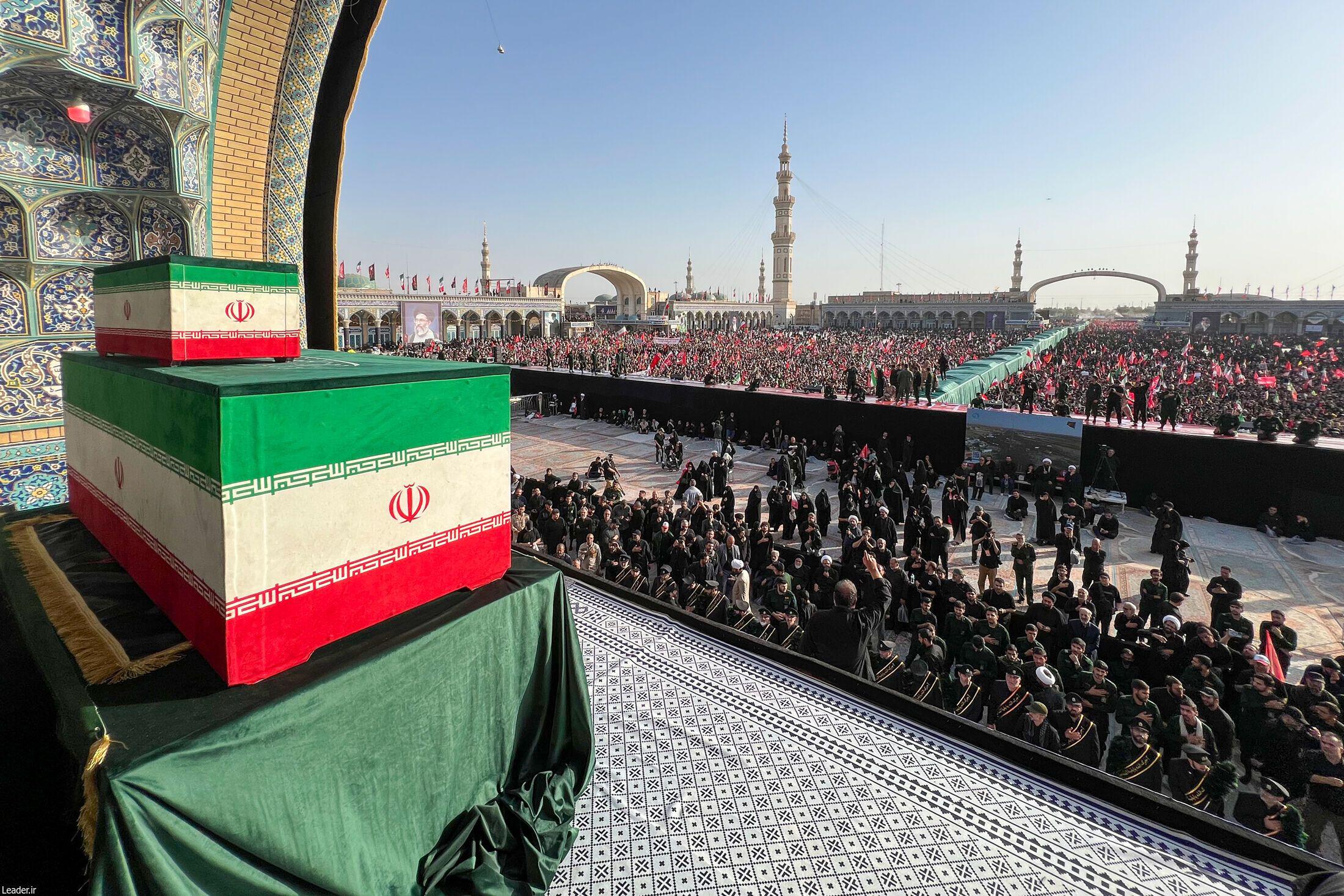
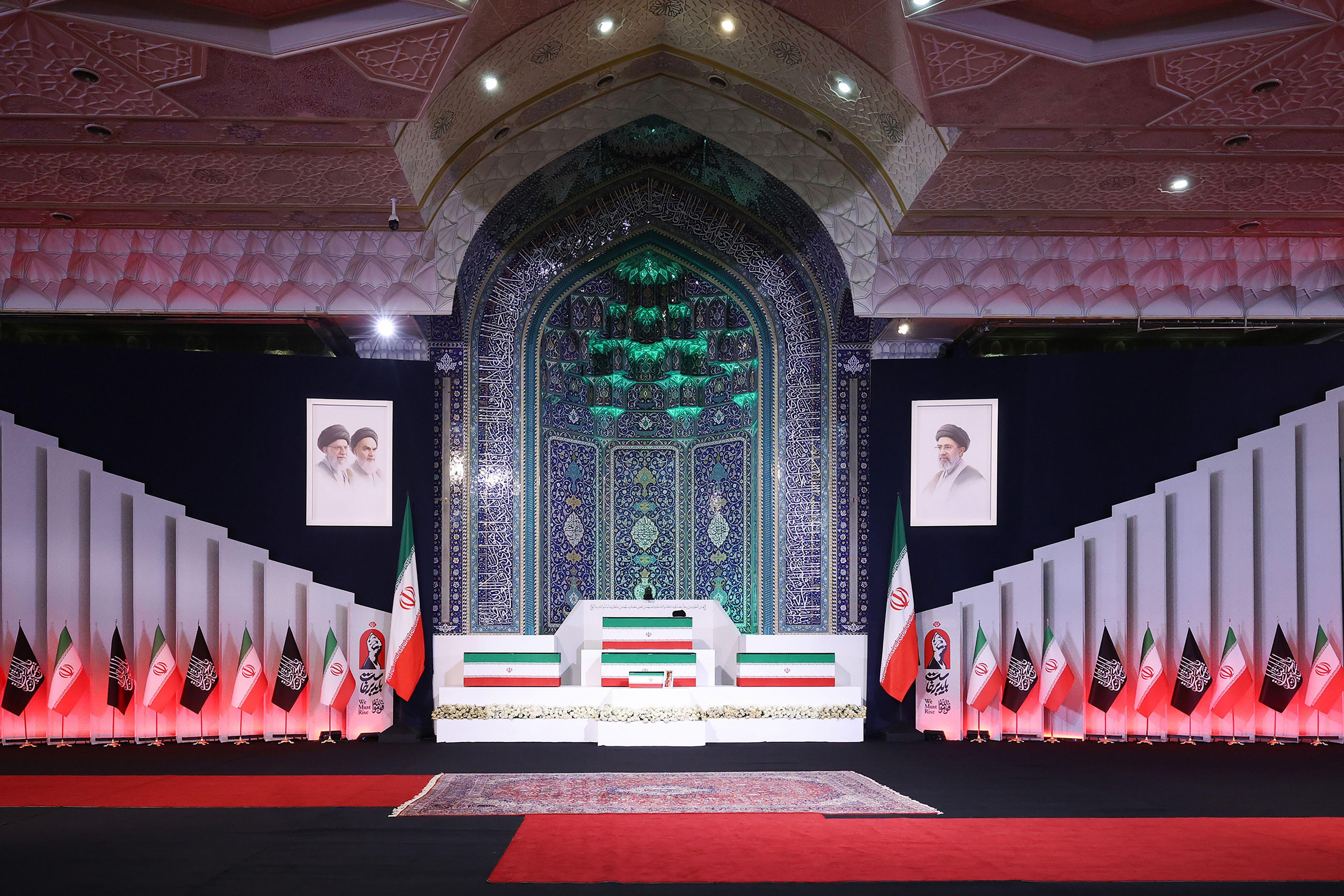
That same day, the Islamic Republic began the long-delayed state funeral of Ali Khamenei at Tehran's vast central prayer grounds. The regime's Health Ministry promised the world 15 to 20 million mourners. State media called it (as reported by TIME) a "referendum" for the Islamic Republic itself.
(Photos by ZUMA Press)
But look at what it took to produce those crowds. According to reporting compiled from Iranian state announcements: 11,000 buses were rerouted to Tehran and Mashhad from cities across the country — hundreds apiece from provinces across the map. The government arranged 50 million loaves of bread, prepared 5,000 mosques and 700 schools to house pilgrims, ordered grocery stores open 24 hours, and provided transportation, food, and lodging to attendees. When you have to feed, house, and bus in your own mourners, that is not grief. That is logistics.
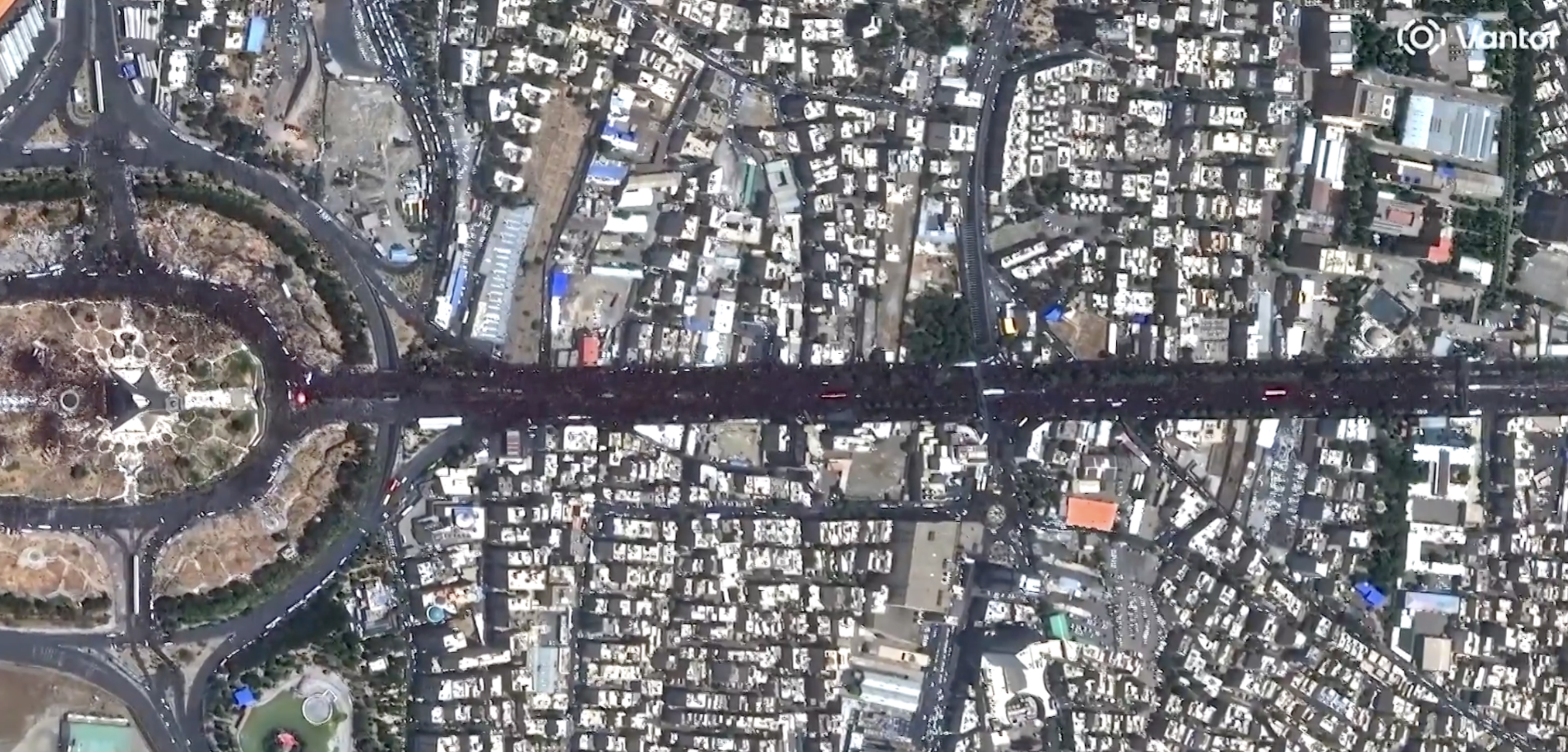
And the logistics went international. Per the compiled record of the coverage, 1.7 million Iraqis registered for a free trip to Iran for the funeral — free, as in paid for — with Iraq's shrine cities mobilized as staging grounds and Iraq's most powerful Shia cleric publicly welcoming the pilgrim traffic, per Iran's own IRNA. Inside Iran, the recruitment was just as explicit: Iran International reported the speaker of Iran's parliament publicly calling on Iranians to turn out for the funeral while vowing blood vengeance — a regime official campaigning for attendance at a funeral the way one campaigns for a referendum, which is precisely what state clerics had declared it to be. The choreography ran a full week, and Euronews billed it beforehand as Iran preparing the largest state funeral in history: the farewell processions in Tehran, then Qom on July 7th — where prayers began at 6 a.m. at the city's great mosque, led by one of the regime's most senior clerics, after Khamenei's body arrived the previous evening by helicopter, before the procession moved to Qom's holiest shrine. Then, on July 8th, the regime brought the coffin to the borrowed mourners directly: it crossed into Iraq, received at Najaf's airport by Iraq's prime minister with Iran's president in tow, as Iraqi authorities declared a national public holiday and processions wound through Najaf and Karbala — Shia Islam's holiest shrine cities — beneath the banners of Iran-backed militias, with crowds chanting "Death to America" along the route, per Reuters. The crowd arithmetic followed the pattern by now familiar: AFP described huge crowds, Al Jazeera's correspondent estimated hundreds of thousands, and an Iraqi security force claimed more than two million — pick your supplier, pick your number. Burial follows in Mashhad on July 9th. Aerial footage broadcast by Iranian media showed Qom's streets filled, with reports describing millions; Reuters' own headline from the Tehran procession told you what the loudest of those mourners came to say: they called for vengeance on Trump. Reuters has published satellite imagery of the processions, captured by the space-imaging firm Vantor, and we present those frames alongside this article; study them yourself, note which agency's caption claims which number, and judge the scale with your own eyes.
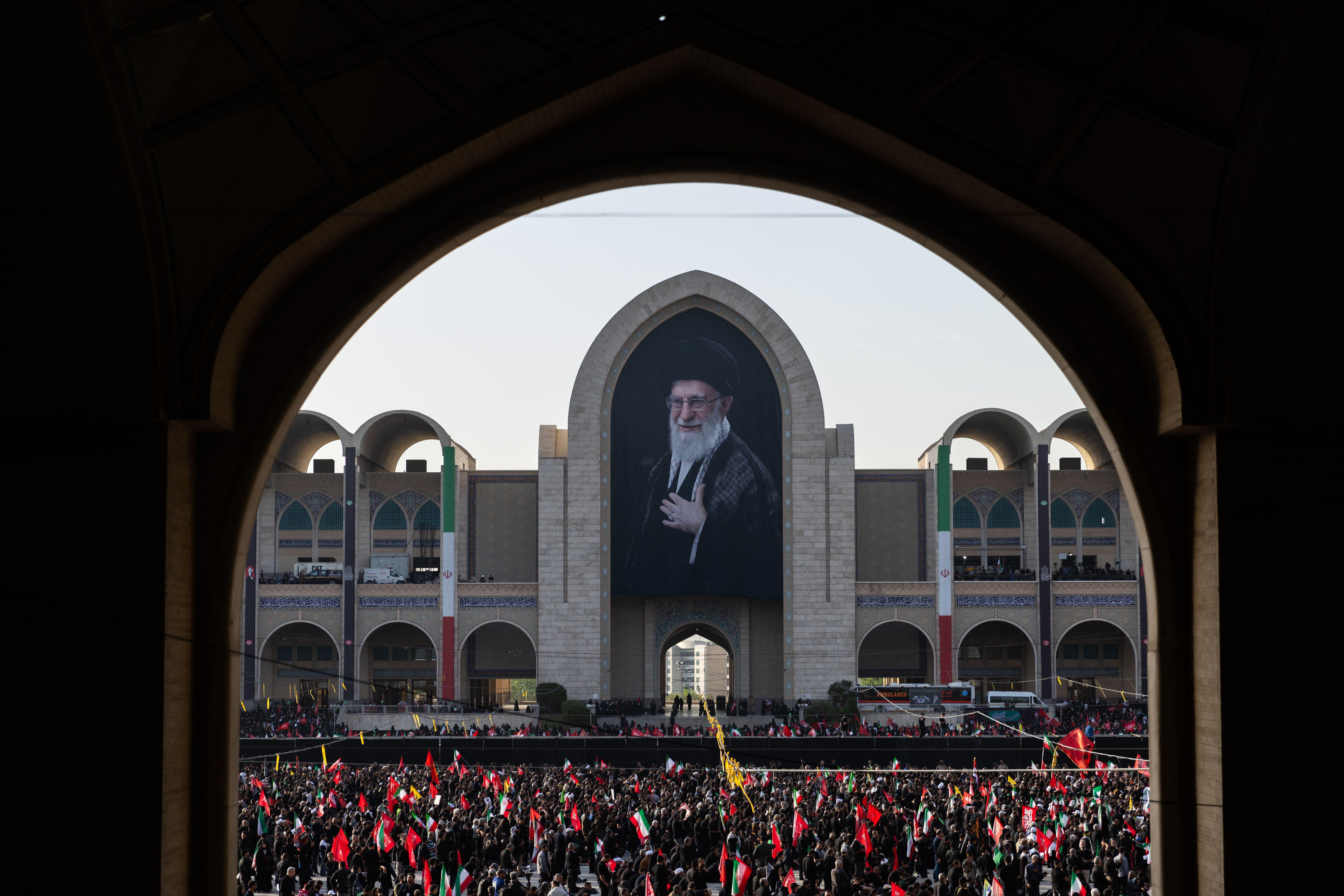
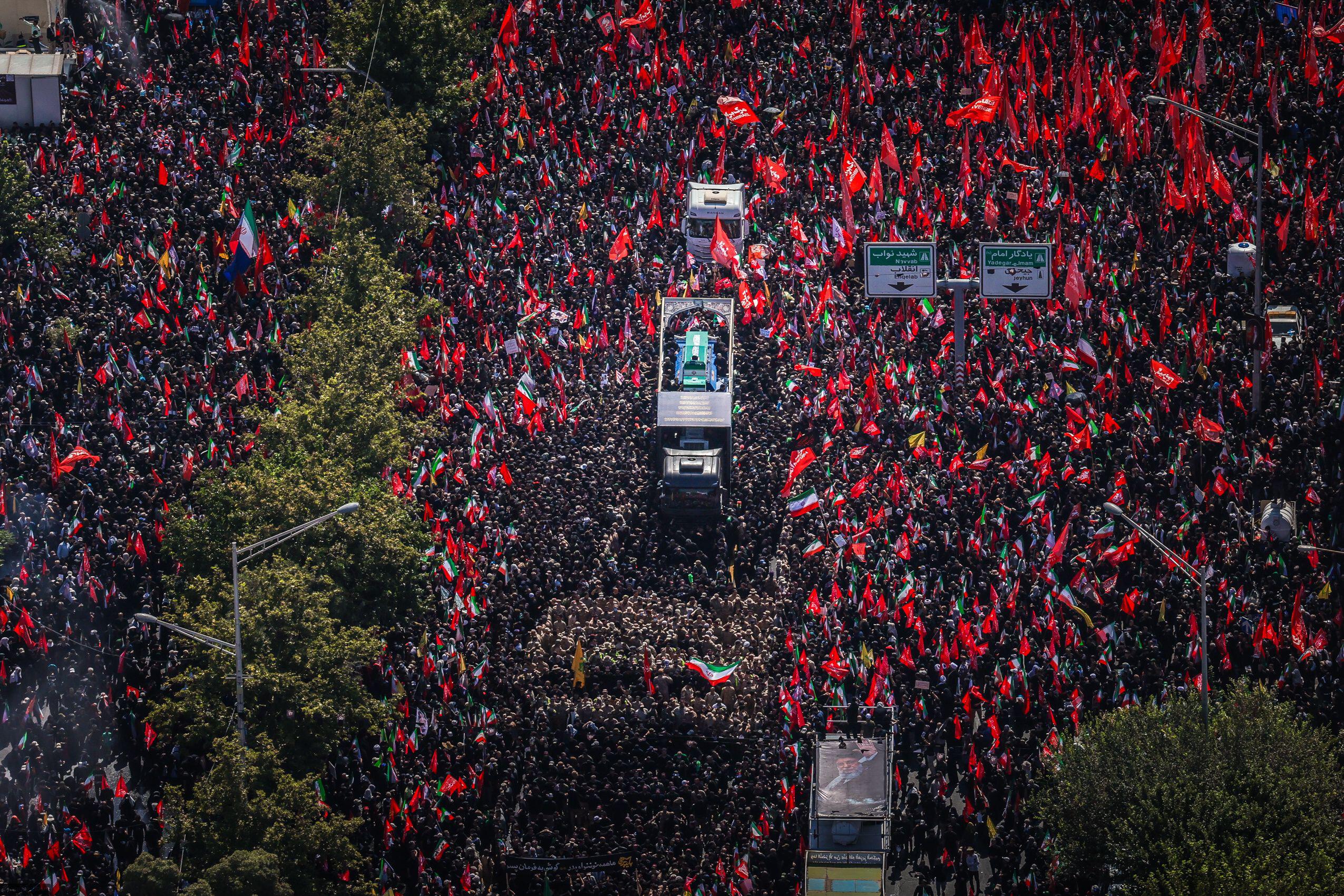
And study what the regime chose to put in those frames, because Monday's climax in Tehran was less a funeral than a 12-hour pageant of vengeance. A truck carried five coffins — Khamenei alongside family members killed in the February 28th strike — on a roughly 20-kilometer route to Azadi — “Freedom” — Square. Even the route became a scandal: NBC News reported it was modified because organizers misjudged their own crowd, while Iran International reported the opposite story from inside the regime — the IRGC’s Tehran commander apologizing for an abruptly shortened route after first denying any change had been made, a member of Khamenei’s own office admitting supporters felt misled, and Iranian social-media users charging that the route was cut to hide sparse turnout, with one calling the regime’s biggest legitimacy display a propaganda disaster. Trucks sprayed mist on mourners in 97-degree heat while organizers handed out flags and portraits, per Dawn. In one square along the route, mourners hanged an effigy of President Trump — the image captured by a Reuters photographer — while others carried placards bearing the faces of Vice President Vance, Defense Secretary Hegseth, and Prime Minister Netanyahu over the words "There will be blood," per Al Jazeera. Iran International documented worse: crosshair placards resembling assassination target lists bearing the faces of Trump, Senator Lindsey Graham, commentator Ben Shapiro, activist Laura Loomer, philanthropist Miriam Adelson, and investor Peter Thiel, captioned that sooner or later their heads will roll; a banner reading "Kill Trump – $100 Million Iranian Bounty" paraded before the coffin itself; crowds chanting that they didn’t want a deal, they wanted Trump’s head; and, in Tehran’s metro, supporters chanting death to the "foreign-backed" Pahlavi. A state-affiliated news agency released footage of a "stoning the devil" ceremony, the hajj ritual repurposed so mourners could pelt pebbles at Trump's image. CNN's correspondent on the route described an extremely charged crowd screaming "Death to America" — and observed plainly that the government had brought people out in force. A grieving nation buries its dead; this regime staged a hate rally around a coffin, on camera, with assassination bounties as processional banners and a ritual borrowed from the holiest pilgrimage in Islam aimed at a foreign president. That is not mourning. That is programming.
(Photos by ZUMA Press & UPI)
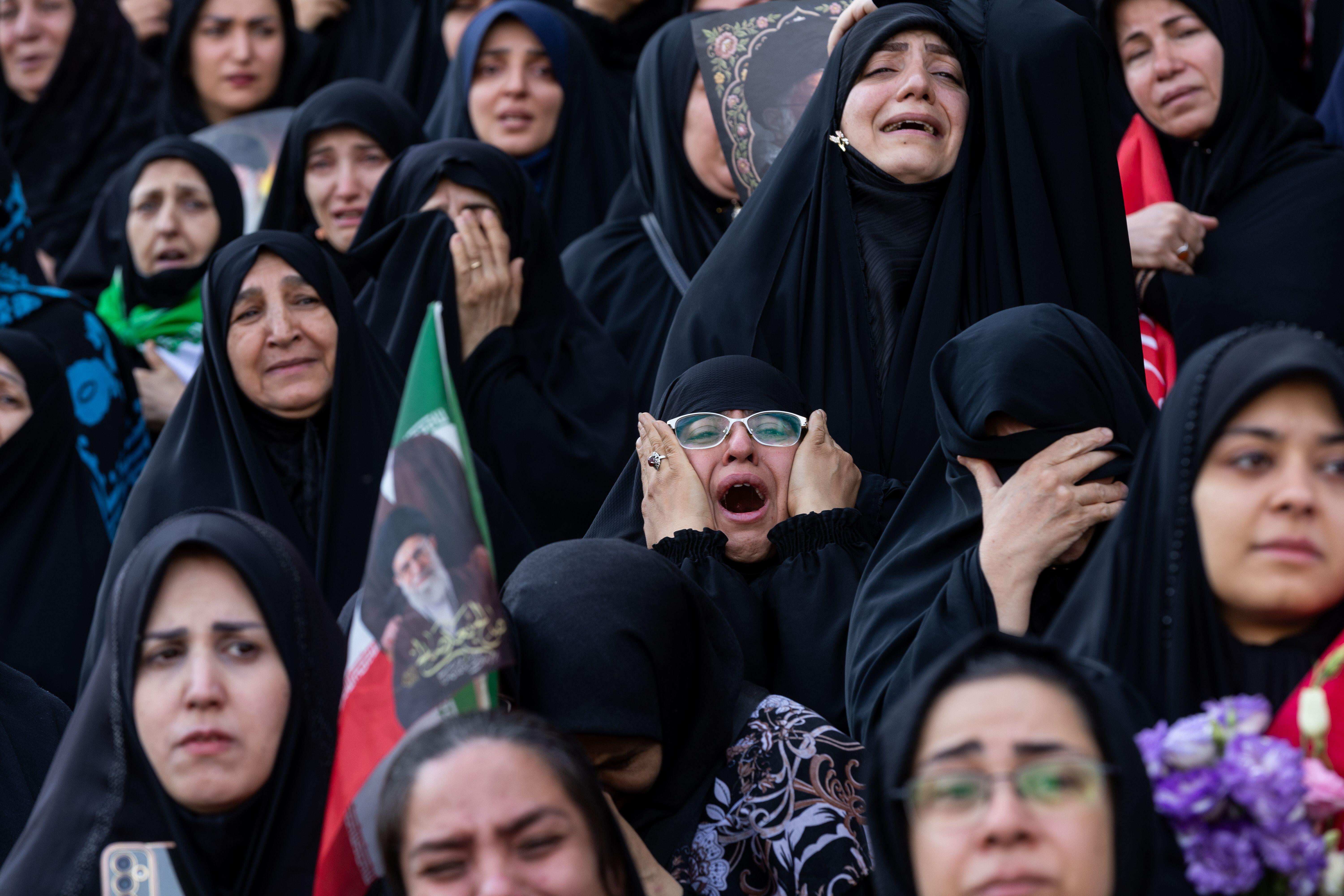
And even with all of that, the picture on the ground didn't match the propaganda. The BBC's own correspondent, reporting from the funeral itself on July 4th, said she had been told millions would attend — and admitted on air that she was quite surprised it was not as busy as she'd expected. Meanwhile, President Trump himself told Axios he was surprised there was any turnout of supporters at all, because he thought Iranians hated Khamenei — and by the Tehran procession, per the compiled coverage, he had sharpened the point, musing that "maybe they are fake tears." He also revealed the quiet geopolitics beneath the pageant: the U.S. could have struck the regime officials gathered at the funeral, he said, but then there would be no one left to negotiate with — so Washington paused negotiations and gave Iran its week to mourn. Israel's Defense Minister Israel Katz was less charitable; as the procession began, Haaretz reported him declaring that "the annihilator was annihilated" and threatening Khamenei's successors. Even the funeral's security depended on its enemies' restraint. He who buries a "martyr" under a ceasefire he begged for is not projecting strength.
(Photos by ZUMA Press)
And as this issue goes to press on July 8th — the funeral's fifth day, with the coffin still parading through Iraq — that restraint has already expired. On Tuesday, Iranian forces fired on three commercial ships in the Strait of Hormuz, per U.S. Central Command. Trump, attending the NATO summit in Turkey, ordered retaliation that same night: overnight strikes on more than 80 Iranian targets from sea and land — air defenses, command networks, coastal radar, and anti-ship missile sites — with Iranian media reporting explosions around Bandar Abbas, Qeshm Island, and the port town of Sirik, and two military bases hit in Bushehr province. Iran's own army took the rare step of publishing the names and ranks of eight air force and navy servicemen killed at Bandar Abbas and Bushehr. The IRGC answered with missiles and drones at U.S. bases in Kuwait and Bahrain, sending both Gulf states to their sirens; Washington, for good measure, revoked the license that had let Tehran sell oil openly on world markets. And Trump, asked at the summit about the interim agreement his administration signed just weeks ago, buried it in a sentence: "I think it's over. I don't want to deal with them anymore. They're scum," per NPR — adding, per CBS News, that U.S. forces would "hit them hard again tonight," and musing openly about electric plants, desalination plants, and Kharg Island. Iran's foreign minister declared the Americans had rendered the agreement's core elements ineffective; a regime security spokesman warned the Gulf states to watch over their oil wells, boasting that Iran has no red lines. Brent crude leapt nearly eight percent to $80 a barrel within hours. Hold the whole day in one frame: in Najaf, the regime paraded a coffin beneath militia banners chanting death to America; in the Strait of Hormuz, it shot at tankers; in Turkey, the American president tore up the truce it had begged for. The Islamic Republic spent six days staging grief for a man killed in a war it cannot stop losing — burying its "martyr" with one hand and reloading with the other. Even his funeral could not outlast the regime's appetite for the confrontation that killed him.
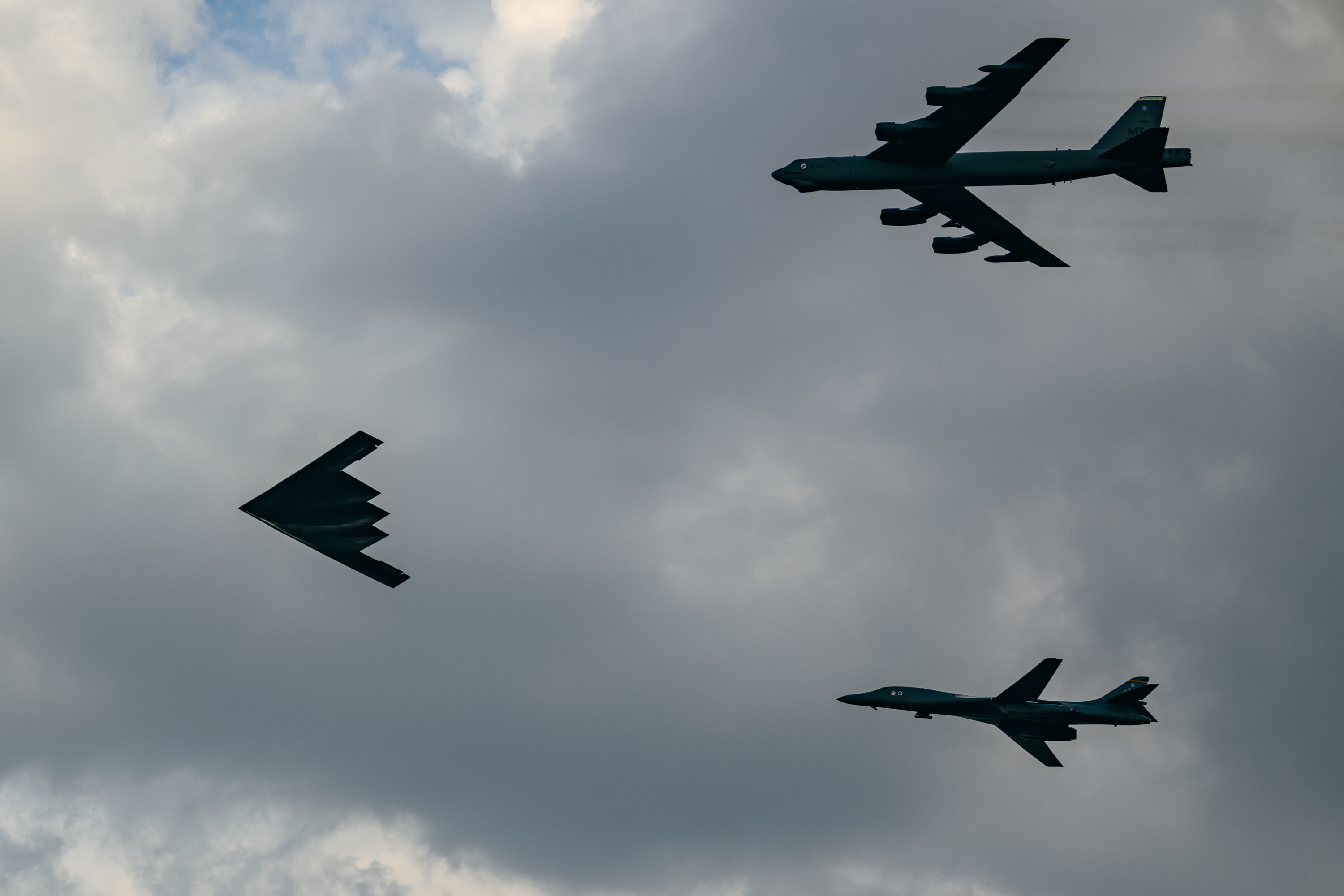
(Photo by Daniel Torok)
So what do the numbers actually show? Here is every figure on the record, and note who supplies each one. The regime's 15-to-20-million promise came from its own Health Ministry via its own semi-official agency. The Financial Times' estimate for the largest single event — Monday's Tehran procession — was 12 to 15 million, and Dawn's headline carried "authorities saying millions." Now set the wire services against that. Reuters-distributed photo captions described "thousands" filling the main prayer grounds on Sunday; CNN's live coverage noted live Reuters footage showing hundreds marching along the car-free streets. CNN's own correspondents at Monday's procession put the crowd at hundreds of thousands — a big crowd, genuinely — while reporting the fact that decides this entire argument: no official figures were ever released. The Washington Post, granted its first access to Iran since the war began only under a government-provided guide and interpreter, could report just that "millions attended, according to Iranian state media." The compiled account of the sourced coverage records "hundreds of thousands" attending the funeral overall. And The Jewish Chronicle blasted Western broadcasters for credulously recycling what it called the IRGC-supplied crowd figure of 20 million with no hint the number might be exaggerated. Here is the benchmark that exposes the arithmetic: Khomeini's 1989 funeral holds the Guinness World Record for funeral attendance at an estimated 10.2 million — one-sixth of Iran's population — and that figure, per CNN, came from official Iranian estimates too. The regime is now claiming Khamenei, a man whose death sent Iranians dancing onto rooftops, drew up to double the largest funeral in recorded human history. There is no independent count, because the Islamic Republic permits none — every foreign journalist worked under regime escort, and every camera pointed where the regime aimed it. The honest answer is that nobody knows the true number; the dishonest answer is the one printed on the regime's press releases.
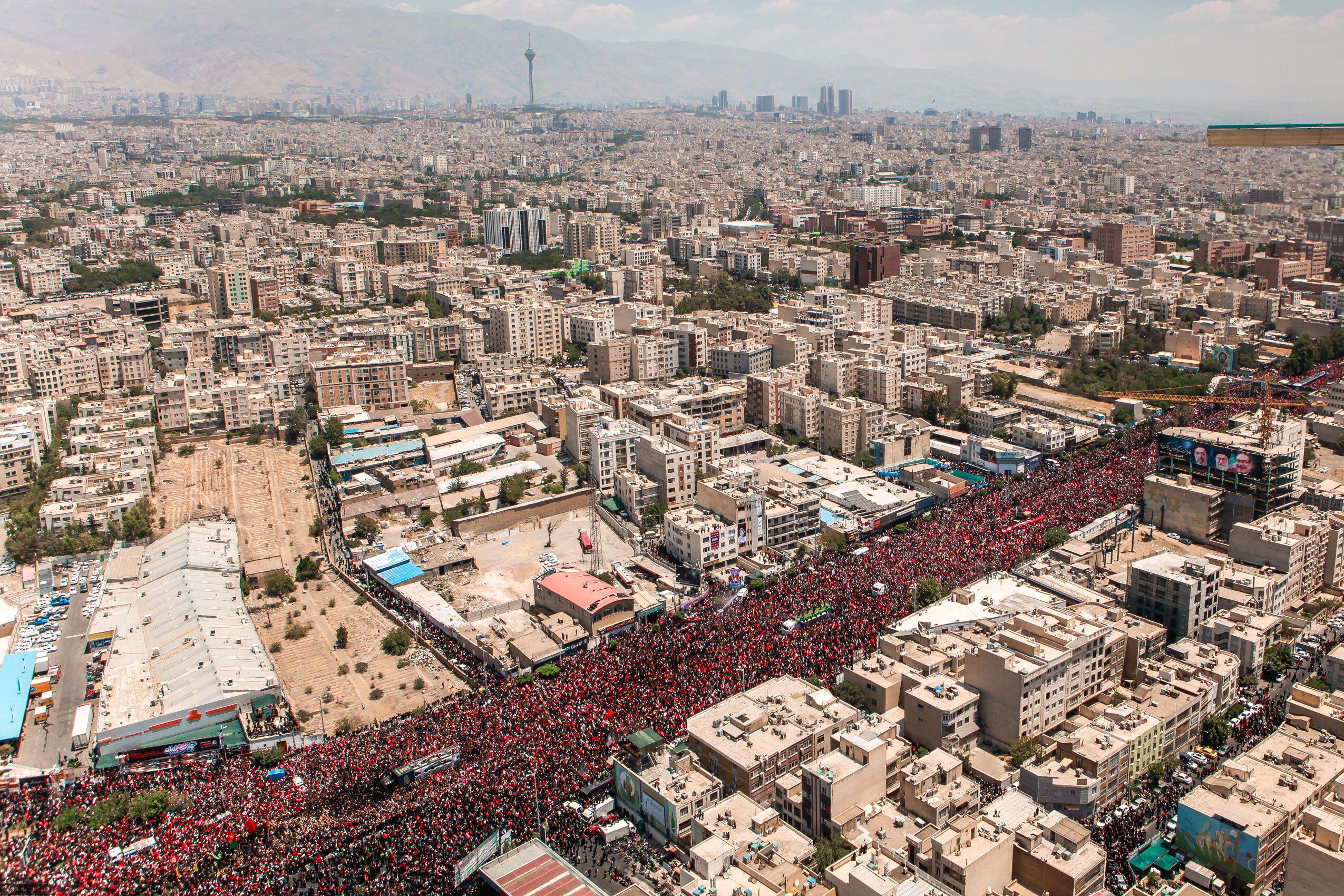
(Photos by ZUMA Press)
The regime padded the optics with imports. Pakistan sent its prime minister, its army chief, and its interior minister, per Al Jazeera and NPR. Delegations arrived from Hamas and Hezbollah. Regime-friendly clips flooded social media — WION reported on a Hindu priest in India's delegation whose viral speech praised Khamenei and boasted that Iran had brought America to its knees. And then there was the American. Jackson Hinkle — the pro-regime influencer whose résumé, per Ynetnews, already included mourning at Hezbollah chief Hassan Nasrallah's funeral in Beirut and taking the Houthis' main stage in Sanaa on Quds Day — flew to Tehran for the festivities, posting on July 4th that honoring Khamenei's life was "the duty of every American patriot." Days later, JFeed and Al Bawaba reported viral footage of Hinkle on stage at Tehran's Revolution Square, leading thousands of regime supporters in chants of "Down With The USA" — on the week of his own country's 250th birthday. The backlash was ferocious and crossed every ideological line: Fox News contributor Marc Thiessen called him a traitor; retired Air Force pilot Buzz Patterson dubbed him a Jane Fonda wannabe; commenters demanded his passport be revoked; even Nick Fuentes turned on him. The Jewish Chronicle noted the Iranians had flown in the usual suspects to perform enthusiasm for the cameras. This is who shows up when a dictator dies: proxies, clients, and clout-chasers. Notably absent? The regime's own new "Supreme Leader," Mojtaba Khamenei, who — per CNN and NBC News — has not shown his face or used his voice since February, skipping his own father's funeral.
What Iranians Actually Did When Khamenei Died
Here is the part the funeral cameras won't show you. When Khamenei's death was confirmed in February, Iranians poured into the streets — not to mourn, but to celebrate. Iran International documented the eruption in real time: residents leaning out of windows and gathering on rooftops shouting in celebration, motorcycles honking through Tehran, young people dancing in the streets of a western city where the regime had gunned down protesters just weeks earlier. Security forces were deployed, and footage showed them opening fire on celebrants in the streets. Think about that: the regime shot its own people for being happy.
Across the diaspora, the celebrations were everywhere. CNN reported spontaneous gatherings from Los Angeles to London outside Iranian embassies. OPB covered hundreds of Iranian-Americans in Portland dancing, singing, and waving the pre-1979 Lion and Sun flag — one organizer saying this was what they had been begging and crying for, for 47 years. The Nashville Banner covered Tennessee's Iranian community grilling kabobs and celebrating with a DJ booth draped in the Lion and Sun flag, with attendees crying tears of joy. Exiled Crown Prince Reza Pahlavi declared the beginning of the end of the Islamic Republic and called on Iranians to prepare for a decisive presence in the streets.
And inside Iran, even among those bused to the funeral, the grief was complicated at best. NPR spoke to a 32-year-old woman whose brother was killed by the IRGC during the December-January protests. Her verdict on the funeral: even in death, the Ayatollah torments them. That is the "referendum" the regime is holding.
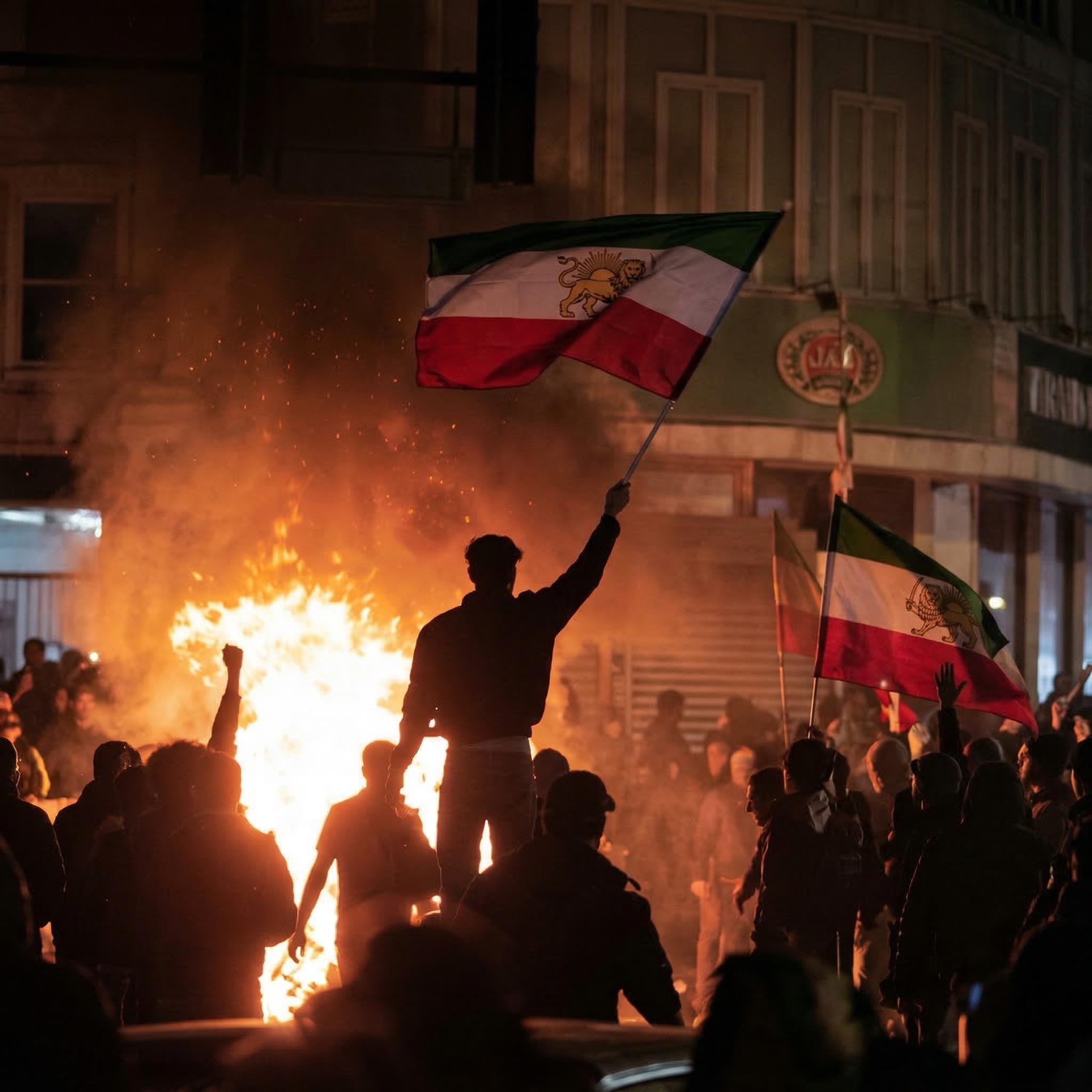
Let's be precise about what that crackdown was, because the numbers are the story. On the nights of January 8th and 9th, 2026 — two nights — the Islamic Republic carried out what Iran International's editorial board, after reviewing classified documents, field reports, and testimony from medical staff and victims' families, documented as the deadliest two-day massacre of street protesters in history: more than 36,500 Iranians killed. TIME magazine, citing two senior officials inside Iran's own Ministry of Health, reported the toll on those two days alone could reach 30,000 — so many dead that the state ran out of body bags and, per those officials, replaced ambulances with eighteen-wheel semi-trailers. The New York Times reported (via The Times of Israel) that Khamenei personally instructed security forces on January 9th to crush the demonstrations by any means necessary, with orders to shoot to kill and show no mercy. Amnesty International called January 2026 the deadliest period of repression in decades of its research on Iran; the UN Special Rapporteur said the toll may surpass 20,000; President Trump has now put a number on it twice himself — 32,000 in February, per CBS News, and then, at the NATO summit on July 8th, per Iran International: "They killed 54,000 people as of now that were protesting," adding that the reason Iranians haven't yet taken over their own country is that so many of those who tried are dead; and Crown Prince Reza Pahlavi told The Sunday Times that according to activists and medical authorities inside Iran, the total may approach 50,000. Even Khamenei himself, on state media, admitted "several thousand" were killed. Al Jazeera reported at least 230 of the dead were children — a figure the meticulous case-by-case verifiers at HRANA are still working toward, with thousands of deaths under review even now, because the regime's internet blackout was designed precisely to make the counting impossible. This — not the coffin, not the buses, not the bread — is the ledger the Islamic Republic carried into its July 4th funeral.
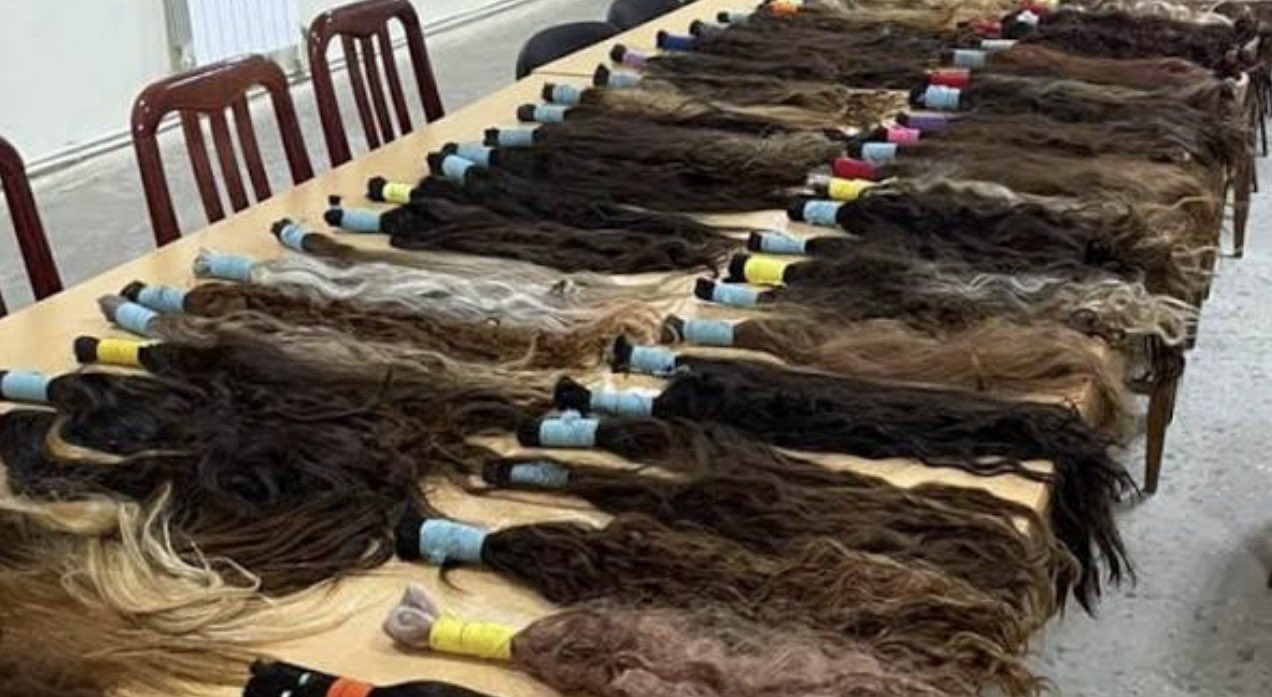
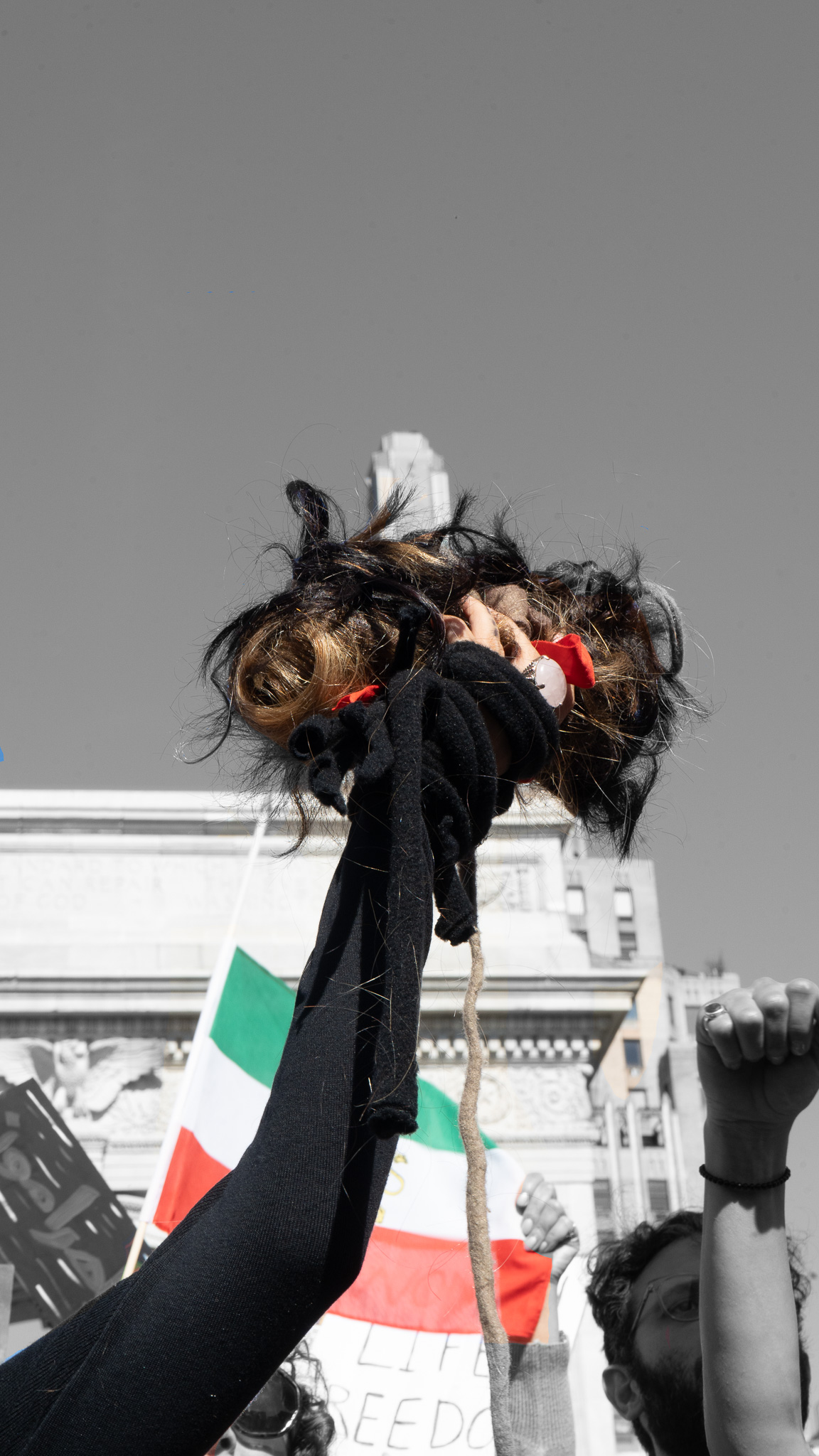
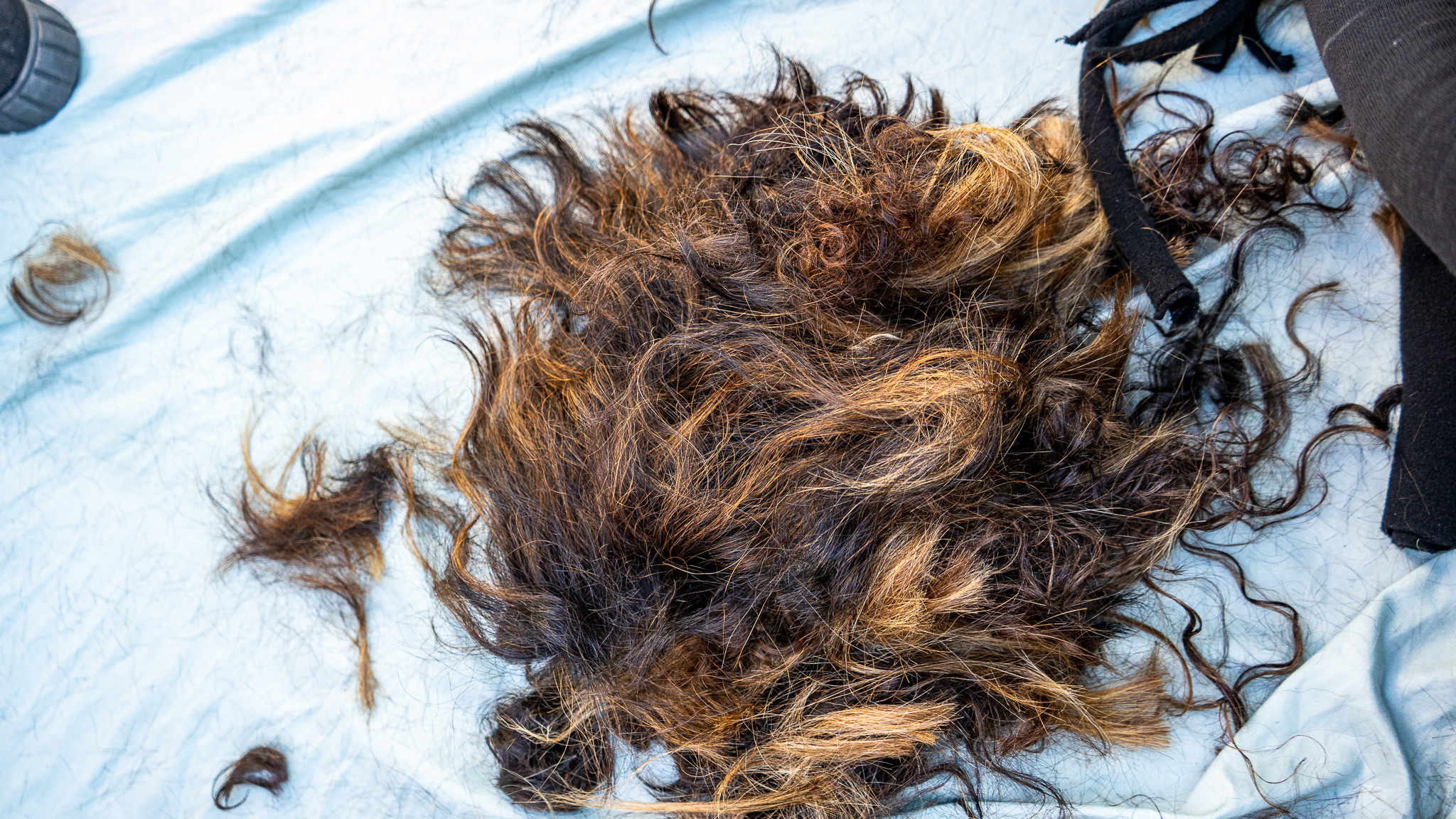
And the ledger has entries the world has barely noticed. In June, The Jerusalem Post reported that Armenian customs officers intercepted a shipment of Iranian women's natural hair at the border — 143 bundles weighing 26 kilograms, hidden inside pillows in the driver's carriage. This is not a rumor, a viral post, or an activist claim: Armenia's State Revenue Committee confirmed the seizure in an official statement, announcing that a protocol for violation of customs rules was drawn up against an Iranian citizen under Article 316 of Armenia's Law on Customs Regulation. And the committee disclosed something far more disturbing than a single bust: smuggling attempts of this kind have become frequent — eleven separate attempts since January, totaling 621 bundles and 135.7 kilograms of Iranian women's hair intercepted at the state border. Since January. Mark the month. Many Iranian activists immediately suspected the unthinkable: that the hair had come from women among the tens of thousands killed in the January massacres. Understand why that suspicion is even possible. This is a regime that, per the same Jerusalem Post report, practices enforced disappearances, secret executions, and the refusal to return bodies to grieving families — a regime that has forfeited any benefit of the doubt about what happens to the dead in its custody. The Post also quoted a former security director at Iran International, who offered the more likely explanation, and it is scarcely less damning: Iranian women driven by economic collapse to sell their own hair to survive. Iranian outlets Rokna News and Khabar Online had already documented the booming domestic hair trade, with women offered between two million and 100 million tomans for their locks — and Iranian media reported as far back as 2023 that citizens were selling kidneys, livers, corneas, and bone marrow to escape poverty.
(Photos by The New Persian Times)
Now remember what a woman's hair means in Iran, because the regime certainly does. In 2022, after the Islamic Republic's morality police killed Mahsa Jina Amini over how she wore her hijab, Iranian women stood on cars and in streets and on stages around the world and cut their hair — the defining image of the Woman, Life, Freedom uprising, an act of defiance seen by billions. Hair is the very thing this regime has spent 47 years policing, veiling, and punishing; women turned it into a weapon against them, and shearing it became a scream the whole world could see without translation. Four years later, that same hair is turning up in smuggled crates at a border checkpoint, converted into export weight. Sit with that fork in the road: either the regime's victims are being harvested, or the regime's economy has reduced its women to selling the very symbol of their resistance to survive. Both roads lead back to the same address in Tehran. What women once cut in defiance, the Islamic Republic's cruelty — through the barrel of a gun or the collapse of a currency — is now taking from them by the kilogram. His conclusion, per the Post, was that decades of the Islamic Republic's mismanagement and brutality have resulted in harm inflicted on a people who never elected it. This is the overlooked atrocity beneath the atrocity — the quiet commerce of a nation's despair, packed in crates at a border crossing while the regime spent 50 million loaves of bread on a funeral.
Contrast the regime's arithmetic of death with the man so many of those protesters were chanting for. In his recent interview with Tina Ghazimorad, published on his official Pahlavi Comms account, Crown Prince Reza Pahlavi said his sole aim is for this struggle to come to fruition with the least possible loss of life — that unlike the regime, for which it doesn't matter how many perish, "every human being who loses their life is truly painful for me," extending his sympathy to grieving families from Minab to Tehran. Minab: the city where, per Iranian state media reports carried by CNN, an airstrike killed over 150 girls at an elementary school. One side counts its dead as leverage. The other mourns every single one. That is the difference between a regime and a nation.
Team Mullah: The World Cup the Regime Couldn't Hijack
The dichotomy played out on the pitch, too. Iran's national team — Team Melli, or as I call it, Team Mullah — faced Egypt at Seattle's Lumen Field on June 26th in the final group stage match of the 2026 World Cup. The match ended 1-1, but in the 93rd minute, defender Shoja Khalilzadeh fired home what looked like the most famous goal in Iranian football history — a winner that would have sent Iran to the knockout stage for the first time ever. VAR ruled it out. Offside by the front half of a boot — ESPN reported the technology deemed that the front of Khalilzadeh's foot had strayed marginally beyond the last defender's line. Forbes ran a column arguing the call was so marginal it exposed a flaw in the offside law itself. Two days later, results elsewhere confirmed Iran's elimination.
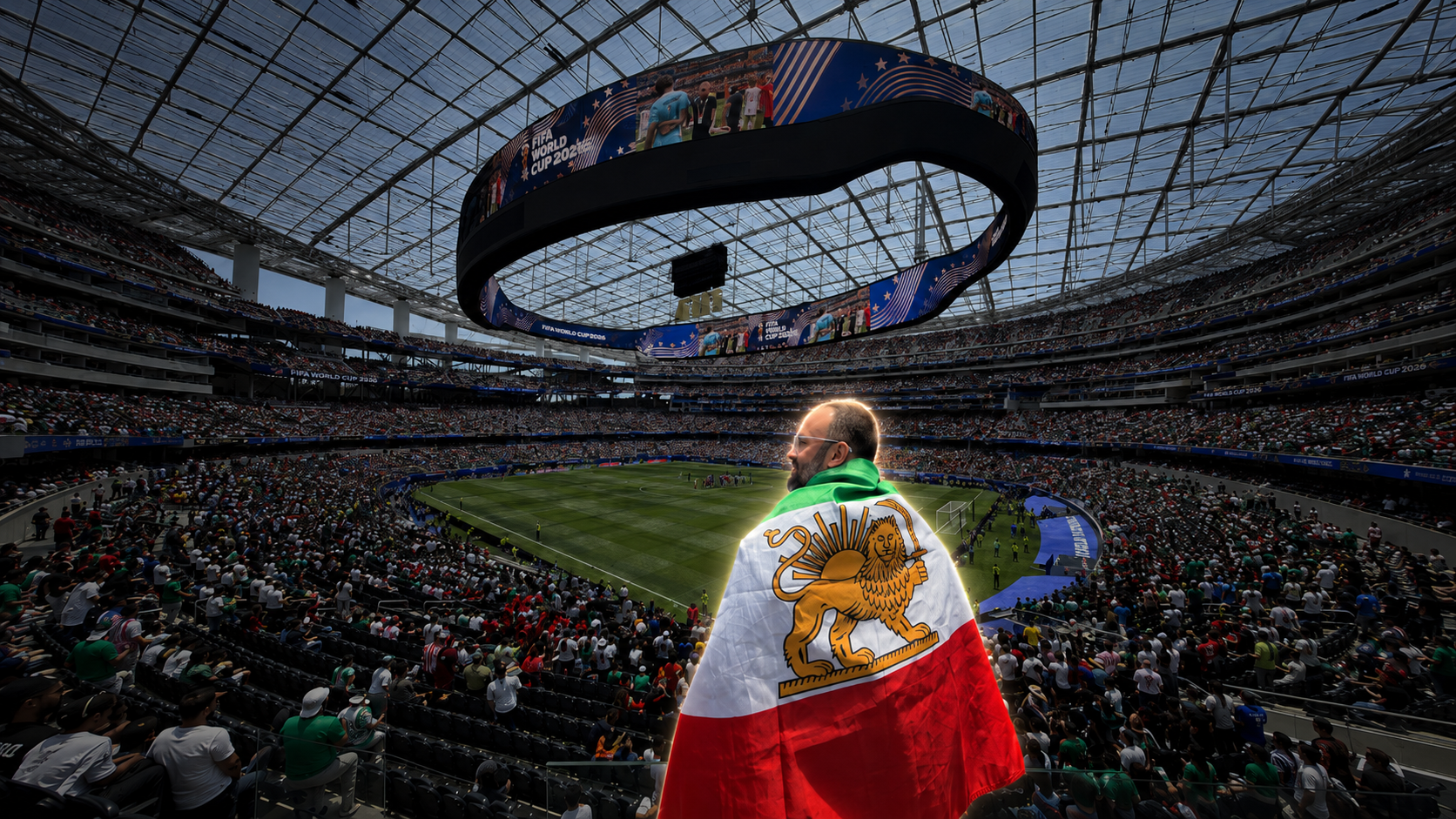
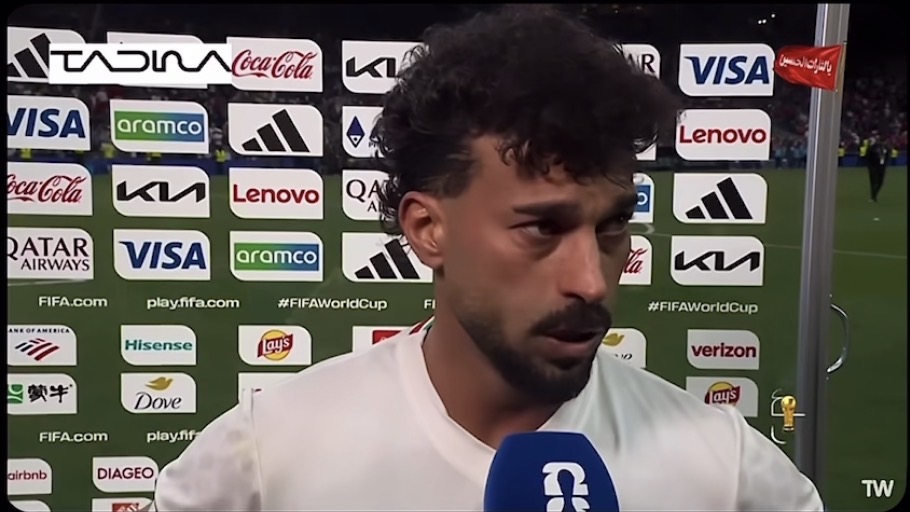
The tears flowed. Captain Mehdi Taremi, per The Hill and The Athletic, called it a "disaster World Cup" and lamented that no one helps — not FIFA, no one. Defender Ramin Rezaeian, who Yahoo Sports reported broke down in tears after the Egypt draw, addressed the nation on the team's return, apologizing to the Iranian people and calling them the most loyal and honorable.
And there was a ghost of history in the matchup itself. The last Shah of Iran, Mohammad Reza Pahlavi, rests to this day in a storied Cairo mosque — buried in the soil of the one nation that honored him in exile when nearly the whole world turned him away. Forty-six years later, it was Egypt that closed the door on the regime's team, while supporters of his grandson filled the streets outside the stadium waving the Lion and Sun. History does not repeat, but it rhymes — and this one rhymed in Persian.
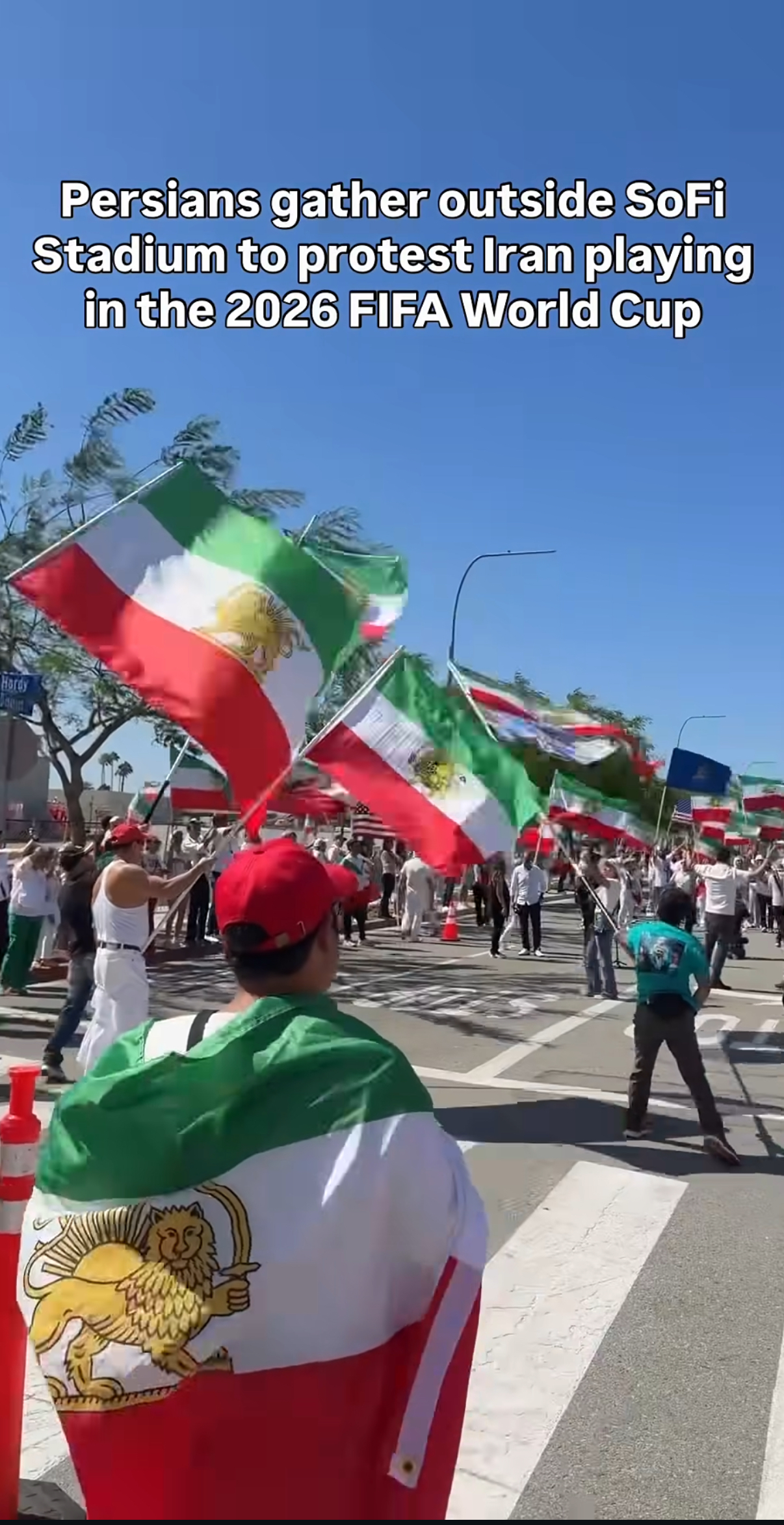
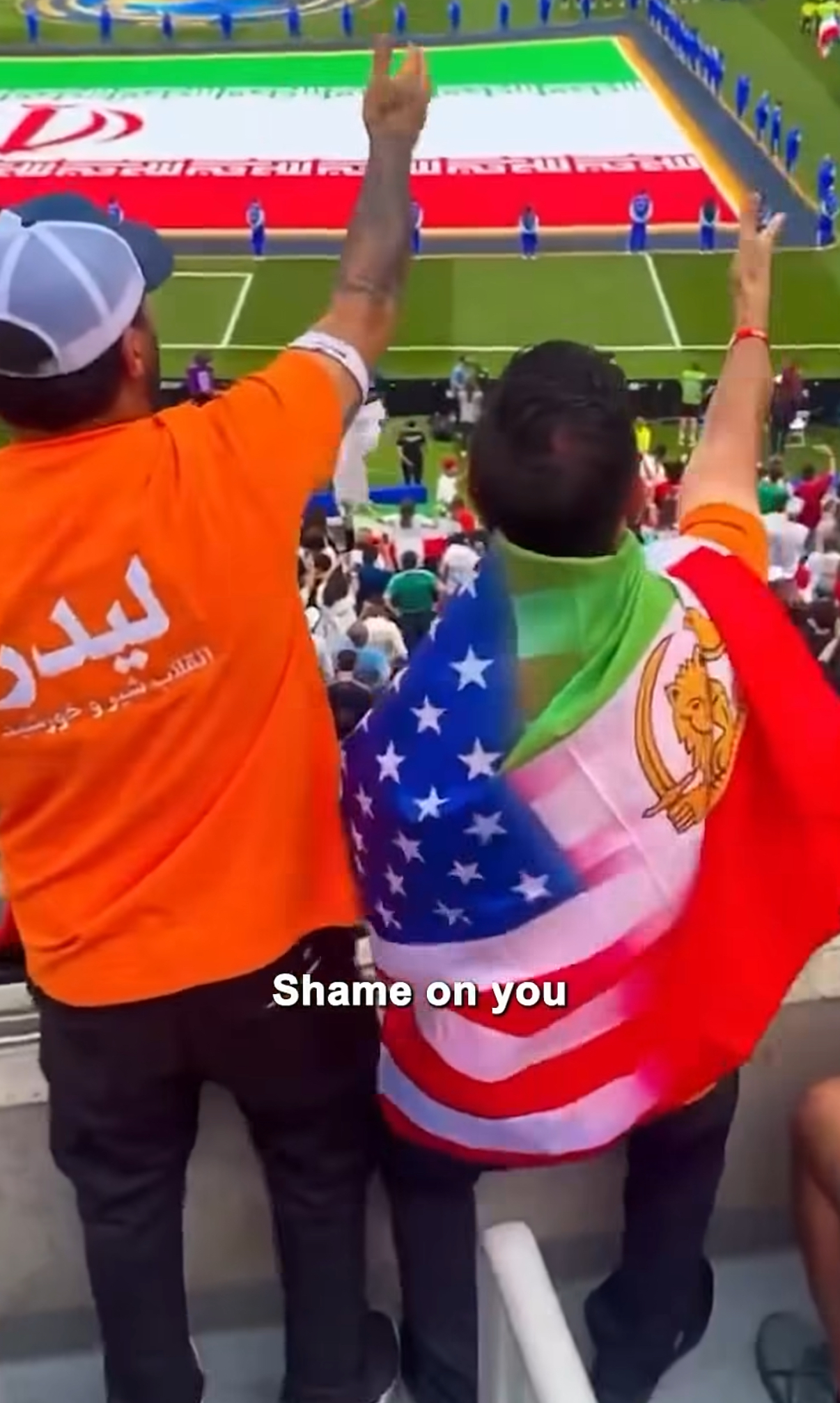
Here's the truth those tears can't wash away: the Iranian people were not behind this team. The evidence came from every corner of the media map. NBC News, covering the opener in "Tehrangeles," reported fans jeering the Islamic Republic's anthem while the pre-1979 Lion and Sun flag was sneaked into the stadium, waved outside the gates, and raised at watch parties across Los Angeles. The Conversation, in an academic analysis before the tournament, documented diaspora calls to boycott outright — buying tickets to leave seats conspicuously empty, booing the anthem, withholding celebration of Iranian goals. Al Jazeera reported plainly that for the second consecutive World Cup, Iran's team did not enjoy unified support from Iranians inside or outside the country — a direct consequence of the regime's slaughter of thousands of protesters, including at least 230 children per Al Jazeera's reporting (the human rights monitor HRANA, which verifies each death case by case, had confirmed dozens of minors by late January with thousands of additional cases still under review) — and noted significant numbers of Iranians in the Seattle stands waving pre-revolutionary flags and booing the anthem at the Egypt match, with hundreds of supporters of Crown Prince Reza Pahlavi taking to the streets outside Lumen Field in the hours before kickoff. In Los Angeles, demonstrators outside SoFi Stadium held a banner with the players' faces crossed out in dripping red ink reading "IRGC Team," while the student-run Corsair reported protesters — many carrying Pahlavi's portrait and the Lion and Sun flag — pointing directly at January 8th and 9th as the reason, with one calling it a massacre that could not be ignored. Left, right, mainstream, independent: they all saw the same thing. The stadiums became protests.
The verdict from inside Iran was just as blunt. After the elimination, Iran International reported a wave of messages from citizens telling the team it had lost the public long ago — one viewer telling Rezaeian, who had joined pro-regime gatherings after Khamenei's killing, that the team was eliminated the moment it turned its back on those who lost their lives. Another wrote that this was not a national team that represents the people, and that people were happier to see it lose. Add to that FIFA's own indefensible contribution: per Iran International, the historic Lion and Sun flag — the flag of Iranians, not the regime — was banned from all World Cup venues as "political," even as dozens of brave fans defied the ban and waved it across SoFi Stadium anyway. Remember that ban. It's about to become very relevant to New York.
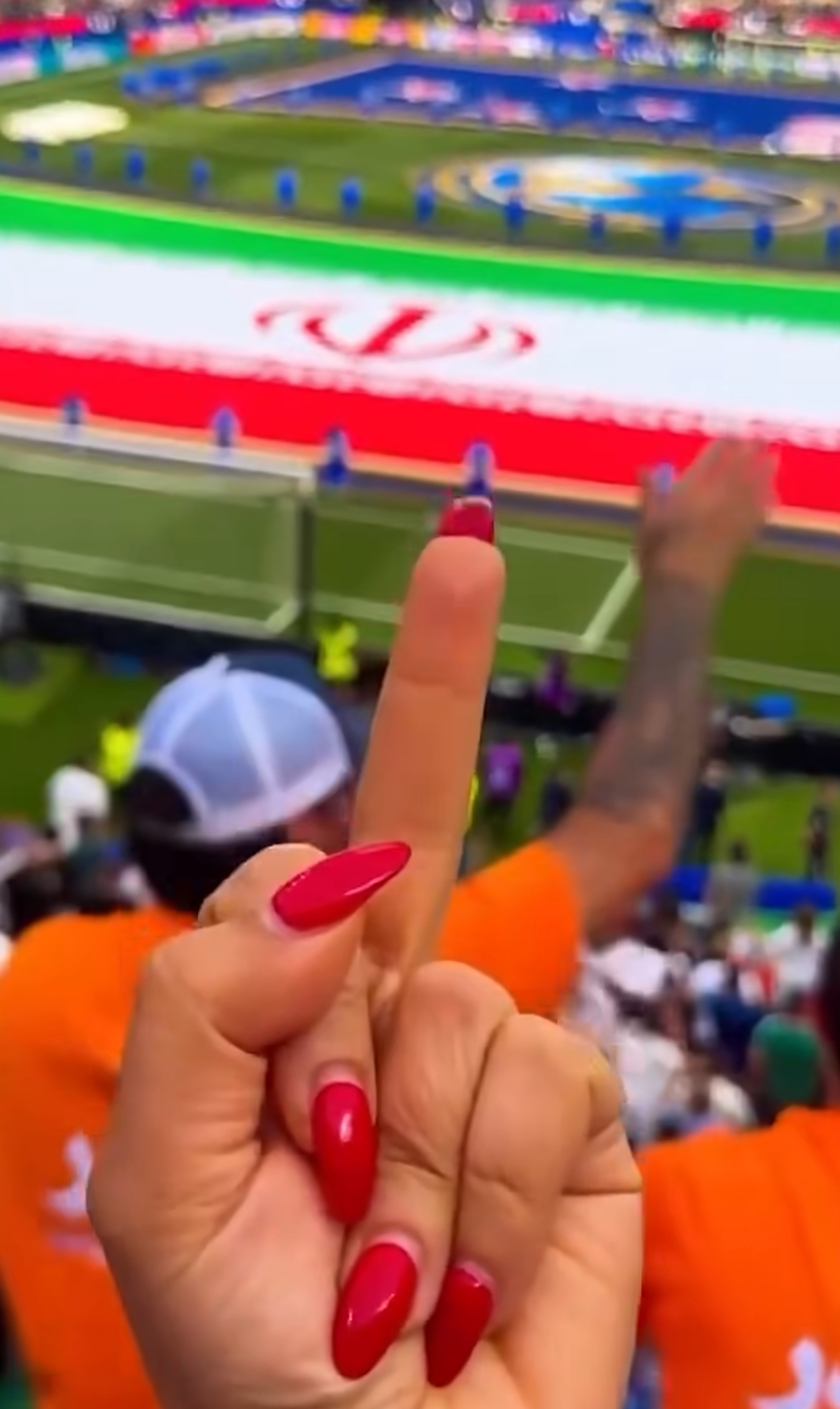
And who wasn't on the pitch? Sardar Azmoun — arguably Iran's most talented striker, 57 goals in 91 caps, and famously one of the players who risked everything to speak out during the Woman, Life, Freedom uprising. Al Jazeera reported he was expelled from the squad for a perceived act of disloyalty to the government, lambasted on state TV after posting a photo with Dubai's ruler during the war; the European outlet Gamereactor put it even more bluntly, headlining that Iran left out its best player over disloyalty to the regime. The regime cut its bravest player to protect its own ego — and went home without him, undefeated but eliminated, in the most Islamic Republic way possible.
Some Iranians will tell you the disallowed goal was a heartbreak. I'll tell you what many others quietly understood: a deep Team Mullah run would have been a propaganda gift to a regime drowning in the blood of its own people — a shiny distraction from crimes against humanity, waved in front of the world's cameras while families of murdered protesters were told to cheer. Even Washington saw through the charade: DHS Secretary Markwayne Mullin said openly he was happy Iran was out, noting per ESPN that nearly half of Iran's non-playing delegation had direct ties to the IRGC. Standing with the Iranian people — not the tracksuits of their oppressors — is what honor looks like. And people are noticing.
Meanwhile, in New York: The Veil Slips at Home
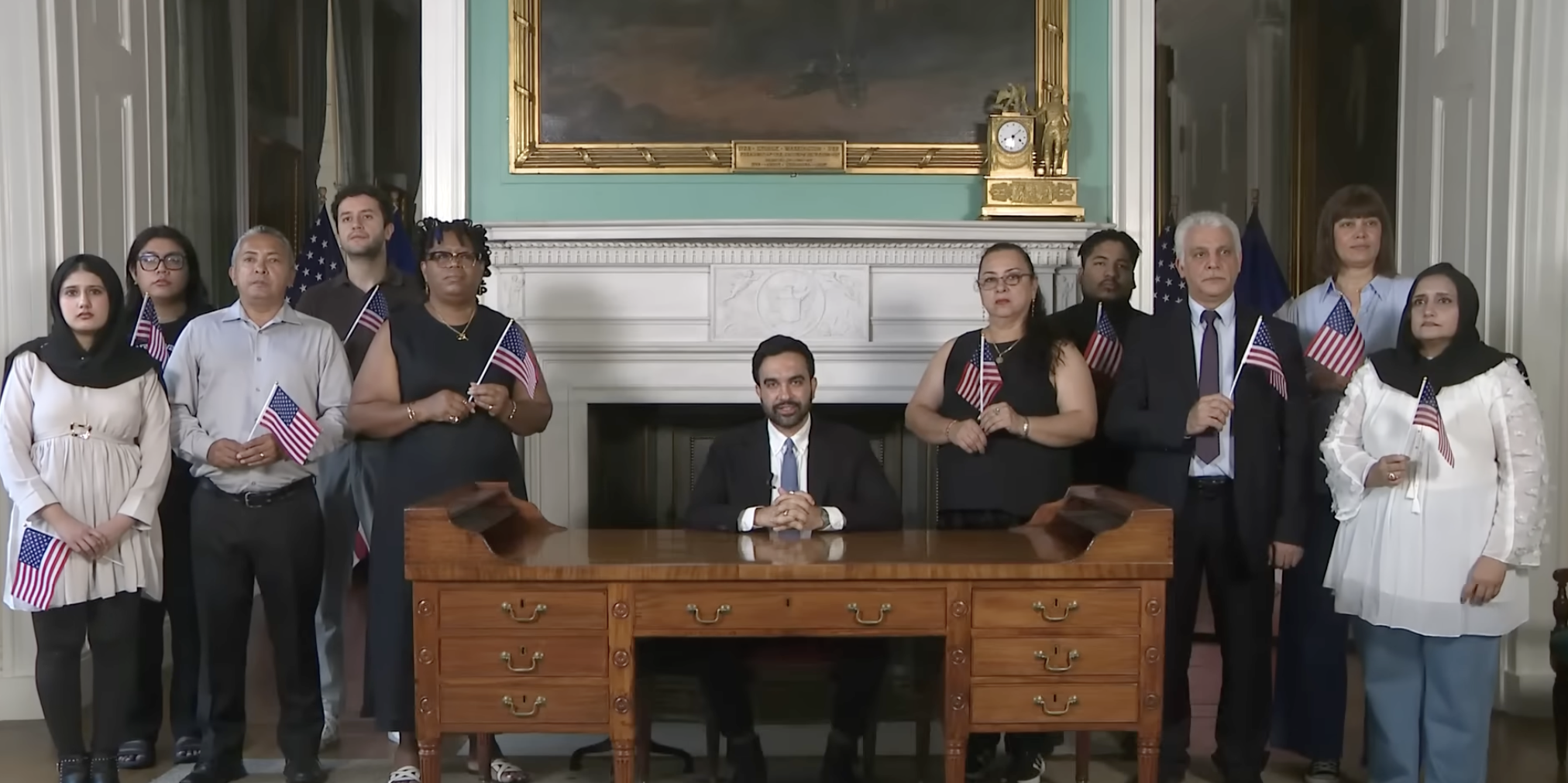
Which brings us home. On July 3rd, the eve of America's 250th, New York City Mayor Zohran Mamdani sat behind George Washington's actual desk at City Hall and delivered a 15-minute address describing America as — in his words, per multiple outlets — an arena of supremacy, a nation of masked agents terrorizing streets and oligarchs buying elections. The backlash was immediate and bipartisan-adjacent: the New York Post's editorial board blasted the speech as retelling American history as an unending parade of horrors; Elon Musk piled on, posting that Mamdani has built nothing and is a taker, never a maker (RedState); GOP gubernatorial candidate Bruce Blakeman called it a dark and vindictive appraisal of America (The Blast). By July 4th, Townhall reported, Mamdani's team was in full damage control, posting a suddenly patriotic follow-up about the privilege of being American. Too late. The mask had already slipped — from behind the desk of the man who founded the republic, no less.
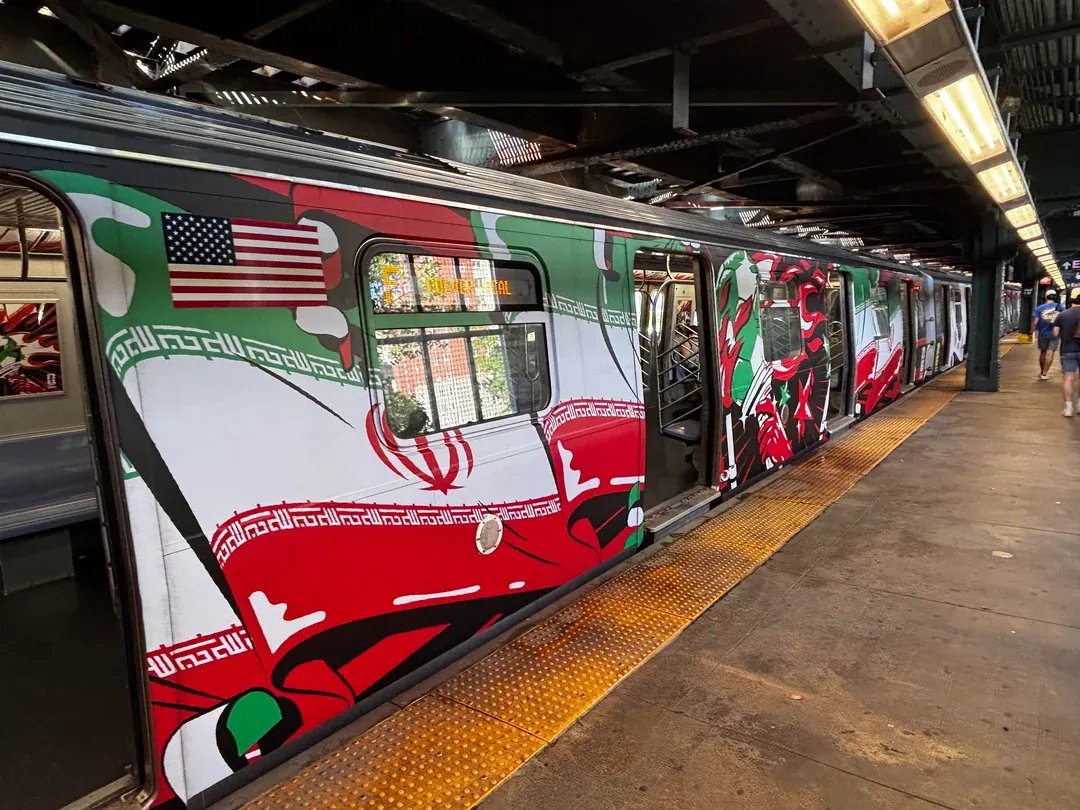
The speech wasn't even the weekend's most surreal New York image. That distinction goes to the F train: as fact-checkers at Lead Stories confirmed, an MTA subway car wrapped in the flag of the Islamic Republic of Iran rolled through New York City over America's 250th birthday weekend. Yes, it was part of a broader MTA World Cup campaign featuring all 48 competing nations — Mamdani himself promoted the wraps, telling Patch that a train carrying a nation's flag "tells a story about who we are as New Yorkers" — and the MTA, per Capitol Times Media, had no plans to remove it despite the backlash. But here is what no press office can explain away: that green-white-red emblem is not the flag of the Iranian nation. It is the brand of the machine that killed upwards of 30,000 people in two January nights. And remember FIFA's ban? The Lion and Sun — the flag Iranians actually claim as their own — was barred from World Cup stadiums as too "political," while the regime's insignia got a taxpayer-adjacent victory lap through Manhattan, 25 years after 9/11. Nobody in City Hall or at the MTA thought to pause and ask the obvious question. That silence is the story.
And what did New Yorkers get for their own semiquincentennial? The historic Times Square ball drop — the first in history held on a day other than New Year's Eve, per ABC7 — was stripped from the public. Fox 5 NY reported the America250 ball drop was converted from a public celebration into a "limited, ticketed in-person experience" inside One Times Square, a change that came days after Mamdani signed an emergency order allowing the city to deny permits for large-scale gatherings during the World Cup window. Former Mayor Rudy Giuliani, who presided over eight New Year's celebrations in that square, put it bitterly on X: the current mayor confined America's 250th to a small private event and wasn't there to celebrate it. A once-in-a-generation moment for the crossroads of the world — squandered behind a velvet rope. A regime flag rides the F train for free; New Yorkers needed a ticket to see their own country's birthday.
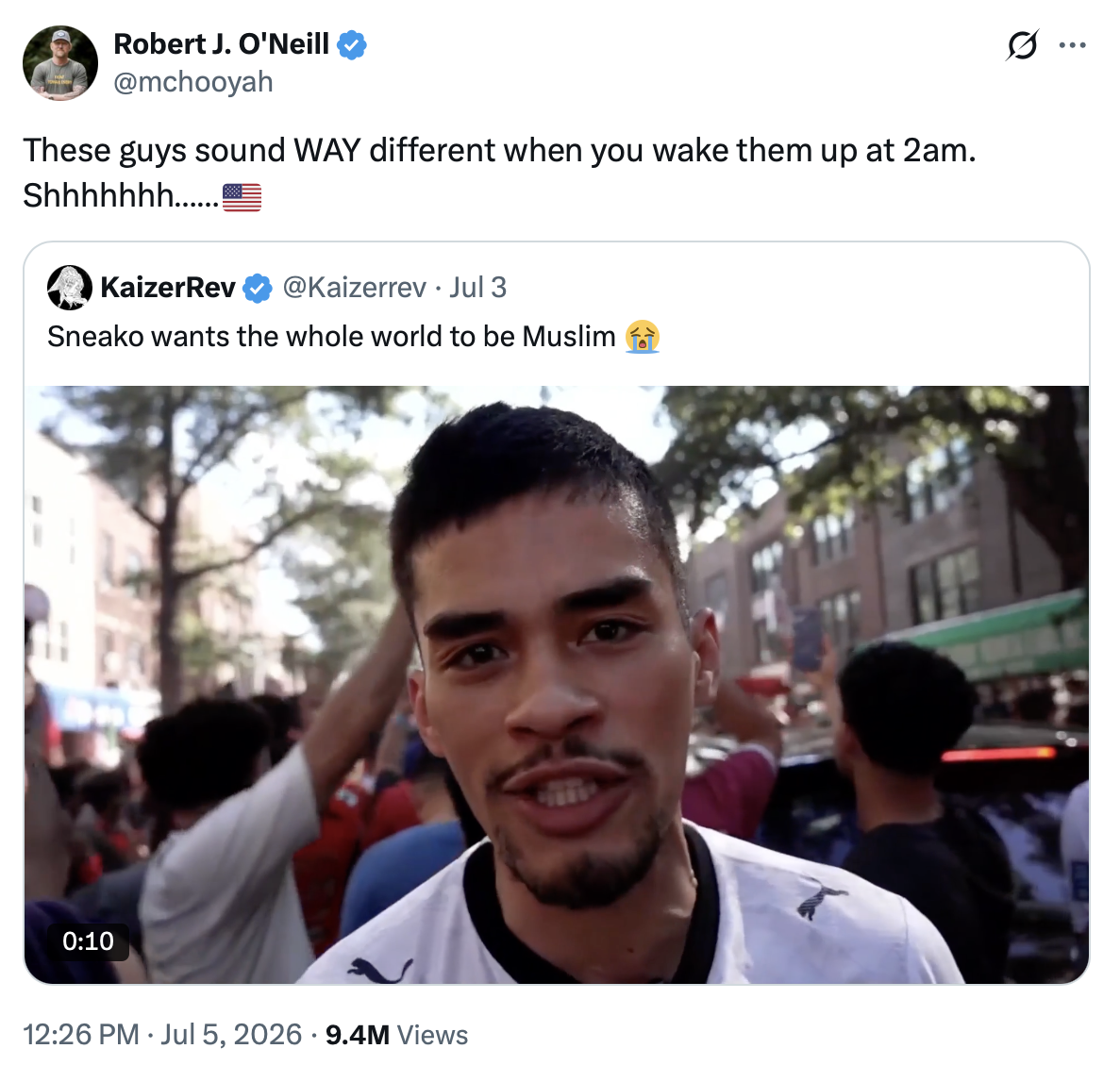
Days earlier, streamer Sneako gave the game away even more explicitly. Filming in Queens amid Egypt's World Cup celebrations, he declared — as covered by Alex Jones' outlet and circulated in viral clips — that this is the "Islamic Republic of New Yorkistan," that Islam will be in every household, and welcomed viewers to Mamdani's New York. He doubled down on July 4th itself. Alex Jones posted "Deport him NOW!" and Elon Musk publicly agreed. Robert J. O'Neill — the former SEAL Team Six operator who says he fired the shots that killed Osama bin Laden — fired back at Sneako directly on X: "These guys sound WAY different when you wake them up at 2am. Shhhhhhh...... 🇺🇸" The man who went into Abbottabad answering an American streamer cosplaying as a herald of the Islamic Republic: if that image doesn't tell you where we are, nothing will. The pushback didn't stop there — MMA Weekly reported that UFC heavyweight Josh Hokit lashed out at Sneako in defense of his Christian faith, with former middleweight champion Sean Strickland publicly applauding him.
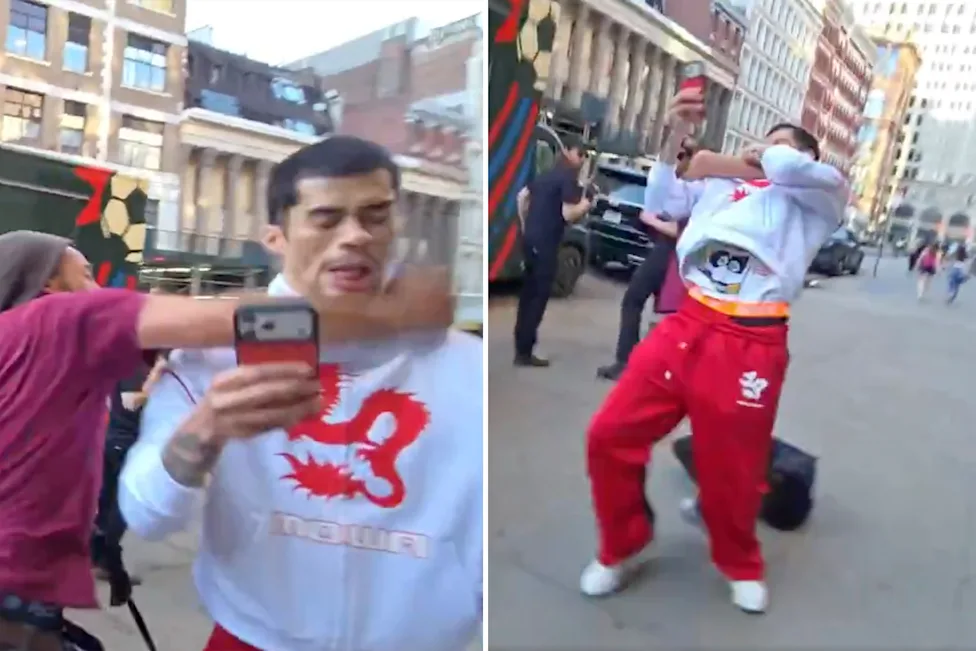
And who is this herald, exactly? His name is Nicolas Kenn De Balinthazy, and the strongman act does not survive contact with his own footage. In April, per Primetimer, he was punched in the face by an unidentified man in broad daylight on a New York City street — captured on his own livestream. His combat record consists largely of volunteering to spar professional fighters and absorbing beatings; Strickland, the former UFC champion now applauding his critics, famously battered him in a sparring session that lives forever online. And in June, his own former mentor Andrew Tate — the manosphere's supreme leader — turned on him in an on-camera video posted to X, claiming, per Primetimer, that Sneako's devotion was never ideology at all: "He tried to be me, literally be me. He was obsessed with me," Tate said, alleging the obsession was romantic in nature, that Sneako had made advances on him in Romania, and that his ostentatious public piety masked a private life Tate called completely haram. We report Tate's claims as claims — the man is hardly a sworn witness. But step back and look at what this whole spectacle actually is: a lonely young man performing dominance he cannot back up, wearing borrowed faith as a costume, worshipping whichever authority figure projects the most cruelty. That is not a bug in the Islamic Republic's brand of masculinity. That is the product. A regime of aging men who prove their strength by shooting unarmed girls, policing women's hair, and busing in their own mourners runs on exactly this psychology — hollow men performing power to conceal humiliation. Sneako didn't stumble into praising the Islamic Republic of New Yorkistan. He recognized his own reflection.
Understand what you just read. A streamer stood in an American city and named it after the very regime — the Islamic Republic — that Iranians have died by the thousands trying to escape. He used its name as a promise. To true Iranians, that phrase is not edgy content. It is the name of the machine that shot celebrants in the streets of Tehran in March, that killed children by the hundreds in January, that cut its best footballer for a photograph, and that had to bus in its own funeral crowd with 50 million loaves of bread.
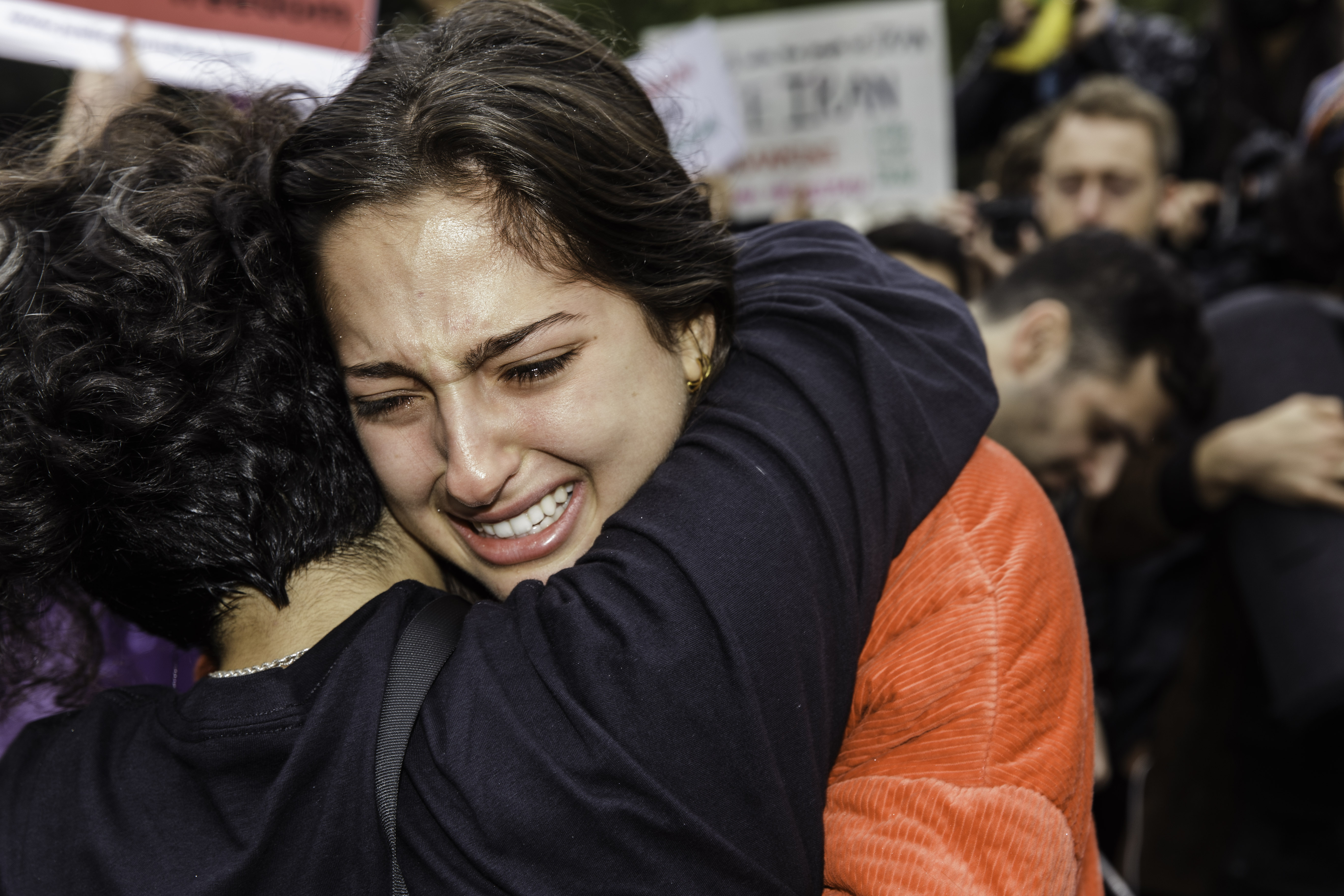
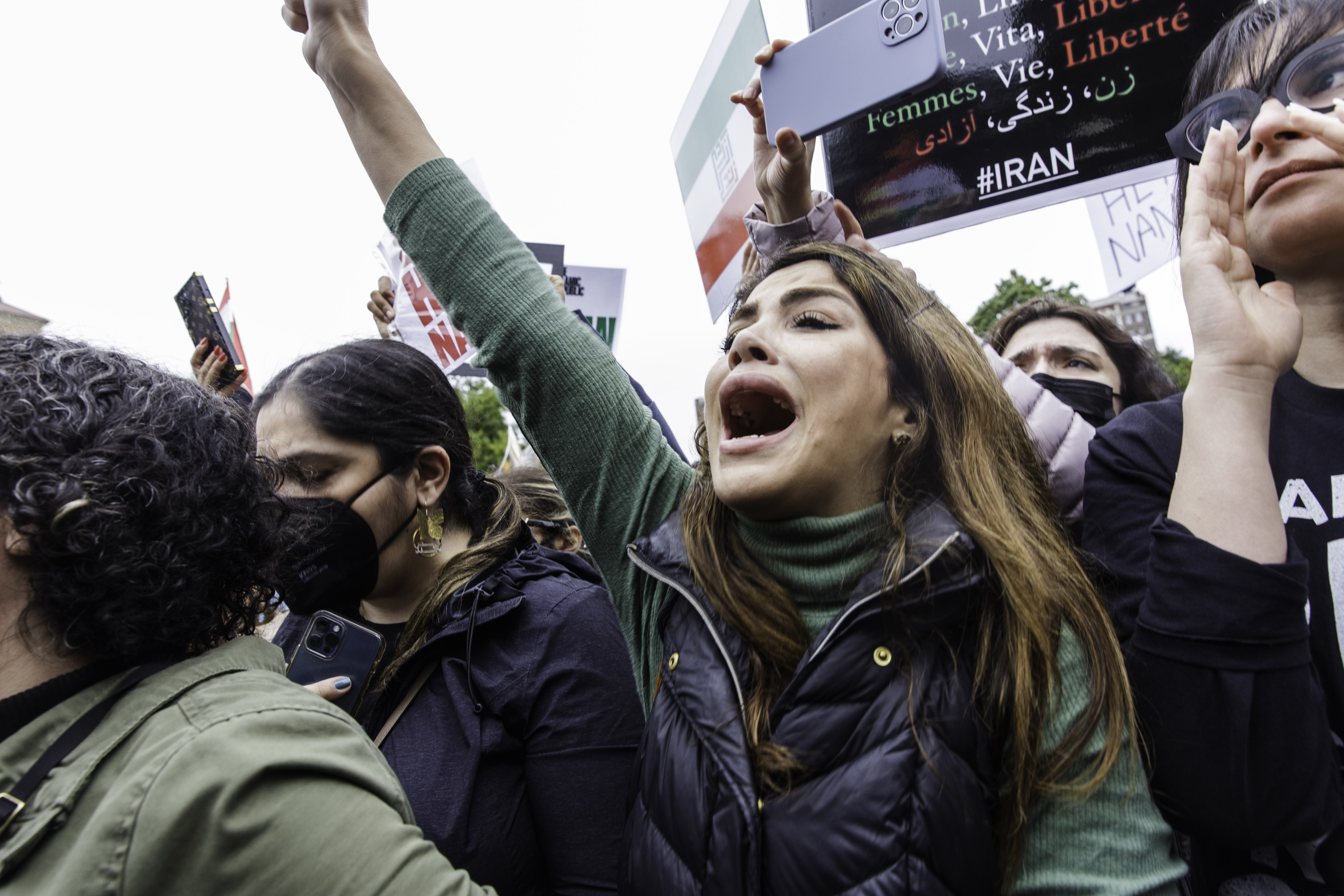
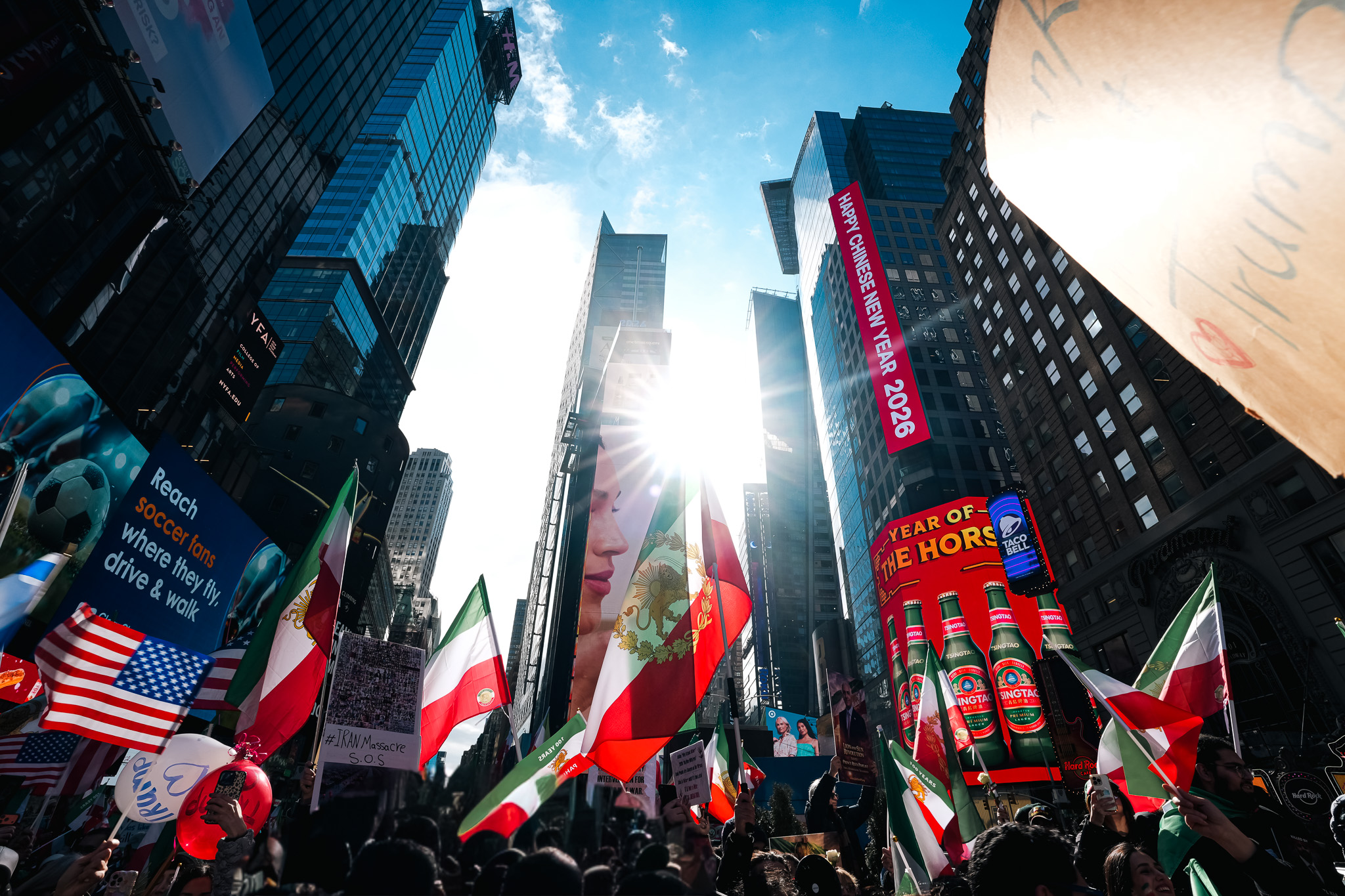
Now hold that image next to the other New York — the one Sneako's camera never finds. Since the war began, Iranian New Yorkers have been in the streets of this city again and again; NPR reported demonstrations in New York and Los Angeles as Iranian Americans rallied against the regime, part of a wave Iran International tallied at 168 protests across 73 cities worldwide. And look at what they carry. NPR's reporters on the ground described the Lion and Sun flying beside the American flag — and even the Israeli flag — while the compiled record of the diaspora rallies shows protesters worldwide making a point of pairing the Lion and Sun with the flag of their host country. In New York, they went further still: The New Persian Times' own footage (https://www.instagram.com/p/DVqjhN7Alue/) from the rallies shows Iranian demonstrators holding aloft the images of fallen American soldiers — honoring, by name and by face, the sons and daughters of their host nation who gave their lives. Think about the manners in that gesture. These are people whose relatives were gunned down five months ago, and still they raise the Stars and Stripes beside their own banner and carry America's fallen alongside their own — guests honoring the house that took them in, mourners who understand sacrifice recognizing it in others, binding their liberation to America's founding promise rather than setting themselves against it. That is how you carry two homelands with honor. Meanwhile, a man born and raised in this country stood in Queens and rechristened it after his hosts' enemy. The immigrants act like citizens; the citizen acts like an occupier's herald. New York has never needed a clearer picture of who actually loves it. And I will offer myself as the counter-example, plainly and on the record: I, Andy Alem, founder of The New Persian Times, was also born and raised in New York City. He spent his birthright on a stunt christening this city after a regime that murders women for their hair. I spend mine filming Iranians in these streets as they honor America's fallen, and publishing the truth about the machine he plays mascot for. This publication — every sourced word of it — is what a New Yorker's answer to the Sneakos of the world looks like. This city teaches everyone what freedom is worth. Only some of us were paying attention.
(Photos by The New Persian Times)
The Veil Is Falling
This is what Iranians inside and outside the country have been screaming for decades: the Islamic Republic is not a nation, not a faith, and not a culture — it is a predatory ideology with a state attached, and its proxies and apologists are not confined to the Middle East. They are in funeral delegations, in viral videos, in city halls, and on your For You page. The dichotomy of July 4th, 2026 made it impossible to unsee. One country's people ran back through security checkpoints in the rain to celebrate their freedom. The other country's regime had to bus, feed, and house a crowd — and shoot the people who celebrated the dictator's death instead.
We are sounding the alarm not out of hatred, but out of love — for both nations. Because here is the hopeful part, and it is genuinely hopeful: the Iranian people and the American people were never enemies. The pre-revolutionary flags waving in Seattle's stands, the Lion and Sun banners dancing in Portland and Nashville, the rooftop cheers in Tehran — and the Iranian New Yorkers marching through this city with the Lion and Sun in one hand and the American flag in the other — these are the sounds of a nation trying to come home to itself. Americans who watched their own 250th celebration should recognize that hunger instantly, because it is the same hunger that built their republic. The gap between Washington and Tehran was never between two peoples. It was always between a people and the regime standing on their necks.
The regime spent this week burying its dictator — and restarted its war before the coffin reached the grave. The Iranian people are still very much alive — and one day soon, inshallah as the regime's parrots love to say, they will throw a birthday party of their own. When they do, America should be the first guest at the door.
Appendix: Where the Sources Diverge
The New Persian Times believes readers deserve to see the raw disagreements between sources — including claims that cut against this article's framing — and draw their own conclusions. Here is the full spread on every contested point above.
How many mourned Khamenei?
- Attribution notes for this section: the claim that the funeral dates were chosen to coincide with July 4th is an allegation carried in the compiled coverage of the funeral, not a regime admission. The "referendum" framing was stated by Qom Friday prayer leader Ayatollah Mohammad Saidi, as reported by TIME. Names and specifics simplified in the text for readability: the Tehran venue was the Imam Khomeini Grand Mosalla; the rerouted buses included 400 from Qazvin, 500 from Central Province, and 274 from Sistan and Baluchistan; Iraq's staging cities were Najaf and Karbala, with cleric Muqtada al-Sadr welcoming pilgrims; the parliament speaker is Mohammad Bagher Ghalibaf; the Qom prayers at the Jamkaran Mosque were led by Ayatollah Javadi Amoli, with the procession ending at the Shrine of Fatima Masumeh; the Trump effigy was hanged in Imam Hussein Square; the "stoning the devil" footage was released by the state-affiliated Mizan agency; Pakistan's delegation comprised Prime Minister Shehbaz Sharif, Army Chief Field Marshal Asim Munir, and Interior Minister Mohsin Naqvi; the Indian delegation's viral speaker was pandit Vijay Kumar Sharma; the BBC's on-site correspondent was Nawal Al-Maghafi; the celebrating city where protesters had been shot weeks earlier is Abdanan; the Portland organizer quoted by OPB is Bahar Behboodi; the former Iran International security director quoted by The Jerusalem Post is Roger Macmillan; the protester quoted by The Corsair outside SoFi Stadium is Jupin Jamin; and the Shah's Cairo resting place is the Al-Rifa'i Mosque.
- Iran's Health Ministry (via the semi-official Tasnim News Agency): 15–20 million expected across the ceremonies — a figure the ministry did not explain how it calculated, per CNN.
- The Financial Times: an estimated 12–15 million at the July 6 Tehran procession, the largest single event. Dawn reported "authorities saying millions."
- Reuters-distributed captions (via WANA): "thousands" filling the Grand Mosalla on Sunday; CNN's live blog described live Reuters footage showing "hundreds marching" along car-free streets.
- CNN's correspondents at Monday's procession: crowds "easily numbered in the hundreds of thousands" — and CNN reported that no official turnout figures were ever released.
- The New Arab: estimated over 10 million gathered in Tehran.
- Iranian authorities' own projection for the final Mashhad burial (per CNBC): 8–10 million.
- CNN and NBC News, reporting from the ground: "hundreds of thousands" at the Monday procession; "tens of thousands" in the gender-separated mourning areas on Sunday. Wikipedia's compiled account of the coverage records "hundreds of thousands" attending overall.
- The Washington Post, reporting from Tehran only under a government-provided guide and interpreter: "millions attended, according to Iranian state media."
- BBC's Nawal Al-Maghafi, on-site July 4th: told millions would attend, said on air she was surprised it was not as busy as expected.
- The Jewish Chronicle: accused Western broadcasters of credulously recycling an "IRGC-supplied" figure of 20 million.
- Benchmark: Khomeini's 1989 funeral holds the Guinness World Record at an estimated 10.2 million — per official Iranian estimates (CNN).
- The July 7 Qom procession: Iranian media aerial footage showed streets filled, with reports describing "millions" — supplied, again, by Iranian media. No independent count.
- The July 8 Iraq processions (Najaf and Karbala): AFP described "huge crowds"; Al Jazeera's correspondent in Najaf estimated "hundreds of thousands"; an Iraqi security force claimed "more than two million." Iraqi authorities declared the day a public holiday, and Reuters reported Iran-backed militia banners over the procession.
- Turnout was actively manufactured: 1.7 million Iraqis registered for a free, paid trip to the funeral (compiled coverage), and Parliament Speaker Ghalibaf publicly called for turnout while vowing "blood vengeance" (Iran International).
- The Tehran route change: NBC News reported the procession route was modified because crowds were too large; Iran International reported the IRGC's Tehran commander apologizing for an abruptly shortened route after first denying any change, a member of Khamenei's office saying supporters "feel they have been misled," and social-media users charging the route was cut to conceal low turnout. Two irreconcilable explanations for the same event — readers may weigh an anonymous-sourced report against the regime's own on-record apology.
- Context cutting both ways: the government provided free buses, food, and lodging (NBC News) — but Al Jazeera, CNN, and The Washington Post also documented genuinely large, emotional crowds, including grieving families of soldiers killed in the war. Regime-organized rallies and authentic grief coexisted in the same crowd. No independent count exists, and none was permitted.
How many were killed on January 8–9?
- Iranian government's official count: 3,117 (announced January 21 by hardliners reporting to Khamenei, per TIME).
- Khamenei himself, on state media: "several thousand."
- An Iranian official to Reuters: over 5,000.
- HRANA (verified, case-by-case, as of February 5): 7,015 confirmed deaths, with 11,744 additional cases under review.
- A source cited in the UK Home Office country bulletin: at least 12,000 over the two nights.
- The Sunday Times (January 17): 16,500–18,000 killed, 330,000 injured.
- UN Special Rapporteur Mai Sato: at least 5,000 confirmed, possibly surpassing 20,000.
- A report to Iran's own parliamentary National Security Committee (per Iran International): over 27,500.
- TIME, citing two senior Health Ministry officials: up to 30,000 on January 8–9 alone.
- President Trump (February 20, per CBS News): 32,000 killed in the crackdown — no source offered for the figure.
- President Trump again (July 8, at the NATO summit, per Iran International): "54,000 people as of now" — again without a stated source; note his own figure grew by 22,000 between February and July.
- IRGC internal reports (per Iran International's sources): 33,000–36,500.
- Iran International editorial board, from classified documents: more than 36,500.
- Reza Pahlavi, citing activists and medical authorities (via The Sunday Times): approximately 50,000 total.
- Why the spread? The regime cut the internet and phone lines on January 8th, posted security forces inside hospitals, and pressured victims' families — every independent counter says its number is a floor, and the regime says everyone else's is a lie. Its Foreign Ministry called TIME's report a fabrication. You now know everything we know.
How many children?
- HRANA (verified as of late January): 42 minors confirmed, thousands of total cases still under review.
- Al Jazeera: at least 230 children among the dead.
Did the former presidents attend?
- AFP (via Arab News and Al Jazeera): none of President Pezeshkian's surviving predecessors — all of whom had tense relations with Khamenei — had been seen at the ceremonies.
- Dawn, citing local Iranian media, and The Jerusalem Post: former President Mahmoud Ahmadinejad was seen attending the Tehran procession.
- Even the regime's show of unity, in other words, cannot be independently confirmed down to who stood in the crowd.
Where did the smuggled hair come from?
- Officially confirmed by the Republic of Armenia's State Revenue Committee, in a public statement quoted by The Jerusalem Post: customs officers seized 143 bundles (26 kg) of natural hair hidden inside pillows in a driver's carriage, filing a customs-violation protocol against an Iranian citizen under Article 316 of Armenia's Law on Customs Regulation. The committee further confirmed 11 separate smuggling attempts since January, totaling 621 bundles / 135.7 kg intercepted at the state border.
- Figure discrepancy to note: World Israel News put the cumulative intercepted total at "over 160 kilograms"; the Armenian committee's own confirmed figure is 135.7 kg. We defer to the government's number.
- Iranian activists' suspicion: that the hair came from women killed in the January massacres — a fear fueled by the regime's documented enforced disappearances, secret executions, withholding of victims' bodies, and decades of family accusations regarding organ harvesting from prisoners.
- Former Iran International security director Roger Macmillan's assessment (per JPost): more likely sold by living women out of economic desperation — a practice witnessed in prior periods of economic turmoil, and consistent with Iranian outlets Rokna News and Khabar Online documenting a growing domestic hair trade, plus earlier Iranian media reports of citizens selling organs to escape poverty.
- What is not in dispute: the seizures are real and government-confirmed, the surge began in January, the regime withholds bodies, and Iranian women are selling their hair to survive. The competing explanations differ only in which regime-made catastrophe produced the crates.
Did Iranians support Team Melli?
- Head coach Amir Ghalenoei, to reporters after the opener (per NBC News): Iranians of different political affiliations all wholeheartedly encouraged the team, calling it a victory for everyone.
- Al Jazeera's on-the-ground reporting from the same match: the stadium erupted in deafening celebrations at both Iranian goals, and the anti-regime protest outside was, in its words, small and contained.
- Against that: NBC News reported the anthem jeered; Al Jazeera reported fans booing the anthem in Seattle and pre-revolutionary flags throughout; The Conversation documented organized boycott calls; Iran International published citizen messages saying the team lost the public long ago. Both things were visibly true at once: many Iranians cheered the players while despising the system that sent them.
Was Iran's delegation tied to the IRGC?
- DHS Secretary Markwayne Mullin (per ESPN): "almost half" of the non-playing delegation had direct IRGC ties.
- Iran's football federation: called the claim an outright and undeniable lie, and described Mullin's celebration of their elimination as hostile and petty.
Was the Iranian-flag subway train a Mamdani stunt?
- Viral posts on X: framed it as Mamdani wrapping the Iranian flag around NYC subways for July 4th weekend.
- Fact-checkers at Lead Stories and MEAWW: the wrap was real, but it was one of 48 national-flag designs in a June MTA World Cup campaign coordinated with the NYNJ Host Committee, predating July 4th, and Iran shared the F line with Argentina, Mexico, Belgium, and others.
- What no fact-check disputes: the regime's flag rolled through Manhattan on America's 250th weekend, the MTA declined to remove it, and the Lion and Sun remained banned from World Cup stadiums as "political."
Was Mamdani's speech anti-American?
- Critics: the New York Post editorial board said he retold U.S. history as an unending parade of horrors; Elon Musk, Bruce Blakeman, and conservative outlets called it a grievance sermon.
- Defenders: Rep. Ro Khanna (per the Washington Examiner) said he was glad Mamdani gave it, calling him a student of history and noting New York was the nation's first capital; progressive audiences cheered the speech, per The Blast.
- The speech text itself, per multiple outlets, contains both the "arena of supremacy" passage critics cite and a closing that called America's ideals strong enough to endure any authoritarian regime. Read the whole thing and decide.
This publication's editorial position is stated plainly above. The evidence is now yours.
Sources referenced: NBC News, CNN, CNBC, Fox News, CBS News, NewsNation, Al Jazeera, BBC, NPR, TIME, Axios, ESPN, The Hill, The Athletic, Yahoo Sports, Forbes, WION, Iran International, The Times of Israel, The Sunday Times, The Jerusalem Post, the State Revenue Committee of the Republic of Armenia, World Israel News, Rokna News, Khabar Online, The Conversation, Amnesty International, Human Rights Watch, the UN Special Rapporteur on Iran, Reuters, WANA, AFP, Vantor satellite imagery via Reuters, U.S. Central Command, Haaretz, Euronews, IRNA, AP News, Dawn, Arab News, the state-affiliated Mizan news agency, the UK Home Office country bulletin, the Washington Examiner, the Financial Times, The Washington Post, The Jewish Chronicle, Ynetnews, JFeed, Al Bawaba, Primetimer, the Butler Eagle, WESA, MEAWW, OPB, Nashville Banner, The Corsair, Gamereactor, The New Arab, New York Post, Townhall, RedState, The Blast, Lead Stories, Patch, Capitol Times Media, Fox 5 NY, ABC7, MMA Weekly, HRANA, The New Persian Times' own on-the-ground footage from the New York rallies, and the Pahlavi Comms interview with Tina Ghazimorad.