
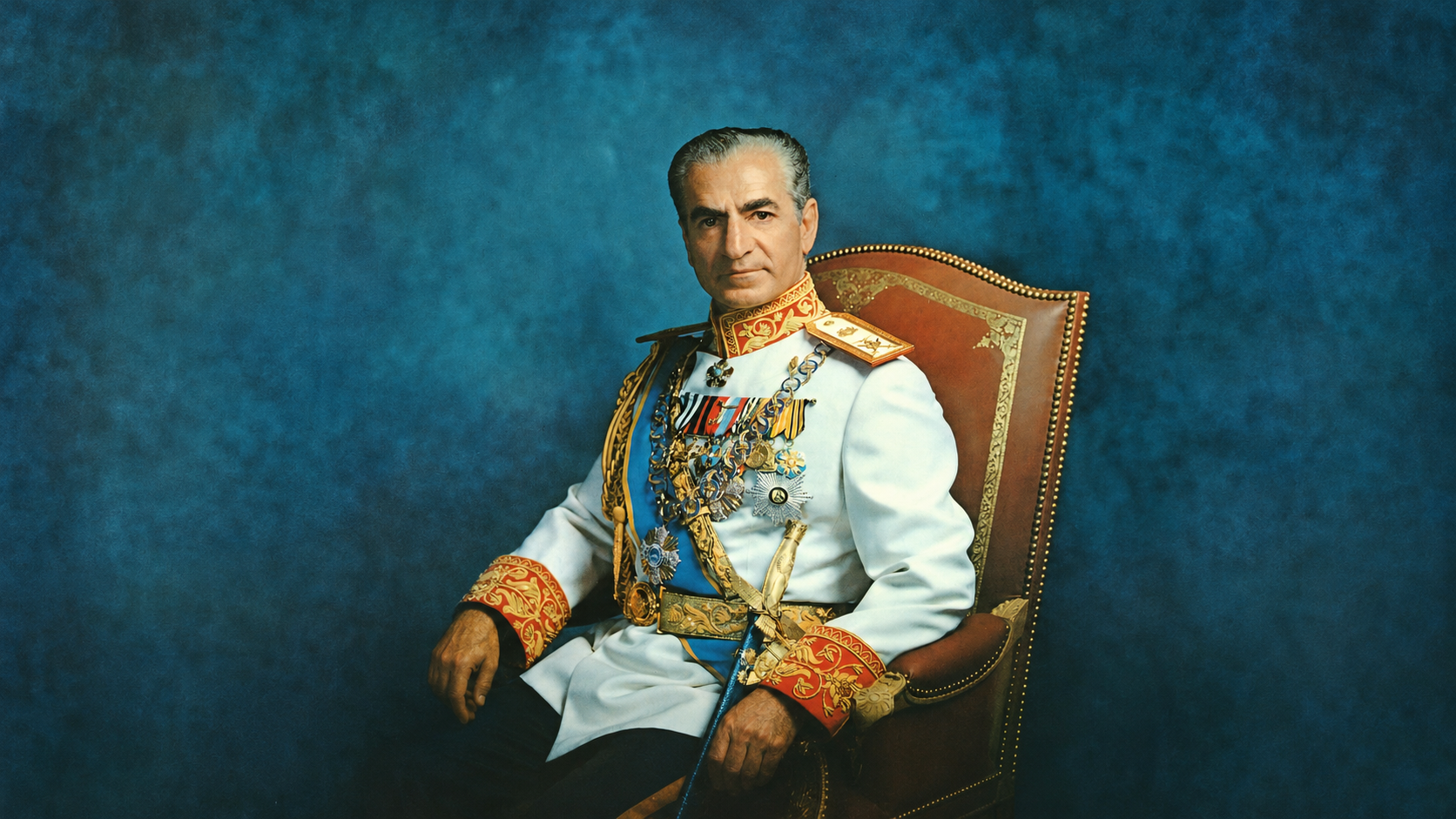
In Memoriam: Mohammad Reza Pahlavi, Shahanshah of Iran
Forty-six years ago today, Mohammad Reza Pahlavi, the last Shah of Iran, died in exile in Cairo — far from the Peacock Throne, far from the palaces of Tehran, far from the country he loved and served for thirty-seven years. He was 60 years old, and cancer had quietly consumed him for longer than the world was ever told. He died not as a king in his own land, but as a guest in someone else's — and yet he died, by every account of those who were with him in his final days, at peace with the choice that had cost him everything.
Egyptian President Anwar Sadat, a friend when few remained, gave him a resting place at the Al-Rifa'i Mosque in Cairo, among the kings and khedives of another nation. Today, on the anniversary of his passing, The New Persian Times pauses to honor his memory — not as a matter of politics, but as a matter of history, gratitude, and reflection on a man whose final act of leadership may have been his most consequential.
A Throne He Would Not Defend With Blood
By the winter of 1978, Iran was unraveling. Protests filled the streets. His generals, and members of his own government, urged him to do what other rulers facing collapse have so often done: unleash the full weight of the military, declare martial law without restraint, and hold the throne by force. He refused.
It is one of the most enduring and, to many Iranians, most honorable accounts of his final months in power: that Mohammad Reza Pahlavi chose exile over a throne built on the bodies of his own people. He is remembered by those close to him as having said, in substance if not in a single verified sentence, that a king who must kill his people to keep his crown has already lost the only thing that made him a king. Whatever the precise words, the historical record bears out the choice behind them — he declined to order the kind of scorched-earth crackdown that might have kept him in power, and instead left the country in January 1979, never to return.
It is a decision that cost him his throne, his health, and ultimately his final months of dignity, spent as a man without a country. But it is also a decision that, with the benefit of hindsight and the perspective of everything Iran has endured since, looks less like the end of a reign and more like an act of restraint from a man who understood, even in his darkest hour, what a government owes to the people it governs.
What He Might Have Thought
We will never know, with certainty, what Mohammad Reza Pahlavi would have made of the Iran of 2026. But it is not hard to imagine.
This past January, the Islamic Republic answered peaceful protest with the kind of violence the Shah chose not to inflict. Over two days, January 8th and 9th, security forces killed thousands of Iranian men, women, and children in cities across the country — Rasht, Fardis, Isfahan, Neyshabur, and more — cutting the internet to hide the scale of what they were doing, and, according to human rights investigators, torturing and disappearing thousands more in the weeks that followed. It stands, by the accounts of those who have documented it, as the deadliest crackdown on protesters in Iran's modern history.
One imagines a man who chose exile over ordering his own soldiers to fire on his own people would have looked upon those two days in horror — not as a vindication of anything, but as confirmation of the very principle he acted on in 1979: that no throne, no ideology, and no claim to power is worth the blood of one's own citizens. It is difficult to picture the Shah, whatever his flaws and however contested his record, standing anywhere but with the mothers of Isfahan and the families of Rasht searching morgues for their children.
That, perhaps, is the clearest thread between the man we remember today and the Iran that exists now: a reminder that the willingness to relinquish power peacefully, rather than defend it violently, is not weakness. It is, in the end, the measure by which history remembers rulers most kindly.
Why We Remember
The New Persian Times does not mark this anniversary to settle the arguments of the past. Iranians will continue to debate the Pahlavi era for generations, as they should. But we mark it because a man who might have chosen to fight to the last bullet instead chose to leave — and in doing so, spared his country a chapter of bloodshed that, tragically, it would come to know anyway, decades later, at other hands.
Forty-six years after his death in a foreign land, Mohammad Reza Pahlavi remains buried far from home. May his memory be a reminder of the restraint his country's current rulers have never shown, and may the Iran he loved one day be free of the violence he refused, at the end, to inflict upon it.
Stay with us. NPT is committed to covering the stories — past and present — that shape Iran and its diaspora, without the filter of state propaganda or foreign spin. If this piece meant something to you, subscribe to The New Persian Times newsletter by including your email on the homepage to stay informed.
The New Persian Times — the Iran coverage you're not getting anywhere else. Born in New York. Rooted in Iran. Beholden to no one.