
House Passes Resolution Reaffirming Iran as Leading State Sponsor of Terrorism
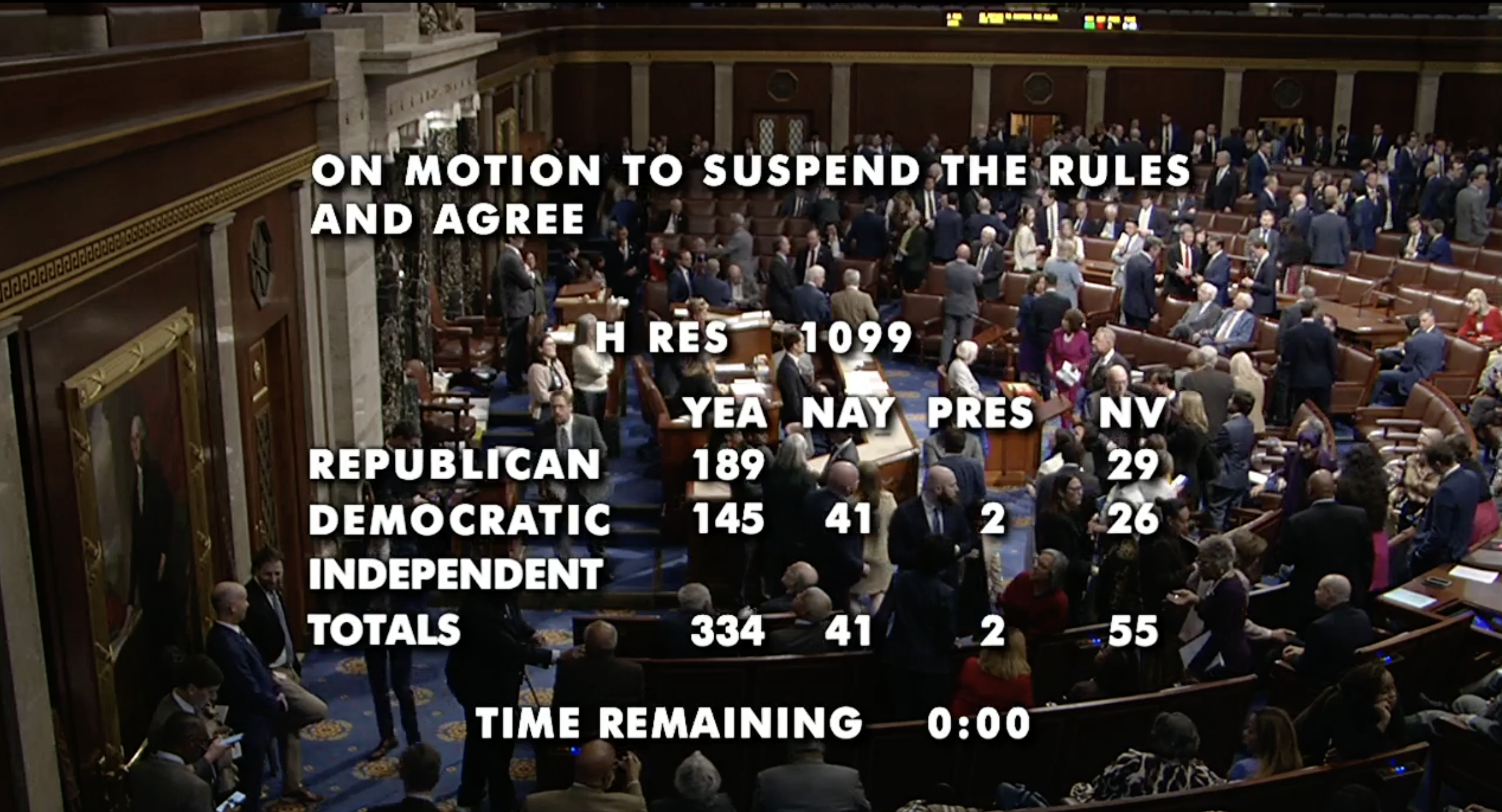
In a decisive move today, the U.S. House of Representatives passed H. Res. 1099, a resolution that reaffirms Iran’s status as the world’s largest state sponsor of terrorism. The non-binding measure, introduced by Rep. Brian Mast (R-FL) on March 4, 2026, passed with strong bipartisan support by a vote of 372-53, requiring a two-thirds majority under suspension of the rules.
The resolution declares it U.S. policy that Iran continues to hold this designation, citing its support for proxy groups like Hezbollah, Hamas, and the Houthis, as well as its involvement in regional instability, attacks on U.S. interests, and human rights abuses. While symbolic, the vote highlights persistent tensions in U.S.-Iran relations amid ongoing Middle East conflicts, including recent U.S. military actions and Iran’s backing of militant organizations.
Bipartisan Support Amid Partisan Divides
The measure received unanimous support from the 215 voting Republicans, joined by 157 Democrats for a total of 372 yeas. The 53 nays came entirely from Democrats, with some critics describing the resolution as a “toothless” political maneuver that distracts from more urgent matters, such as efforts to curb unauthorized military engagements. Rep. Judy Chu (D-CA) voted in favor, affirming the facts about Iran’s regime while emphasizing that such truths do not justify unauthorized U.S. military actions abroad.
This passage follows a close defeat of H. Con. Res. 38, a War Powers Resolution seeking to withdraw U.S. forces from unauthorized hostilities in Iran, which fell short 212-219.
Implications for U.S.-Iran Relations
For Iranian-Americans and those monitoring Persian affairs, the resolution solidifies a longstanding U.S. position that has influenced sanctions, diplomacy, and security policies toward Tehran. Iran’s government denies sponsoring terrorism, framing its regional activities as resistance to U.S. and Israeli influence. However, U.S. intelligence and international assessments consistently point to Tehran’s funding and arming of groups linked to attacks on American and allied targets.
The timing aligns with escalated regional tensions, including Iran’s alleged support for Houthi disruptions in shipping lanes and other proxy operations. Though non-binding, the resolution may strengthen cases for additional sanctions or support for Iran’s adversaries, potentially hindering future diplomatic efforts.
Voices from the Community
Iranian-American advocacy groups have mixed reactions. Some urge caution, warning that such measures escalate rhetoric without tackling underlying issues like economic hardships faced by ordinary Iranians. Others in the diaspora, particularly those critical of the Islamic Republic, view the affirmation as a positive step toward greater accountability for the regime.
As The New Persian Times continues to cover developments in U.S.-Iran relations and their impact on the Persian community, we will provide updates on any Senate action or related policy shifts.