
A Millennial's Memory — What I Do Not Forget
Twenty-five years after September 11th — the candles of Tehran, the backlash at home, and everything we were told to stop asking.
By Andy Alem (آیین) | The New Persian Times | September 11, 2026
I was seventeen that Tuesday morning. A New York kid, born in this city, raised on its skyline. Like every New Yorker, I carry September 11th not as history but as memory — the blue of that sky, the silence that followed, the names read aloud year after year. Twenty-five years later, the memory has not softened. It has settled into something deeper.
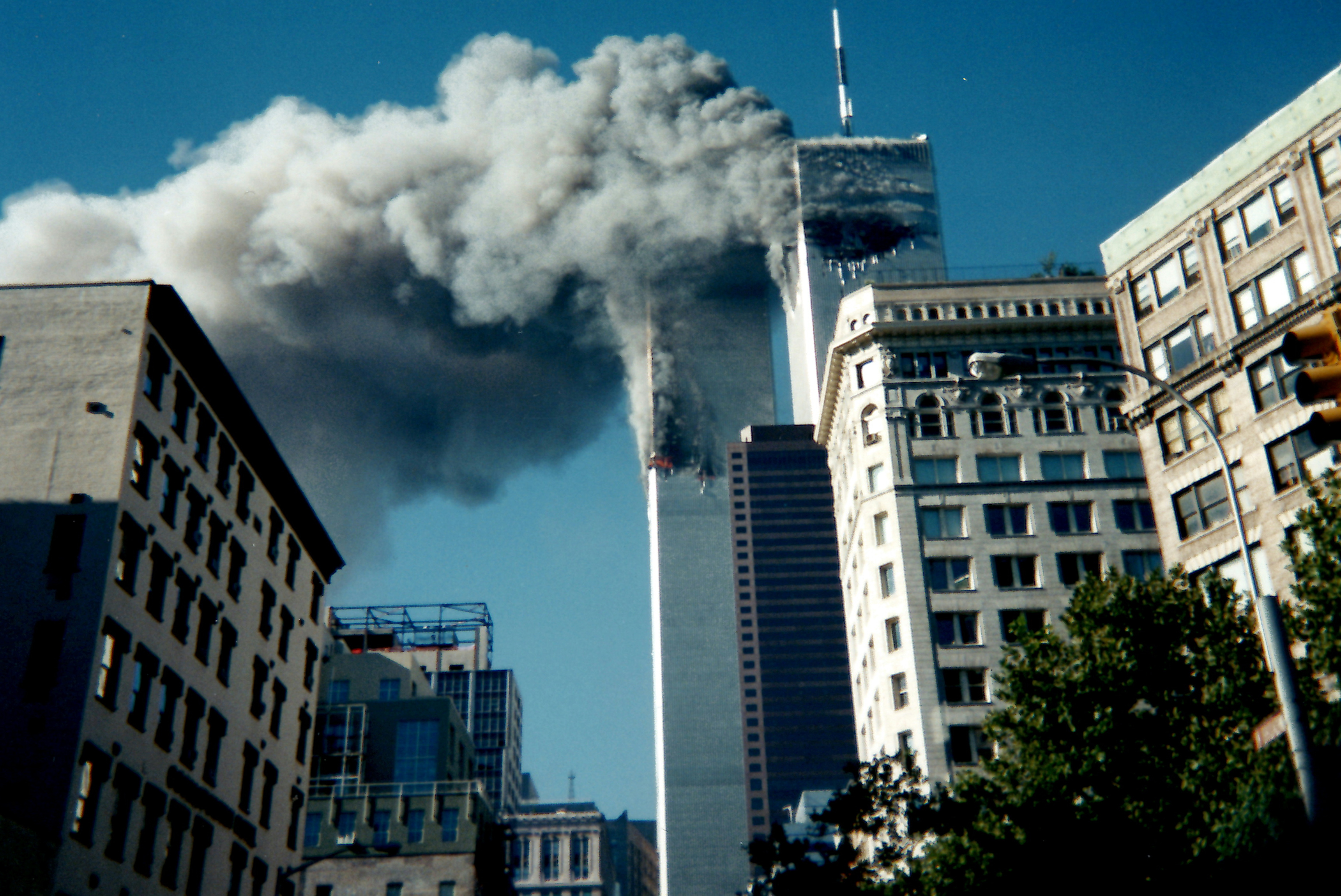
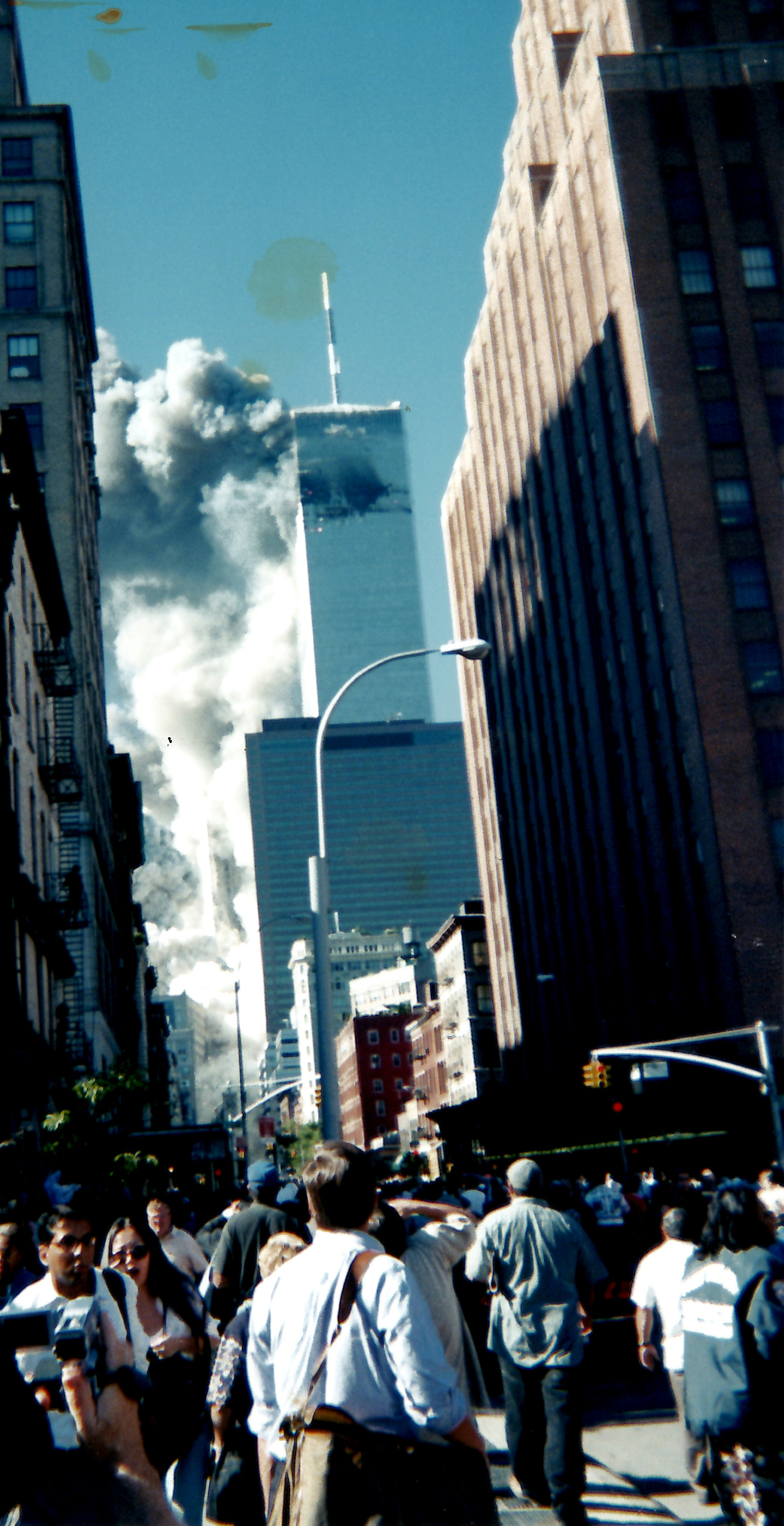
That morning, I dropped my father off at the train station. He had a meeting downtown. A few hours later the news came over the school loudspeakers — and then the phone lines went dead. I couldn't reach him. They cut school early, and I came home to the full horror on the screen, doing the math no kid should ever have to do: downtown, that morning, his meeting. For hours, nothing. When he finally walked through the door, unharmed, he pressed a disposable camera into my hands. I had it developed — and discovered my father had witnessed the entire thing. He had come up out of the subway at Chambers Street just as the first plane hit, his meeting interrupted by history. And he stood there and documented the day, frame by frame, on the only camera he could find — while I sat in a classroom believing I had lost him. I will hold that memory dear forever, and I hold him closer for it. I thank God he is still here today.
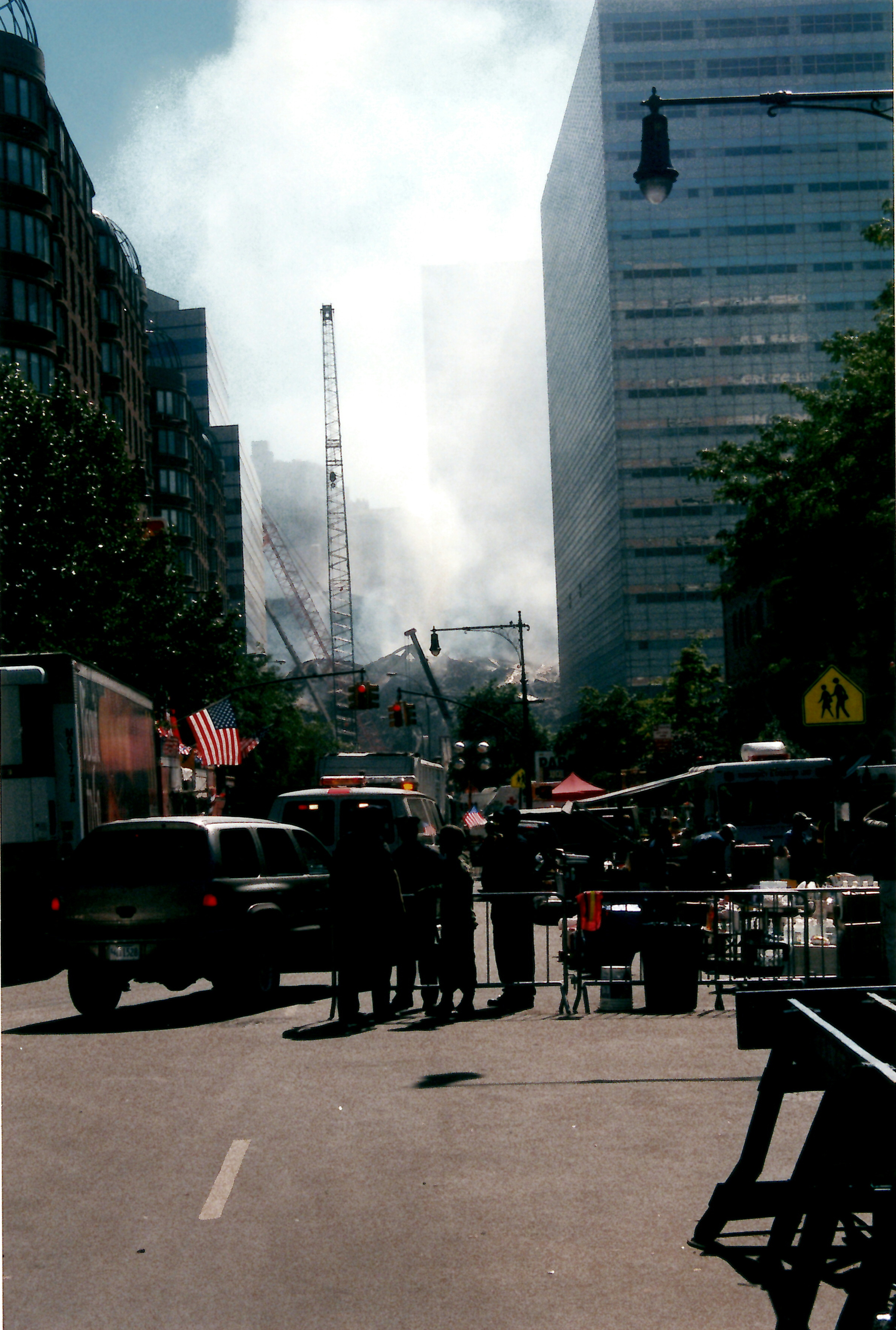
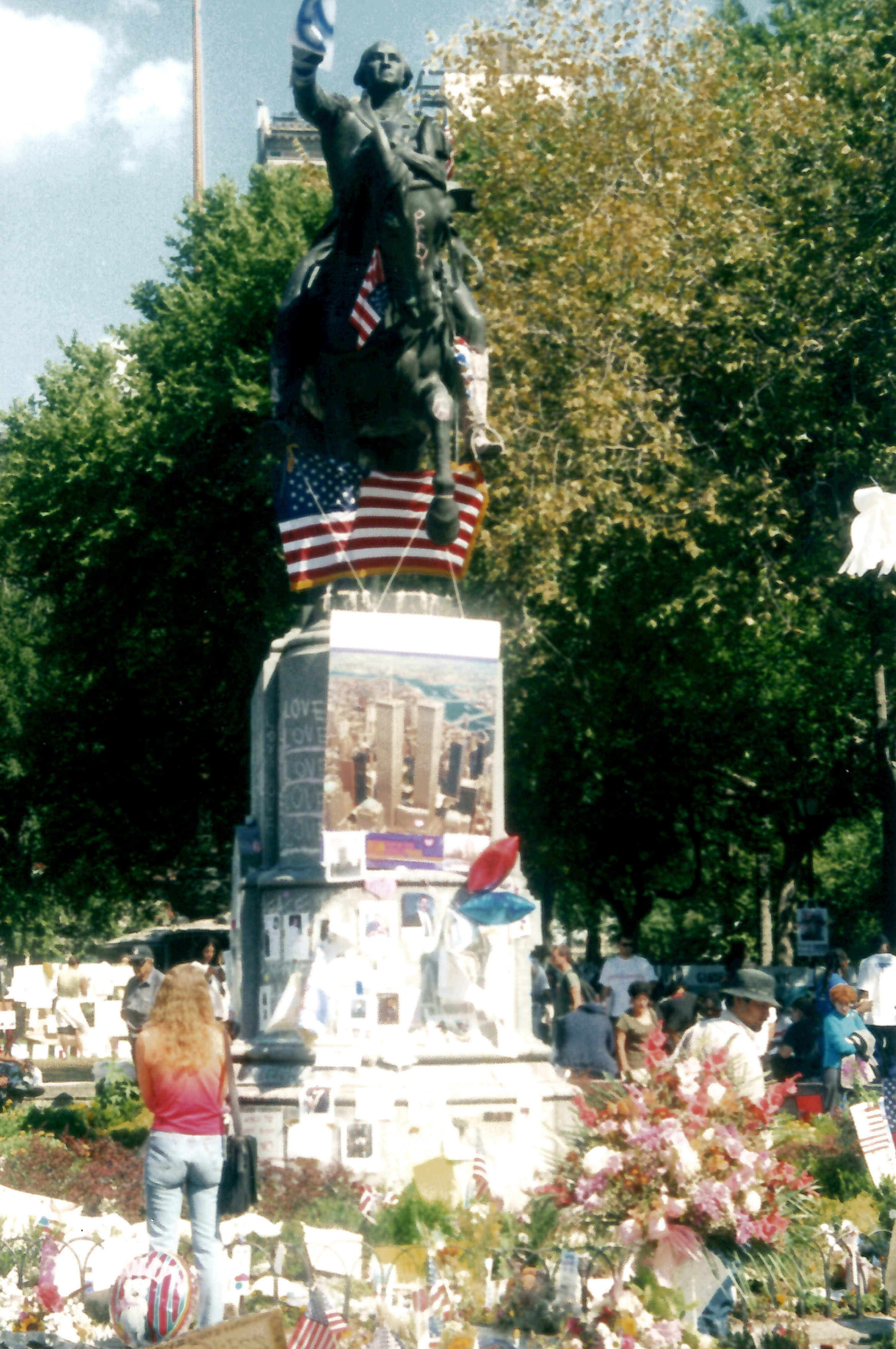
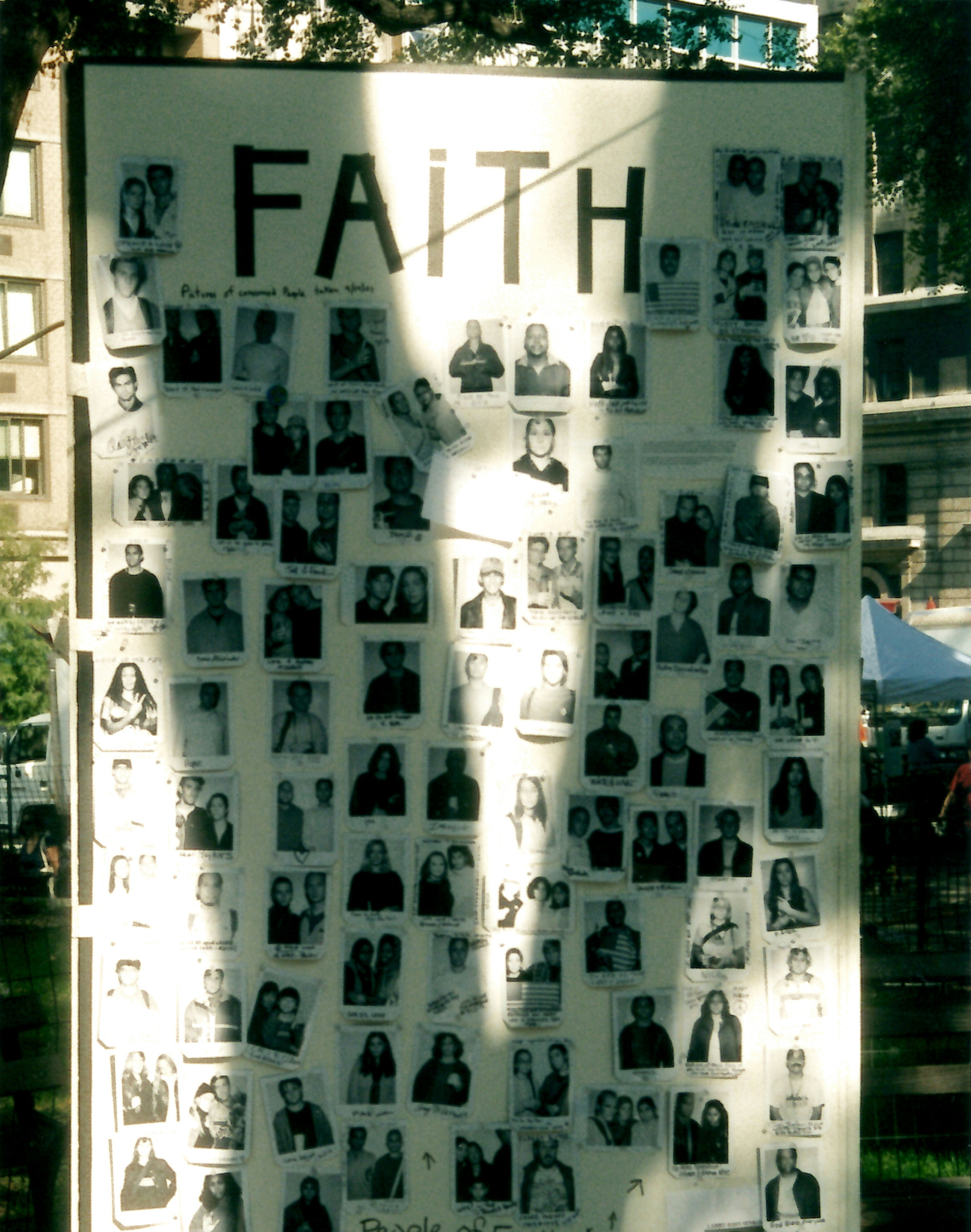
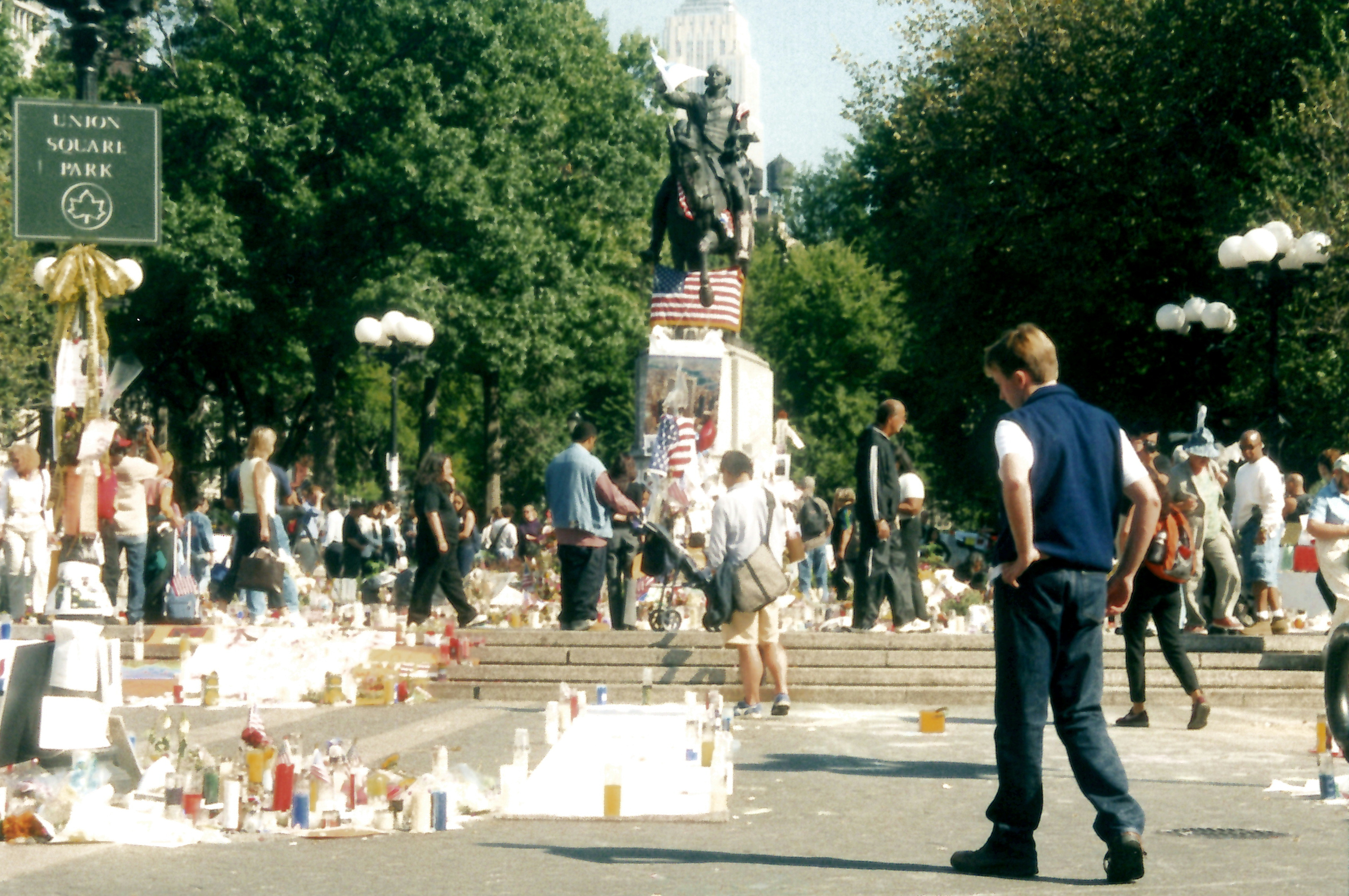
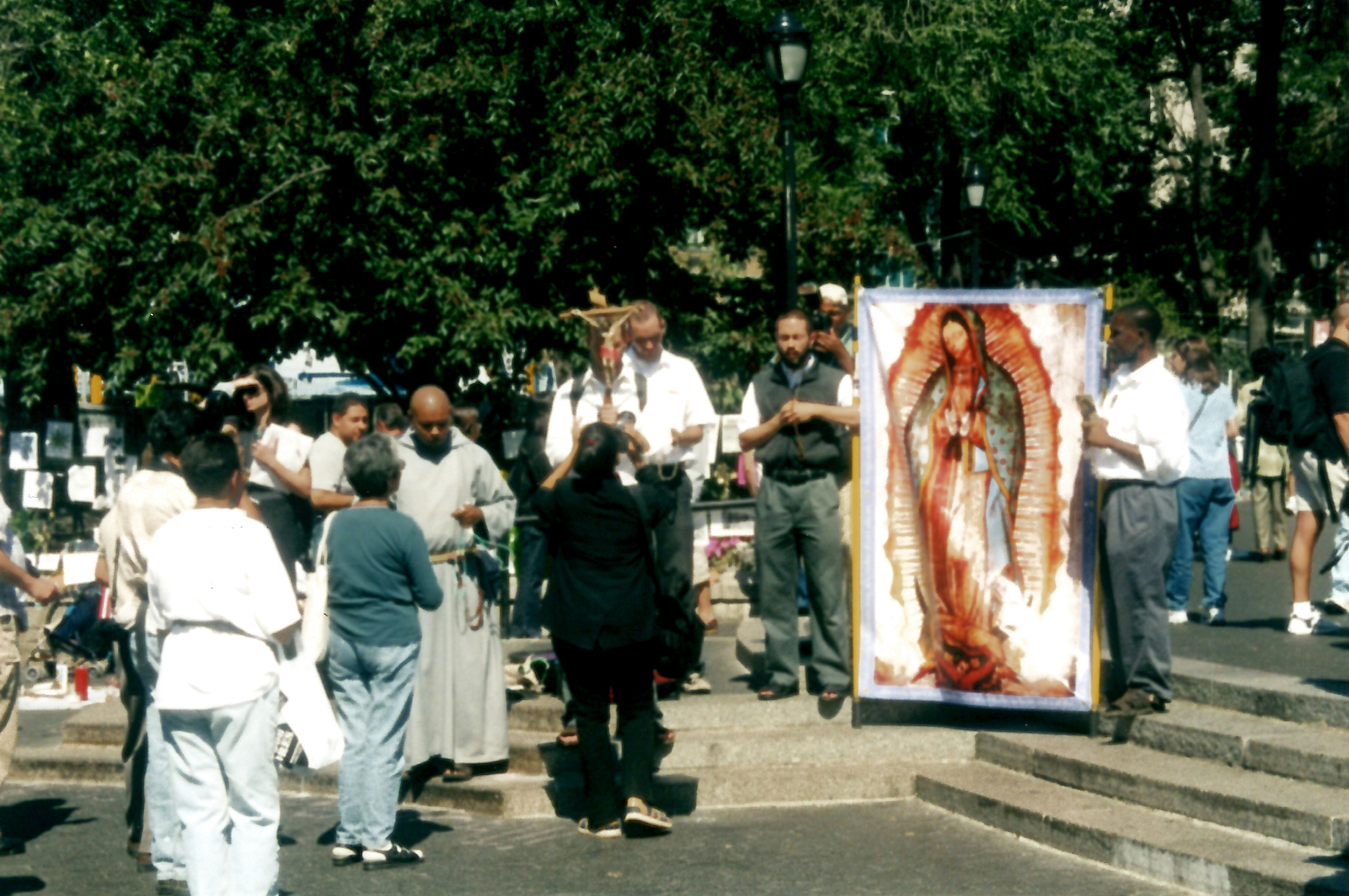
Days later, my father had to go back downtown — the meeting that history interrupted still had to happen. This time I went with him, and I brought my own camera. I crossed the barricade and stood before the smoking rubble of what had been the tallest things I knew. And later that day I photographed Union Square Park, where the city had gathered to grieve — the candles, the flyers of the missing, strangers crying openly in a town not known for it. First his camera, then mine. Maybe that is when I truly learned what a camera is for: to bear witness.
But there is a part of the story of September 11th that most Americans were never told. It belongs to the other half of my heart.
While others celebrated, Iran mourned
In the days after the attacks, while footage circulated of celebrations elsewhere in the region, something remarkable happened in Tehran. Iranians — young people, ordinary people, people with every reason to fear their own government — poured into the streets holding candles for American victims. Not one of the nineteen hijackers was Iranian. No one ordered these crowds into the streets. In the Islamic Republic, the state orders crowds into the streets to chant against America. These crowds came out on their own — to grieve with America.
Hundreds gathered in the night at vigils across Tehran, in Mohseni Square and beyond, candles in hand. Thousands more joined in the days that followed. Some stood outside the Swiss Embassy — the building that has represented American interests in Iran since 1979 — and lit candles as a symbol of mourning. Days after the attacks, sixty thousand fans at Azadi Stadium stood for a minute of silence before a World Cup qualifier. Sixty thousand Iranians, in a stadium named "Freedom," standing silent for New York and Washington.
You can still watch that night. Footage from the Associated Press, resurfaced this week by @historyphotographed as the anniversary approached, shows young Iranians gathered in the streets of northern Tehran, candles in hand, grieving for a city most of them would never be allowed to visit. A quarter century later, the clip has moved tens of thousands all over again — a display of shared grief that, as the archive itself puts it, directly rejected the anti-American rhetoric of their own government.
President Khatami expressed his "deep sympathy... to the American nation, particularly those who have suffered." The U.S. State Department would later thank the Iranian people for their sympathy, saying America would never forget their kindness in those harsh days.
And how did the regime answer its own people's compassion? The way it answers everything. Security forces shut down the vigil at Mohseni Square shortly after it began. The basij attacked another and scattered the mourners. Candles, it turns out, frighten men who rule by fire.
That is the whole story of Iran in one September week: a nation whose instinct was mercy, and a regime whose instinct was the baton.
The backlash we don't talk about
And yet for those of us who were Iranian in America, that September carried a second wound — one that never made the memorials.
I was in high school. We grieved as New Yorkers, because we were New Yorkers. And then we watched some of that grief curdle into anger, and watched that anger — understandable, human, with nowhere to go — find its way to us. Sometimes it was said out loud. More often it wasn't: a look held a beat too long, a joke you were expected to laugh at, a distance that opened where friendship had been. You didn't always have words for it at sixteen. You just knew you had become a suspect in your own homeland.
Here is the cruelest irony of it. Our families came to America fleeing the Islamic Revolution of 1979 — fleeing the very ideology this country now feared. We carried that trauma across an ocean, worked to become American, raised our flags on this soil. And when the ideology we escaped struck the country we loved, we were made to answer for it. Innocent bystanders, twice over: victims of the regime that drove us out, and victims of the resentment that met us here. That is a quiet, generational grief — being blamed in the land you fled to, for the thing you fled from. Islam was the cover story for nineteen men's crime; an entire people paid retail for it, and Iranians — who had just filled the streets of Tehran with candles for America — paid alongside everyone else.
I don't write this to accuse. Anger was everywhere that fall, and most of it was simply pain looking for an address. I write it because remembering honestly means remembering all of the innocent — the ones in the towers, and the ones who spent the years after proving, again and again, that they were never the enemy.
Two peoples, kept apart
I have spent my life standing on the bridge between my two homelands. And nothing tells me more about who Iranians truly are than what they did in September 2001. Before sanctions and centrifuges dominated every headline, the Iranian people showed America their heart — unprompted, unpermitted, at their own risk.
The tragedy of the last twenty-five years is how thoroughly that moment was buried. The vigils were broken up. The goodwill was squandered. Within months, the opening closed, and two nations that had grieved together were taught, again, to see each other only through the language of their governments. A generation of Americans grew up never knowing that Tehran wept for them. A generation of Iranians grew up being told America was the enemy — by a regime that feared nothing more than how much its own people loved the American idea: freedom.
But the truth has a long memory. The same spirit that lit candles in Mohseni Square lit the streets in 2009, and again in 2019, and again after Mahsa Amini in 2022 — Woman, Life, Freedom. It is the same spirit rising now, in this year of all years, as the Islamic Republic buries its Supreme Leader and stands at the edge of its own reckoning. Twenty-five years later, the candles have become a fire the regime cannot put out.
Never forget — all of it
"Never forget" is the vow of this day, and I take it seriously — perhaps more seriously than the slogan intends. Because remembering only the morning is not remembering.
Remember what it did to people's livelihoods. The towers were not just buildings — they were the beating heart of world commerce, and everyone from the largest corporations on earth to the coffee cart on the corner lived off that heartbeat. The stock exchange went dark for four days, its longest closure since the Great Depression, and when it reopened the market shed over a trillion dollars in a single week. The Federal Reserve Bank of New York later put the direct cost to the city at $33 to $36 billion, with job losses peaking near 70,000 — and its research found the hardest-hit were not the bankers but the hotel workers, waiters, and airline crews who served that economy. Thousands of mom-and-pop shops across Lower Manhattan and Chinatown were destroyed or displaced and never came back. For everyday people, few single days in American history ever landed a harder financial blow: capitalism was struck at its own capital, and ordinary families paid the longest bill.
Remember what was done with our grief. Within six weeks came the Patriot Act, and with it the foundation of the surveillance state we now live under — liberties surrendered in fear that were never handed back. Within two months came the TSA, and the end of an America where you could walk your loved ones to the gate and wave until the plane pulled away. Today we pay a premium to get back a fraction of what we once had for free. Within four months, Guantánamo Bay opened — the seat of a torture program that our own Senate later concluded produced nothing of value. And within eighteen months, our mourning was spent on a war in Iraq — a country that, like Iran, had nothing to do with the attacks — sold to us on intelligence that proved false, while the Vice President's former company collected billions in contracts from the fighting. The bill came due in bodies: hundreds of thousands of Iraqi civilians — more than 300,000 by some estimates — and nearly seven thousand American service members across Iraq and Afghanistan, in wars that outlasted the childhoods of the soldiers who finished them.
Even the man who would later become president read that morning with a builder's eye. On the afternoon of September 11th, Donald Trump — then simply a New York developer, speaking to WWOR-TV as the smoke still hung over downtown — refused to believe the towers were fragile: "It wasn't architectural defects... the World Trade Center was always known as a very, very strong building." And he said aloud, in real time, what millions would later wonder: "I happen to think that not only did they have a plane, they had bombs that exploded almost simultaneously... I just can't imagine anything being able to go through that wall." Speculation, spoken in the shock of the day — but spoken honestly, on the day itself. And when America's mourning was spent on Baghdad, he did not stay quiet for long. "Look at the war in Iraq and the mess that we're in," he told Esquire in 2004, when the war was barely a year old and still popular. "What was the purpose of this whole thing? Hundreds and hundreds of young people killed. And what about the people coming back with no arms and legs?" Twelve years later he stood on a Republican debate stage and said what no one in his own party had dared say about its own war: "They lied. They said there were weapons of mass destruction, and there were none. And they knew there were none."
And remember the third tower. Most Americans have never even heard of it. At 5:20 that afternoon, World Trade Center Building 7 — forty-seven stories of steel, struck by no plane — came down into its own footprint in a matter of seconds. I remember it. And I remember the questions that followed: it took the government seven years to conclude that fires brought it down — the first steel high-rise in history said to have collapsed that way — and the official report itself concedes the building fell at free-fall acceleration for more than two seconds of its descent. Thousands of architects and engineers have signed their names saying that explanation does not add up.
The record answers some of it, and this page owes you that record too. Debris from the falling North Tower tore the building open and severed the water mains, so the fires burned unfought for seven hours. Firefighters watched Building 7 bulge and groan all afternoon — FDNY chiefs set a surveyor's transit on it, measured it moving, and cleared a collapse zone hours before it fell. No seismograph in the region recorded a detonation. And when insurers with hundreds of millions of dollars at stake spent a decade in federal court litigating exactly why Building 7 fell — Aegis Insurance v. 7 World Trade Co., armed with subpoena power and the best experts money could buy — their claim was fire and design negligence, not explosives. I give you both sides because that is what an honest page does. But notice what needs no theory at all: a forty-seven-story building fell in New York City, the investigation took seven years, and most of the country was never even told it happened. Watch the footage. Read the report. Ask your own questions. A free people does not outsource its memory.
And remember how much else was never truly answered. The 9/11 Commission's own chairmen later wrote that their inquiry was "set up to fail." The twenty-eight pages concerning Saudi Arabia sat classified for fifteen years. The victims' families are in court to this day, still fighting for the whole truth. A generation was told to trust its government — and then was lied into a war by it. Is it any wonder that so many Americans stopped believing what they are told, about that day and every day since? Trust was among the casualties of September 11th, and no one has yet rebuilt it.
Remember, too, the ones still paying: the responders and volunteers who breathed the air at Ground Zero when they were told it was safe, now dying of cancers and lung disease a quarter century on. That seventh moment of silence at Ground Zero exists because the dying never stopped.
So when we say never forget — this is what I do not forget. All of it. The candles and the backlash, the fallen and the lied-to, the wars and the ones who profited from them. And I never will.
What we owe each other
So on this twenty-fifth anniversary, I ask my American readers to hold two truths at once. Mourn our nearly three thousand — the firefighters who climbed, the workers who jumped, the responders still dying today. And remember who mourned with you. Remember that in the one country whose government commands "Death to America," the people answered with candles.
And to my Iranian readers: America has not forgotten. I promise you that. The kindness your parents showed this city in its darkest week is a debt New York still carries. When your day of freedom comes — and it is coming, on God's time — Americans will remember who stood with them when it cost something to stand.
Twenty-five years ago, we were one people for a week. I believe we will be again — this time, for good.
May God rest the souls we lost that morning, and the souls still being lost to it. May He comfort every family that sets an empty place at the table tonight, in New York and in Tehran alike. And may the light of those candles outlive every regime that ever tried to blow them out.
Always in solidarity. Always for freedom.
Sincerely, آیین
If this story moved you, it's one America was never told — help us tell it. Subscribe and Donate to The New Persian Times