
The 12-Day War: The Islamic Republic Reels as Israel, U.S. Stike and Reza Pahlavi Calls for Ali Khameni to "Step Down!"
The Middle East is reeling from the “12-Day War,” a whirlwind of airstrikes, panic, and protests that’s left The Islamic Republic teetering and Iranians, both at home and in the diaspora, caught in a storm of uncertainty. Israel and the U.S. have hammered the regime’s nuclear and military sites, while Crown Prince Reza Pahlavi, has risen to rally his compatriots for a nationwide uprising, urging Supreme Leader Ayatollah Ali Khamenei to “Step Down!” and announcing a secure channel for military defectors to join the revolution. For The New Persian Times readers, here’s the breakdown of this chaotic chapter.
The Strike Begins
On a June morning in 2025, Israel launched “Operation Rising Lion,” a nod to the pre-revolutionary “Lion and Sun” symbol, targeting The Islamic Republic’s nuclear facilities at Natanz and Isfahan, plus military bases. They killed key figures like IRGC commander Hossein Salami and nuclear scientist Fereydoon Abbasi, claiming the regime was nearing a nuclear bomb, a charge The Regime denies, insisting its program is peaceful. The Islamic Republic retaliated with missiles and drones, hitting Israeli cities like Tel Aviv and Jerusalem, causing deaths and injuries. Iran’s health ministry reported a heavy toll, mostly civilians, though an unnamed source told The New Persian Times that Israel’s military has not targeted civilian areas in mass bombing raids, if there are any civilian casualties were most likely collateral damage as a result from precision strikes on key officials’ residences.
Chaos in Tehran
The chaos surged when President Trump posted on Truth Social, urging Tehran’s residents to “evacuate immediately,” sparking city-wide panic. Highways like Karaj-Chalus became gridlocked, gas stations ran dry, and price gouging hit absurd levels. Israel escalated the drama, bombing The Islamic Republic’s state TV during a live broadcast, forcing reporter Sahar Emami to flee as debris rained down, silencing the regime’s propaganda mid-sentence.
Operation Midnight Hammer
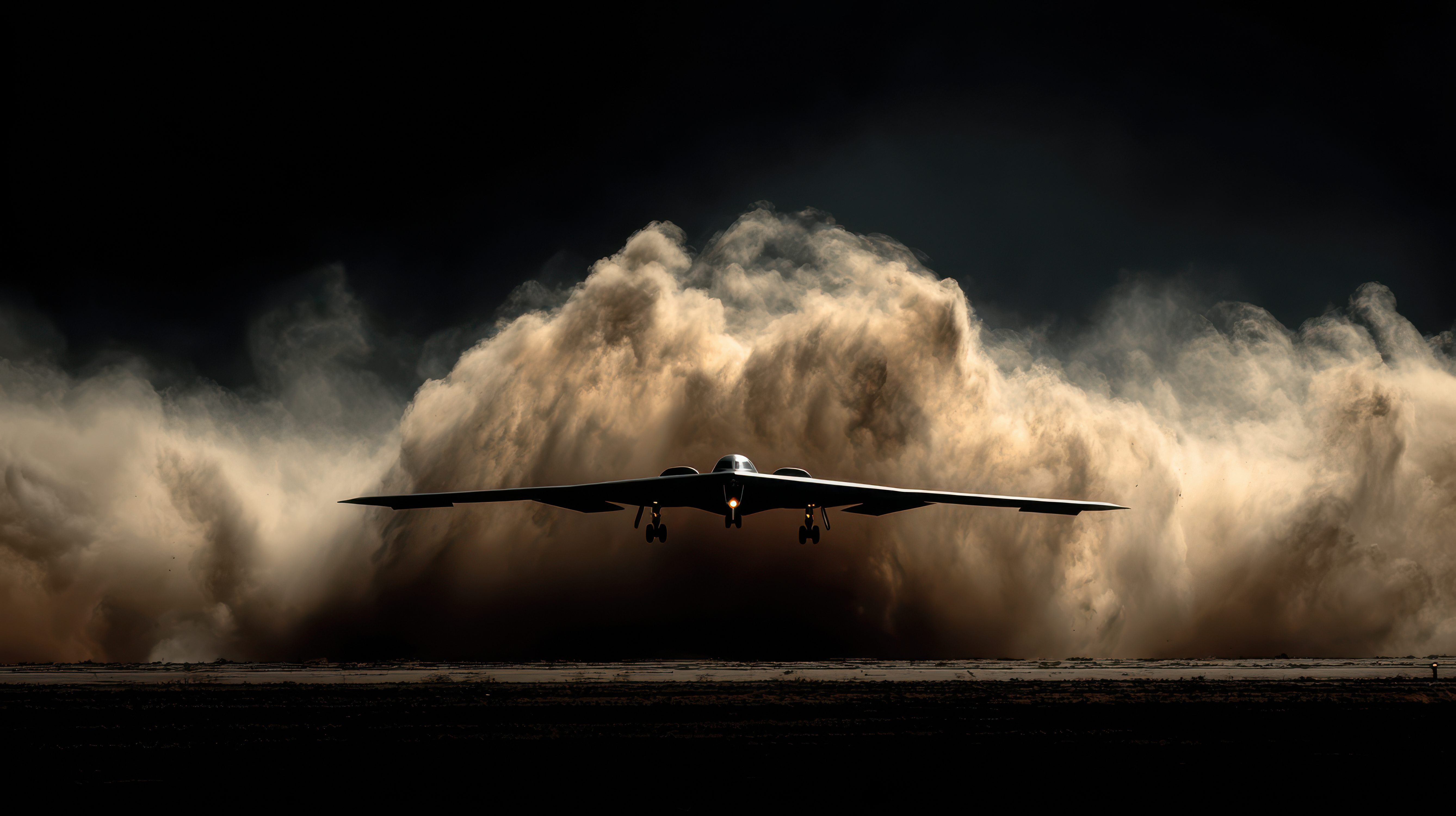
Days later, the U.S. joined the fray, with Trump ordering B-2 bombers and Tomahawk missiles to strike the nuclear facilities in Fordo, Natanz, and Isfahan in “Operation Midnight Hammer.” He claimed on Fox News the strikes “obliterated” the nuclear program, a view echoed by Sen. Lindsey Graham, who called it a “decisive blow.” But Newsweek cited a U.S. intelligence report suggesting the strikes only delayed the program, as uranium stockpiles were moved beforehand. Rep. Marjorie Taylor Greene, a Trump ally, called the action reckless without congressional approval, showing a MAGA split.
Reza Pahlavi’s Call to Action
Amid the turmoil, Reza Pahlavi issued a powerful video message, addressing his “fellow compatriots” and declaring, “The Islamic Republic has reached its end and is collapsing.” He accused Khamenei of dragging Iran into war and claimed the Supreme Leader was “hiding underground like a frightened rat.” Pahlavi called for a nationwide uprising to “reclaim Iran,” urging citizens from Bandar Abbas to Tabriz to rise up. He demanded Khamenei “step down,” promising a fair trial and due process, “more than you have ever given any Iranian.” Pahlavi also announced a secure platform for military, police, and security personnel to defect and join the revolution, promising safety and a role in a democratic future. Posts on X report officials signaling readiness to defect via this channel, though these claims lack independent verification. He emphasized that Israel and the U.S. are not Iran’s enemies, only the regime, urging the military to “stand with the people.”
Regime Crackdown
Inside Iran, regime loyalists rallied in Revolution Square, waving The Islamic Republic and Palestinian flags in a display of pseudo-nationalism to prop up the regime. Meanwhile, the IRGC and Basij, often in plain clothes, cracked down, arresting people for alleged Israeli ties, confiscating phones, and forcing WhatsApp deletions. NetBlocks confirmed a nationwide internet blackout, isolating Iranians further. These actions, while plausible, lack specific confirmation in open sources but reflect the regime’s paranoia.
The Iranian Perspective
Iranians, from the diaspora to Tehran, feel “numb.” “Nobody wanted these attacks, but we’re stuck, hating the regime, fearing the bombs,” a diaspora member shared. The Islamic Republic, weaker than at any point in its history. An unnamed source inside of Isfahan, Iran told The New Persian Times, “The people are enduring hardships and are anticipating what the next move will be. There is a lot of confusion going on but we’re all waiting for something to happen. We’re ready for change.” The confusion continues as the Iranian diaspora community remains deeply divided, a stark contrast to the unity once seen in September 2022 during the murder of Mahsa Jina Amini. The division was most noticed after Israel’s military response to the October 7th attacks.
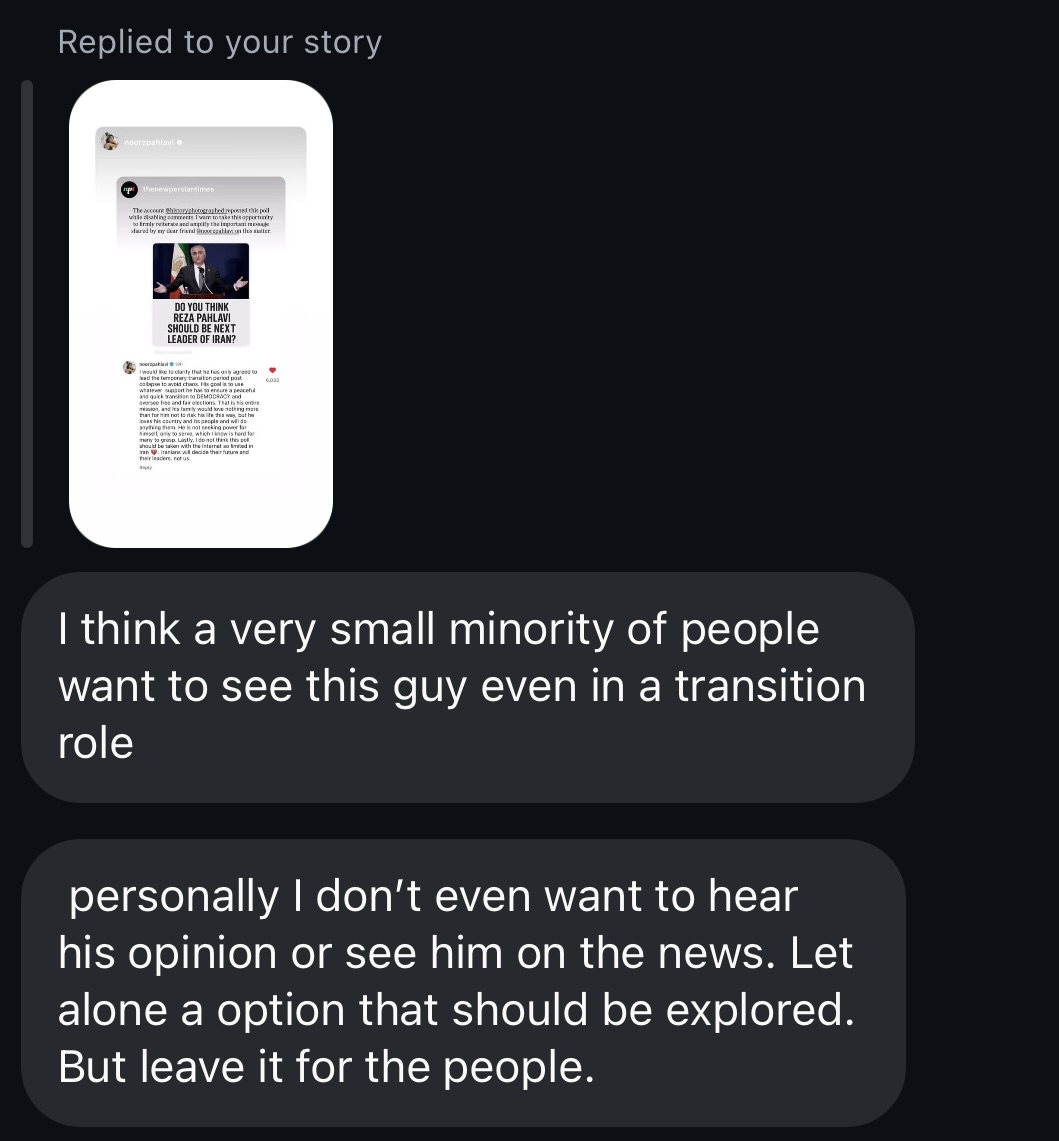
Trump announced a Qatar-brokered ceasefire, but it’s fragile. Crown Prince Reza Pahlavi’s call has sparked hope but also skepticism. One Iranian in the American diaspora messaged The New Persian Times stating:
Regime Propaganda
Shortly after the ceasefire, The Islamic regime permitted CNN to report inside Iran amplifying their anti-western rhetoric seen below:
Public Opinion
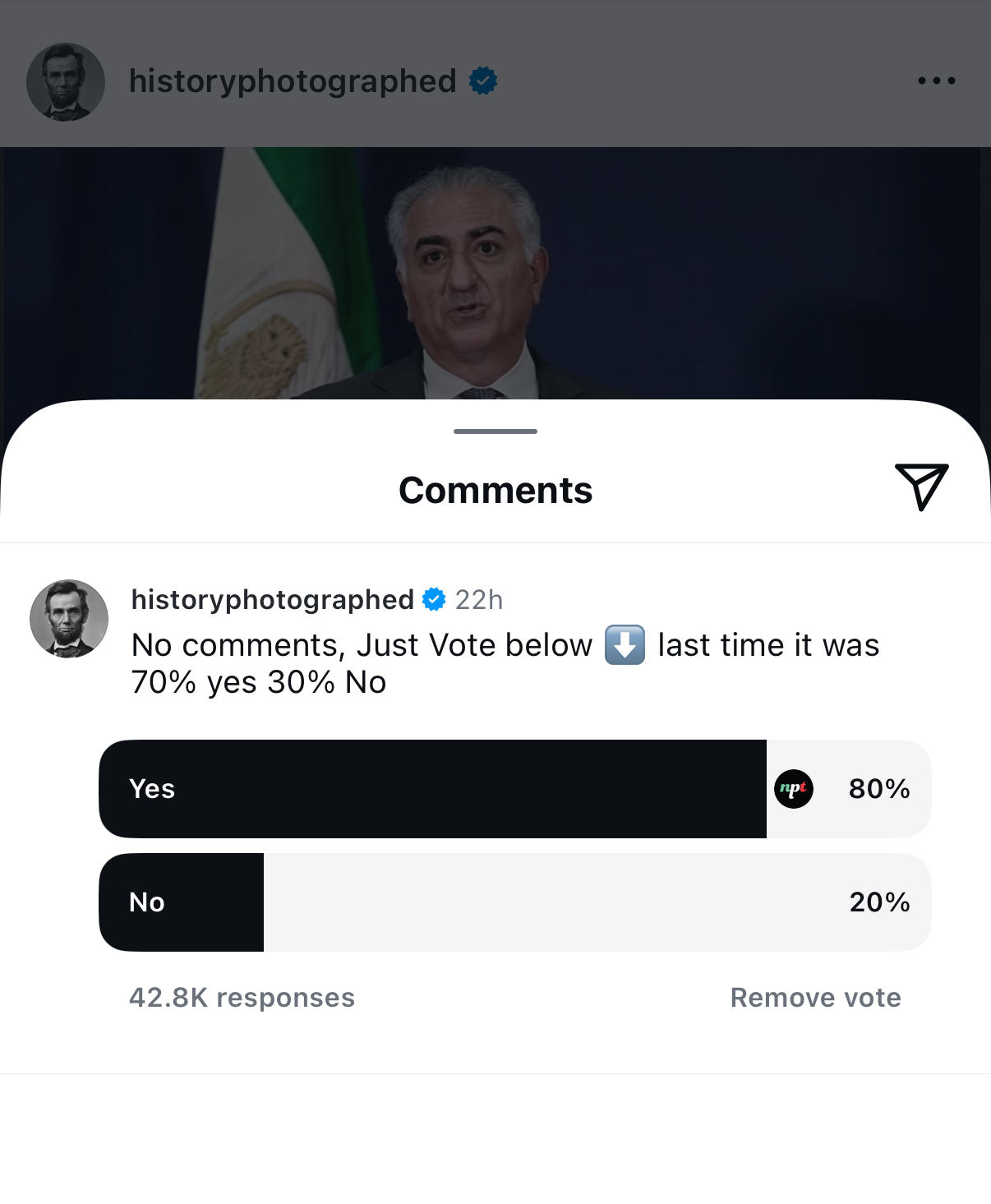
Despite “mainstream” reporting, the instagram account @HistoryPhotographed, with a whopping 8.8M followers, ran a poll during Iran’s internet blackout which showed:
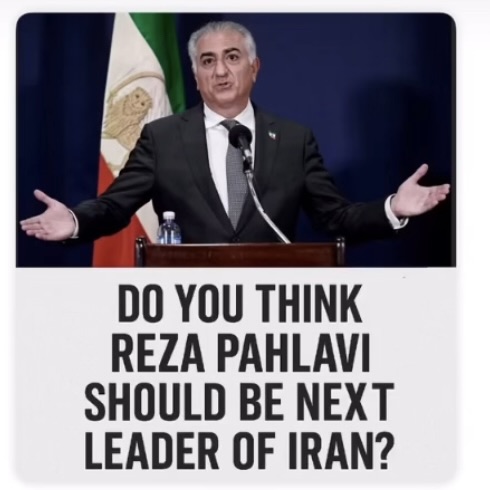
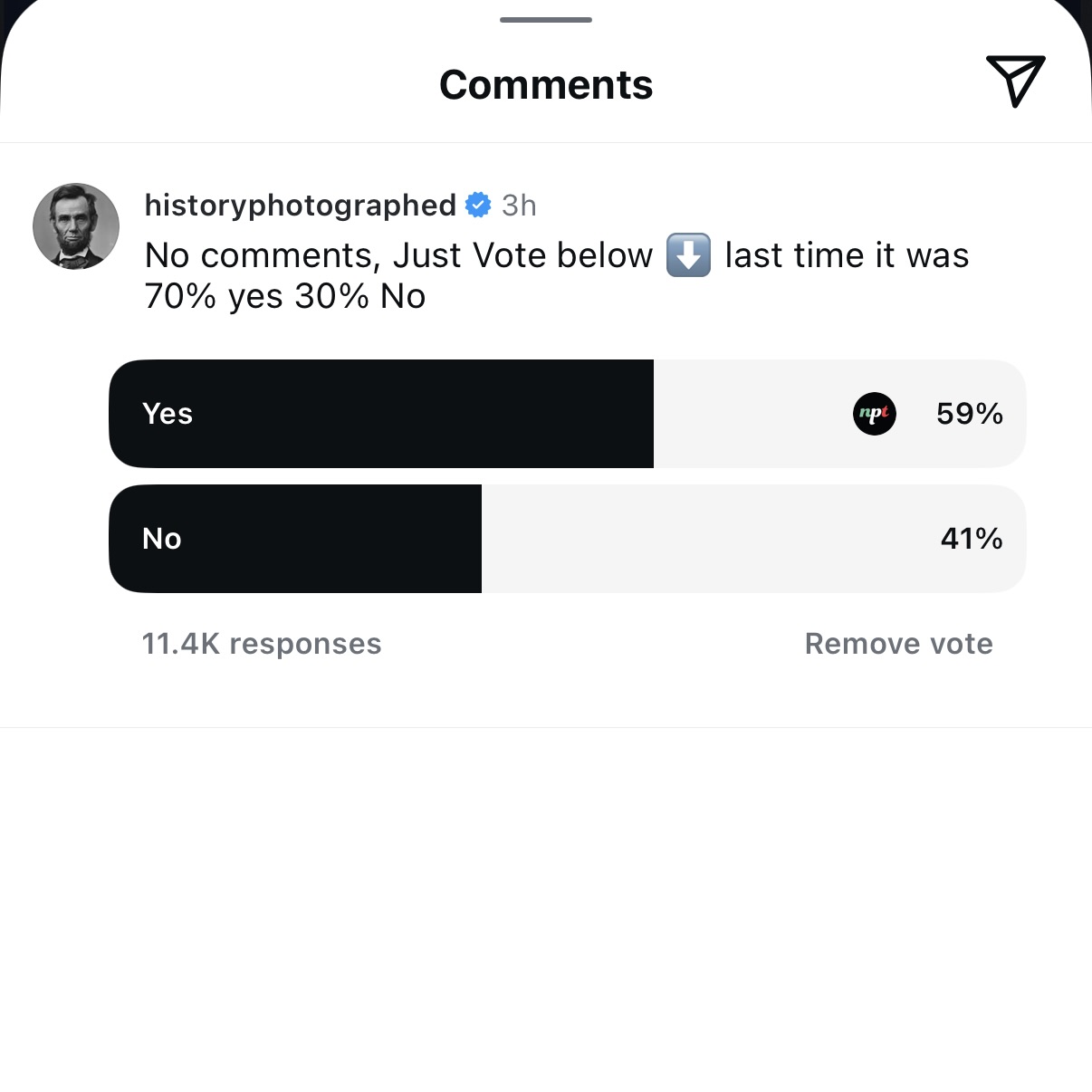
Then posted the poll again when the internet returned to Iran days later.
Conclusion
As the smoke clears from the “12-Day War,” the wounds it leaves run deep, compounding the pain of a people already battered by water shortages, hyperinflation, brutal crackdowns, and the abuse of women, children, and animals. Add to that the regime’s export of a destructive ideology, generational trauma, decades of sanctions, global disrespect, and gross mismanagement, and the toll is staggering. Now, more than ever, two narratives clash over Iranian identity: one from within The Islamic Republic and its proxies, rooted in regime loyalty, and another from the Iranian diaspora, dreaming of a free, democratic Iran. For too long, Iran’s essence, its rich culture and vast resources, has been hijacked for personal, political, and financial gain, plundering one of the world’s wealthiest nations. With the regime at its most vulnerable, Iranians, at home and abroad, must confront their reflection. Will they unite to reclaim their future, or let division prevail? Share your thoughts below and keep this vital conversation going.
What are your thoughts on this developing situation?
Share your perspective and keep this vital conversation going.